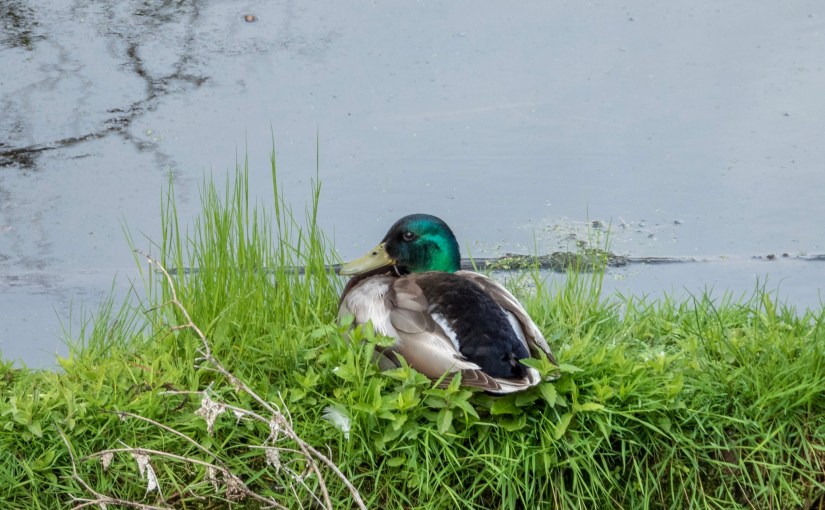
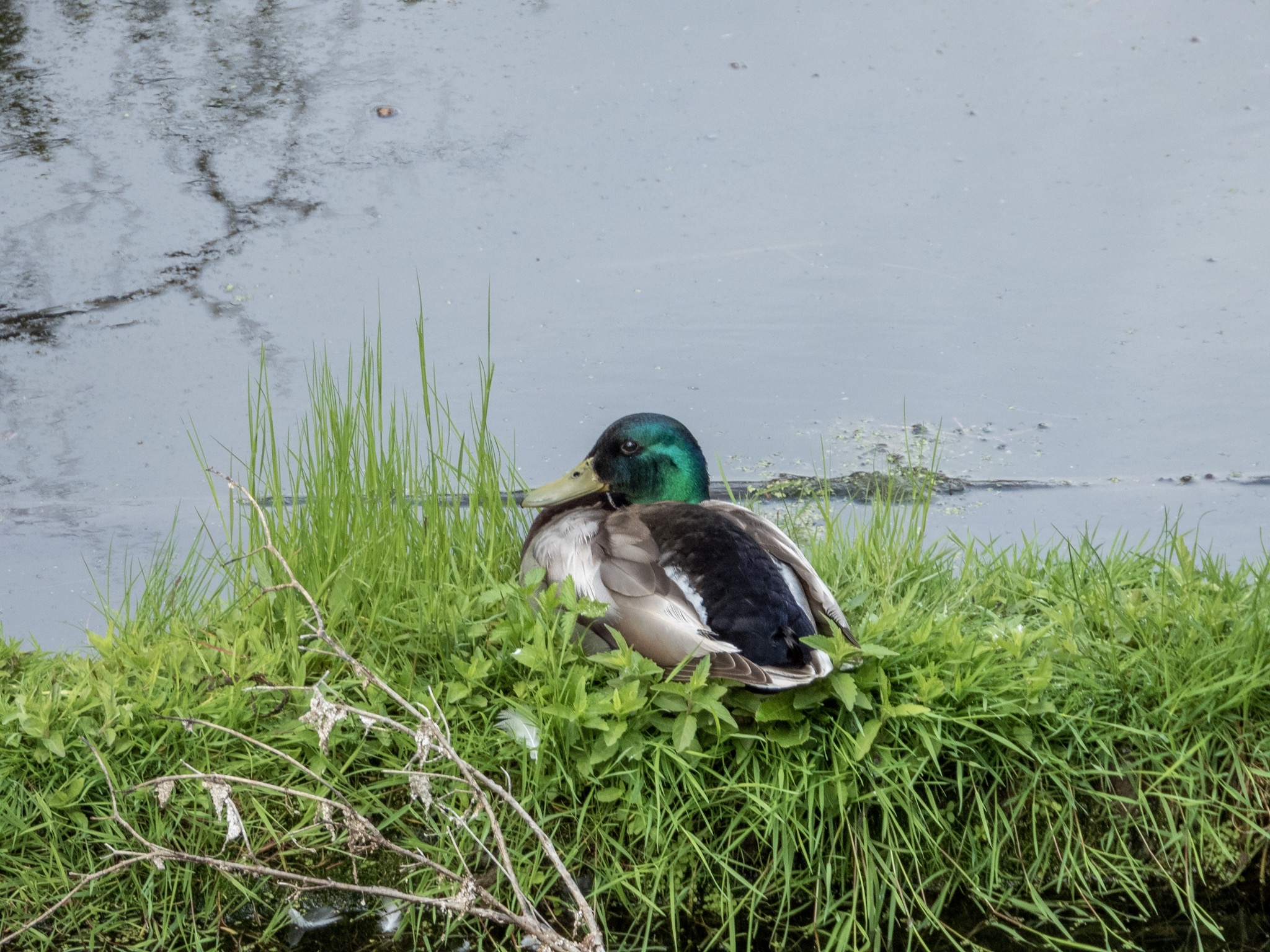
The very first bird we spotted as we arrived at the oxbow pond down at the Whitemud ravine was a male mallard that was snoozing on a log. The log was covered in lush greenery with the mallard cosy like a bug in a rug in the greenery. It was very idyllic and looked quite comfortable. Oxbow ponds are unique habitats where the water is still and stagnant compared to the rushing water in the creek. There are rumours of numerous oxbow ponds along the Whitemud creek. So far I have found two, both almost entirely covered with thick riparian vegetation making them surprisingly difficult to spot although they are only steps away from the trail. This particular oxbow is the largest one I have found so far and is bound by an old beaver dam at the north end and a wall of accreted sediments on the south end. Groundwater and seepage from the west side of the ravine feeds the oxbow, as does spring and surface runoff. Other than seasonal fluctuations in the water level the water is completely still in these pond.
Nikon P1000, 604mm @ 35mm, 1/250s, f/5.0, ISO 180
May the curiosity be with you. This is from “The Birds are Calling” blog (www.thebirdsarecalling.com). Copyright Mario Pineda.
It has been raining over the last few days, but this morning there was a break in the weather so without further ado, we went down to the Whitemud Creek to check out what we could find. On a whim we decided to take the trail along going south along the Whitemud Creek from Snow Valley. Usually we stick to the northern section, but I have been curious for a while now to check out some oxbow ponds in the southern section. Right off the bat we saw a subtle movement along the water’s edge. Something tiny and well-camouflaged was scurrying around on the muddy bank. A closer look revealed that it was a small shore bird that was definitely a lifer. After a bit of studying Merlin and discussions back and forth we reached a unanimous verdict, it was a Spotted Sandpiper (Actitis macularius, Lifer #162, AB Big Year #114). The identification was unmistakable, the spotted under parts, orange bill and bobbing tail as it walked around along the water’s edge. That was a great start to a pleasant morning nature walk. The sandpiper was a welcomed bonus, but the real reason we went to this part of the creek were the oxbows. We did find two oxbow ponds nestled among the vegetation along the trail. We did not have the time to explore them today, but now that I know where they are I am looking forward to coming back and spend some more quality time exploring them. Todays picture shows a wide meander in the Whitemud Creek, this is how oxbow ponds are formed. When a river or creek creates a wide meander like this neck of the meander progressively becomes narrower until it is only a land bridge. Sooner or later the river cuts through the neck, e.g. during high water flow regimes during the spring melt, cutting off the meander and forming an oxbow lake. Oxbow lakes are U-shaped and become free-standing bodies of water with very little or not flow and provide a unique habitat quite different from the habitats along the fast flowing water in the main creek.
Shot with iPhone.
May the curiosity be with you. This is from “The Birds are Calling” blog (www.thebirdsarecalling.com). Copyright Mario Pineda.
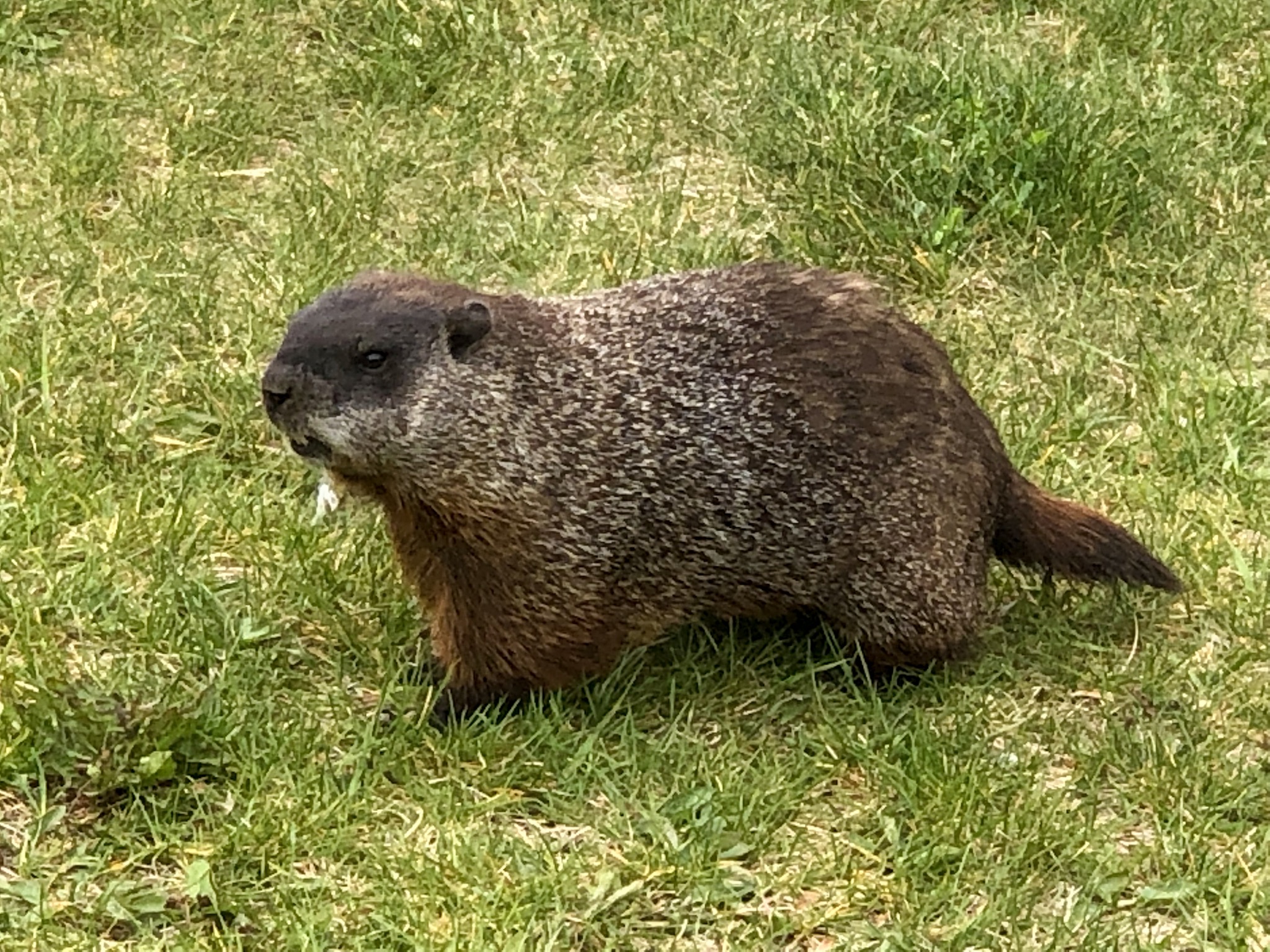
Today’s picture is a contribution from my lovely better half and my sister-in-law. While going for a stroll in the MacKinnon park, right below the old Royal Alberta Museum, chatting about stuff that only better halfs and sister-in-laws chat about they came across this curious looking critter. I received a picture and a short video clip at work asking me what this critter is. To be completely honest, I had no clue what it could be. It looked somewhat similar to a marmot, but the only marmots I have ever seen were high up in the mountains, so I did not think it would be a marmot. It turns out that it is a marmot. Marmots are essentially large squirrels in the genus Marmota, with 15 species spread out throughout the northern hemisphere. One of the species is the Hoary Marmot (Marmota caligata) which I saw many years ago in Lake O’Hara. The fella in MacKinnon Park, however, is a Groundhog aka Woodchuck (Marmota monax) which is another species in the same genus. It turns out this particular Groundhog is somewhat of a local celebrity and has even been featured as a news story on CBC. Apparently people are regularly feeding it and it is obvious that it is very comfortable around humans. It is quite regrettable that people do not have the sensibility to treat wildlife, even urbanized wildlife, appropriately. Groundhogs are known to have an aggressive nature so having one so comfortable around humans could potentially lead to trouble down the road.
May the curiosity be with you. This is from “The Birds are Calling” blog (www.thebirdsarecalling.com). Copyright Mario Pineda.
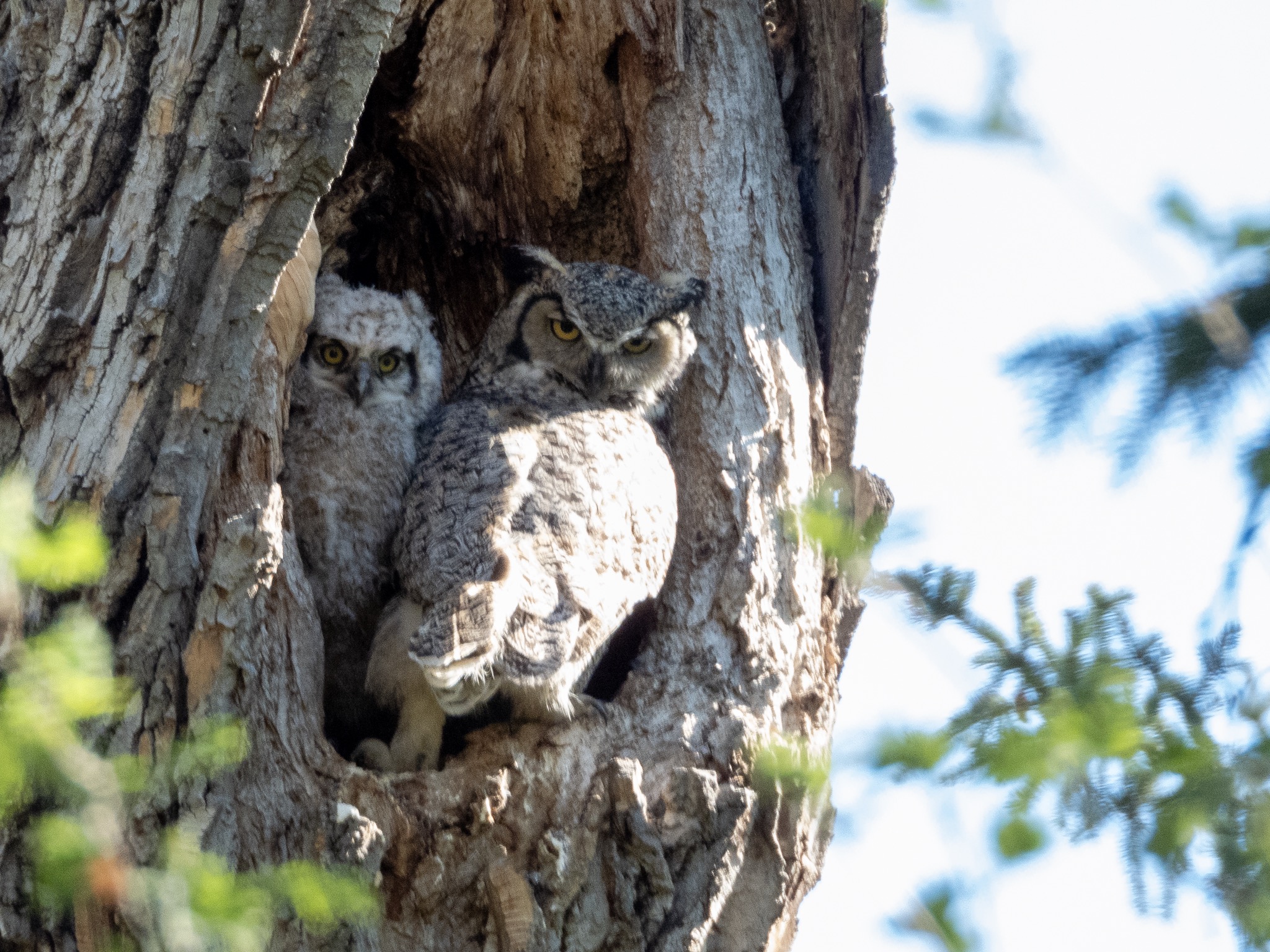
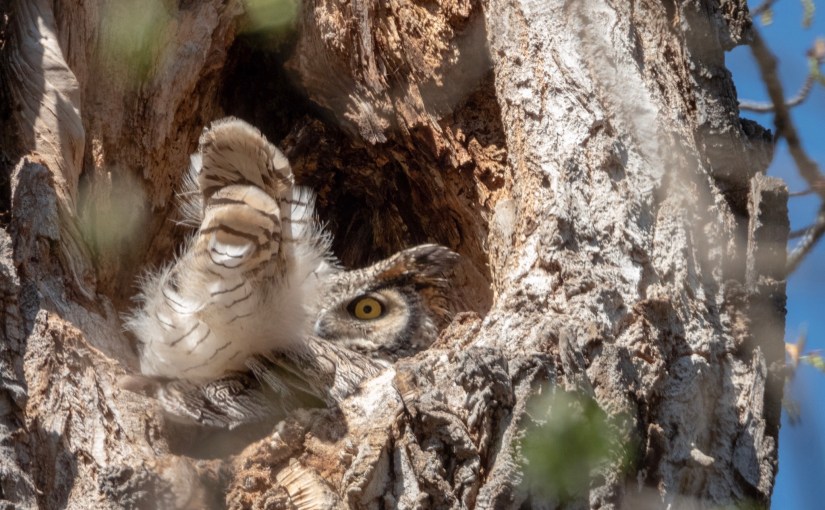
I had never been down to the Whitemud Ravine in the morning before. Last Tuesday I was off from work and woke up early to a beautiful sunny morning. It was the perfect morning for a nature walk down by the creek. Said and done, at 7 am I started out down at the Snow Valley parking lot. Right off the bat, the birding kicked in at full gear with a bunch of Chipping Sparrows (Spizella passerina) hanging out in the trees by the parking lot. These were lifers for me and by playing their call through the Merlin App I had them sitting all around me in the trees curiously eyeing me. I can just imagine what must have been going though their bird brains, “Is this an intruder?” or “Is this a potential mate?”. That was a great start to a morning of some awesome birding. Other than two lifers, the highlight was definitely the Great Horned Owlets that were hanging out in their cavity. They were about 3 weeks old and getting quite large. By owl standards they would probably be considered teenagers. They sure behaved like teenagers, curious, oblivious to the dangers of the outside world, not following their owl parent instructions etc. There they were, perching precariously at the edge of the nest and ogling passersby. The sudden croaking of ravens directed their attention skywards. I am not sure if they would be aware of the dangers the ravens pose, but their parents definitely are. Dad, sitting in a nearby tree, started hooting and right away mom was inbound. She landed at the edge of the cavity pushing her owlets inside. The owlets had none of it as they tried to get past mom to check out what the commotion was about. Although the mother barely fit in the nest she blocked the entrance pushing her owlets back into the nest as she intently eyed the skies for the ravens. I spend well over an hour at the nest, snapping pictures and shooting videos of the chicks.
Nikon P1000, 1108mm @ 35mm, 1/200s, f/5.6, ISO 400.
Below is a video clip (13:16 min) of the action at the nest. Mom arrives at 7:32 and the person you can hear talking and shooting pictures in the background is Wayne Oaks, the resident Whitemud Ravine birding afictionado.
All in all, it was an amazing and beautiful morning full of birds, two of which were lifers (Chipping Sparrow and the American Goldfinch). I could have continued but after 3.5 hrs and 6 km my stomach started to grumble so it was time for a second breakfast and more coffee. This experience has opened my eyes to the virtues of early morning birding. The weekend cannot arrive soon enough.
Here is the eBird summary of the morning.
Edmonton–Whitemud Park, Edmonton, Alberta, CA May 21, 2019 7:07 AM – 10:37 AM Protocol: Traveling 6.341 kilometer(s) 18 species
Canada Goose (Branta canadensis) 5 Mallard (Anas platyrhynchos) 12 Green-winged Teal (Anas crecca) 2 Common Goldeneye (Bucephala clangula) 3 Common Merganser (Mergus merganser) 5 Great Horned Owl (Bubo virginianus) 4 Downy Woodpecker (Dryobates pubescens) 1 Pileated Woodpecker (Dryocopus pileatus) 1 Sound only Common Raven (Corvus corax) 3 Black-capped Chickadee (Poecile atricapillus) 15 American Robin (Turdus migratorius) 4 House Finch (Haemorhous mexicanus) 1 American Goldfinch (Spinus tristis) 2 Chipping Sparrow (Spizella passerina) 3 Dark-eyed Junco (Junco hyemalis) 3 White-throated Sparrow (Zonotrichia albicollis) 1 Song Sparrow (Melospiza melodia) 2 Common Grackle (Quiscalus quiscula) 1
May the curiosity be with you. This is from “The Birds are Calling” blog (www.thebirdsarecalling.com). Copyright Mario Pineda.
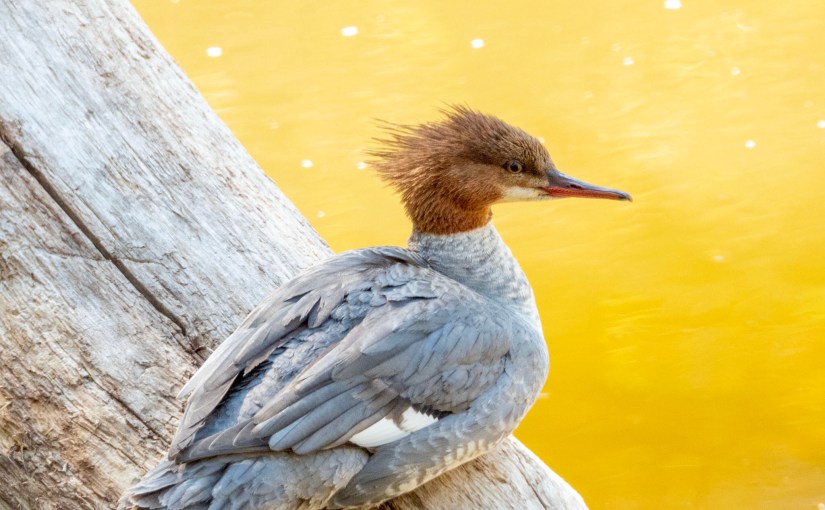
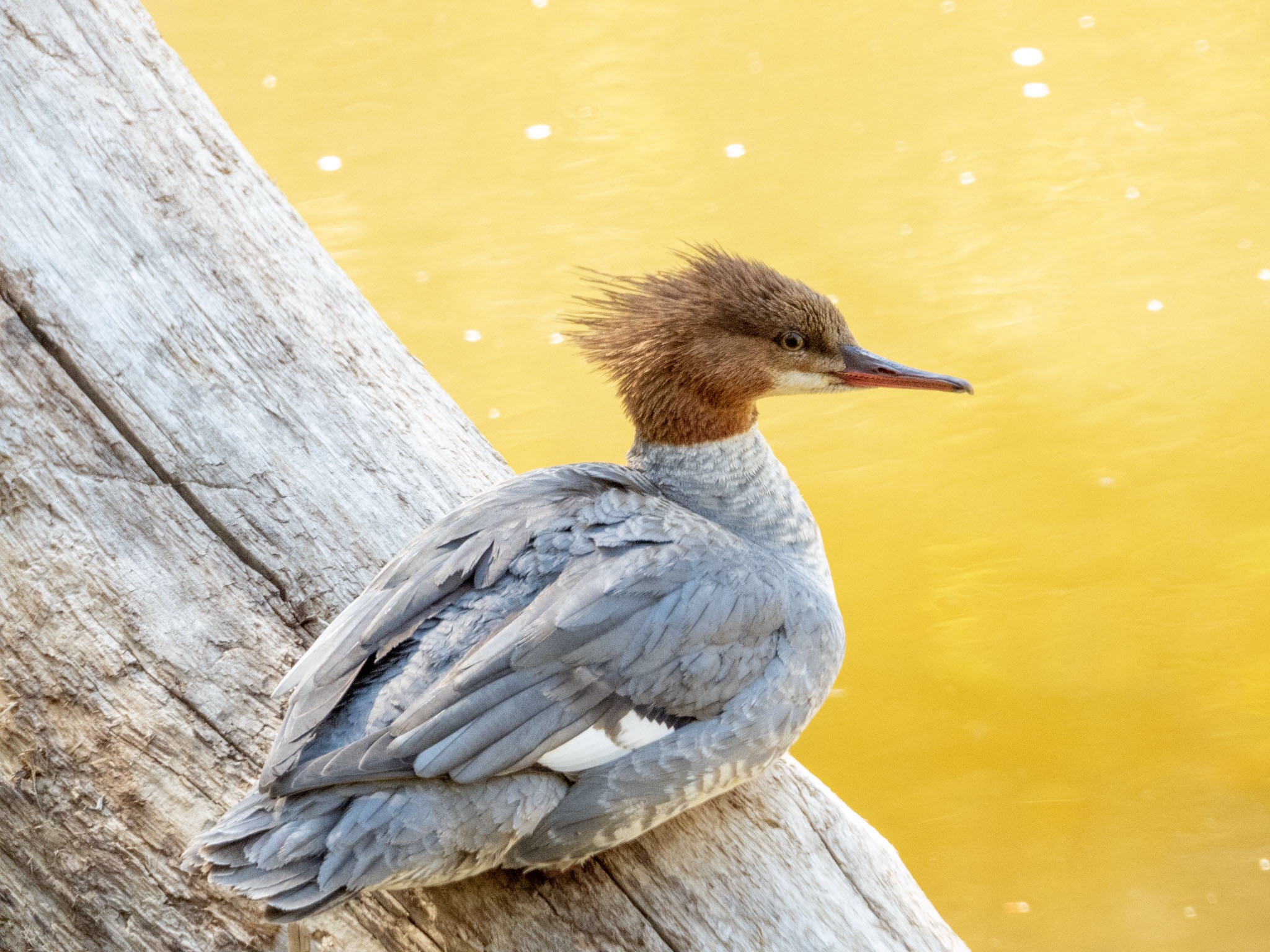
Found this lovely Common Merganser (Mergus merganser) down at the Whitemud Creek yesterday morning. There its was, just chilling on a log with its funky hairdo…, er, “featherdo”? If you look closely at the picture you can see the serrated edge of the bill. Mergansers eat fish so this helps them grip their prey. Sometimes they are referred to as sawbills. The famed naturalist and painter John James Audubon referred to these as Buff-breasted Merganser and Goosander in his 1827 book The Birds of North America. This particular merganser appeared to be alone and is likely either a non-breeding male or a female. Once males reach their breeding age (2 years) their appearance changes a black head and white body. Nonbreeding males and females are tricker to tell apart. None of the information online provided any clues as how to tell them apart. If in doubt, consult your Sibley! According to Sibley, adult nonbreeding males have a white stripe on their wing, which can clearly be seen in this picture. So there you have it folks, it’s a lonesome bachelor. Just a bit downstream there were several merganser couples swimming around romantically in the murky water. I guess this fella either did not get lucky this year or is not ready to commit, not that male merganser commit much as they do not help the female to care for the eggs or young.
Nikon P1000, 868mm @ 35mm, 1/125s, f/5.6, ISO 640.
May the curiosity be with you. This is from “The Birds are Calling” blog (www.thebirdsarecalling.com). Copyright Mario Pineda.
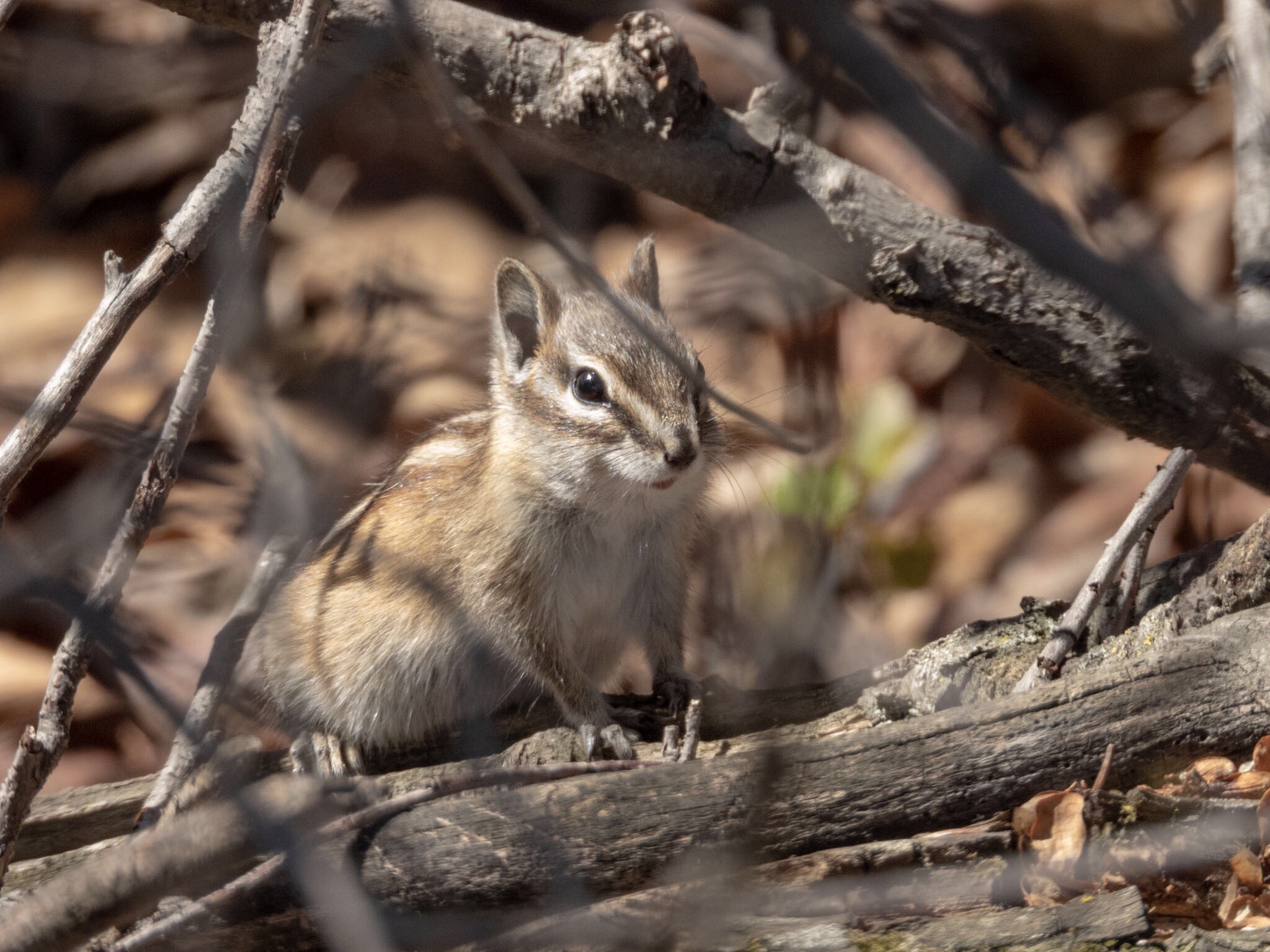
Last Sunday I went on my first bike field trip down to the Whitemud Ravine and through the river valley. It takes a bit of practice to bike, and, at the same time, be ready to bird and take pictures. Where do your keep your binoculars, camera and notebook while biking? You want this gear to be accessible yet out of your way while biking. Hanging the binoculars and camera around your neck does not work so well when on a bike. Still working on the logistics of that, but I am looking forward to doing more bike birding, or nature biking during the summer. The first critter I encountered when I arrived at the ravine was this diminutive Least Chipmunk (Neotamias minimus) scampering through the understory. He was bit apprehensive of the large critter staring at him and making weird noise (that would be me) yet too curious to just run away without checking out what the commotion was about. The Least Chipmunk is the smallest species of chipmunk and the most widespread in North America. These chipmunks are diurnal (primarily active during the daytime), which is probably a good idea considering the nearby Great Horned Owl family.
Nikon P1000, 1000mm @ 35mm, 1/500s, f/5.6, ISO 250. Postprocessed and cropped in Lightroom.
May the curiosity be with you. This is from “The Birds are Calling” blog (www.thebirdsarecalling.com). Copyright Mario Pineda.
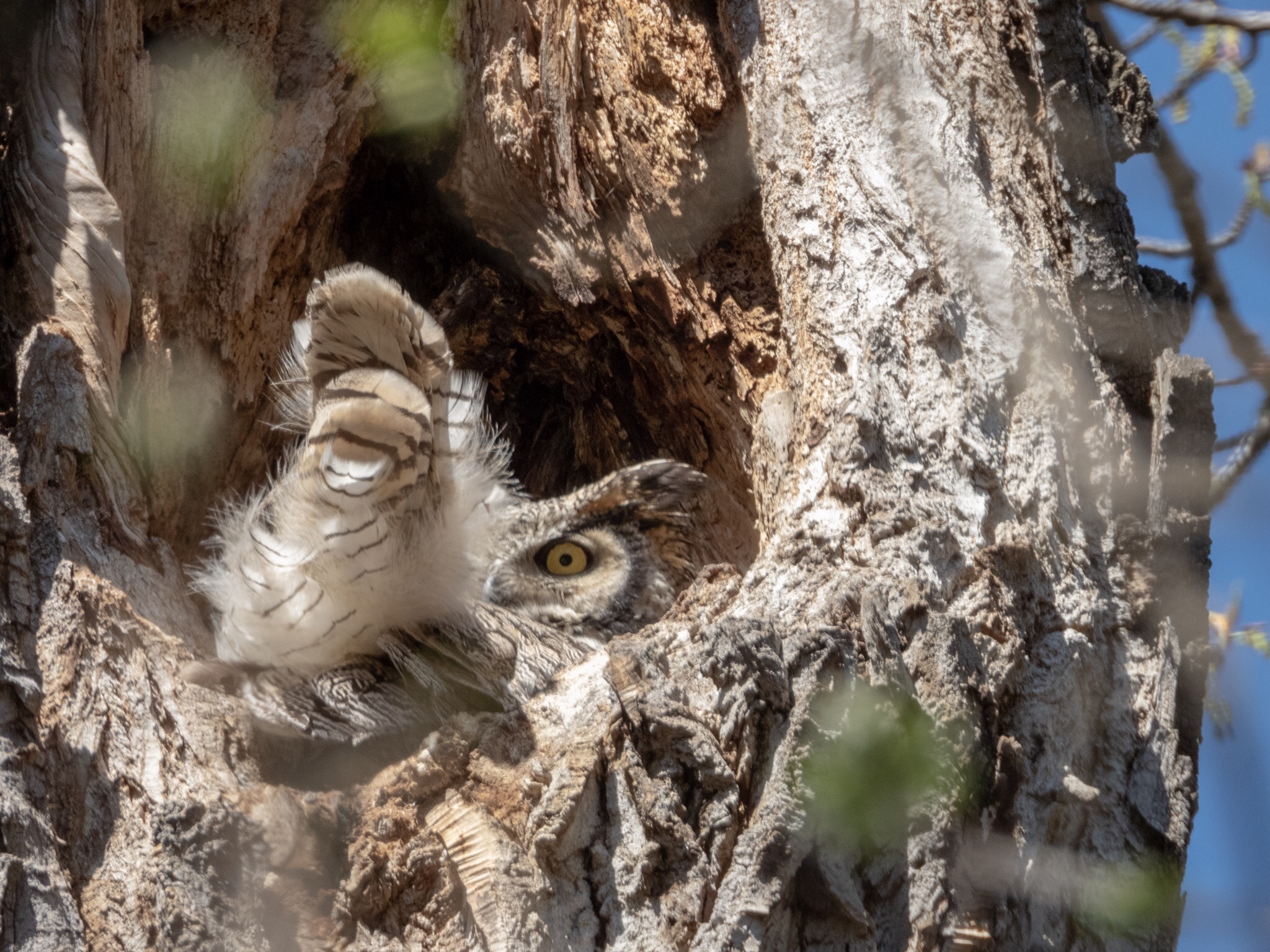
The female Great Horned Owl down at the Whitemud Ravine has now been holed up in her tree for 2 months (that’s 60 days folks). There is reliable intelligence (i.e. picture evidence) showing that her eggs now have hatched and that she has at least two adorable fuzzy chicks. I went down to check out the new family on Mother’s Day (last Sunday). It was a beautiful and sunny spring day and lots of people were out on the trails. The trail was busy with adults and kids walking and biking, dogs taking their owners for a walk and the occasional mandatory fitness buffs. I was surprised to find no other birders or photographers were at the nest site. Mom owl was in her nest, with her tail feathers sticking out. Dad owl was nowhere to be seen but the occasional hooting from inside the forest provided reassurance that he was around. I set up my gear and got to try out my new ultra-portable tripod, the JOBY GorillaPod 3K Video PRO with the Nikon P1000. As my mode of transport was my bike I did not want to pack the full sized tripod. The GorrillaPod performed commendable and had no trouble managing the hefty P1000. Of course a lone photographer with a camera pointed skyward attracts attention and it was not long before I had quite a gathering of spectators squinting against the bright sky trying to figure out what I was photographing. Everyone gets super happy and impressed when they are told about the nest with Great Horned Owl mom and her chicks. Owl mom seemed to be sleeping until an overly excited dog came running down the trail, barking and yapping like its life depended on it. Immediately a big yellow eye appeared in the nest scanning the horizon watchfully. She owl did not move a feather but her ever watchful eye was keeping close tabs on our activities below. I did not see the chicks that day, but I spend a long time at the nest taking photos, watching for the dad (which I never spotted, only heard) and talking to people about the owl family. Today’s photo was shoot through the emerging foliage. Your can see a few fuzzy green blobs of leaves bursting out after a long winter.
Nikon P1000, 1000mm @ 35mm, 1/500s, f/5.6, ISO 200. Postprocessed and cropped in Lightroom.
May the curiosity be with you. This is from “The Birds are Calling” blog (www.thebirdsarecalling.com). Copyright Mario Pineda.
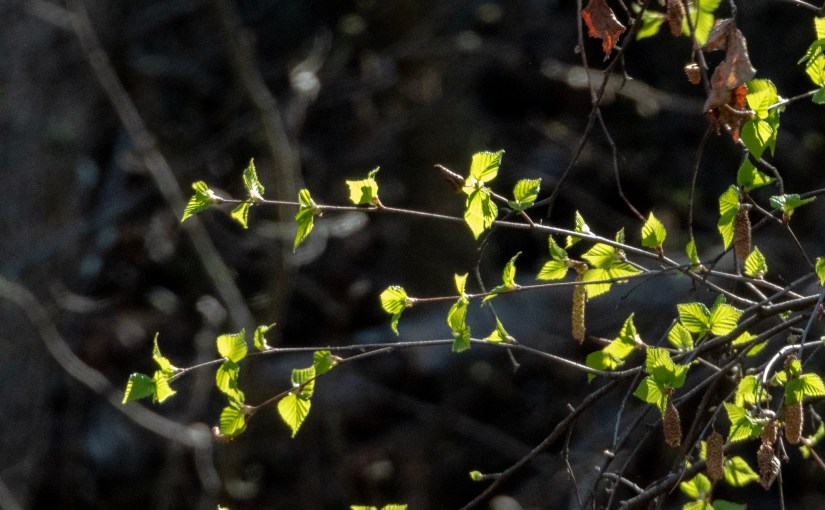
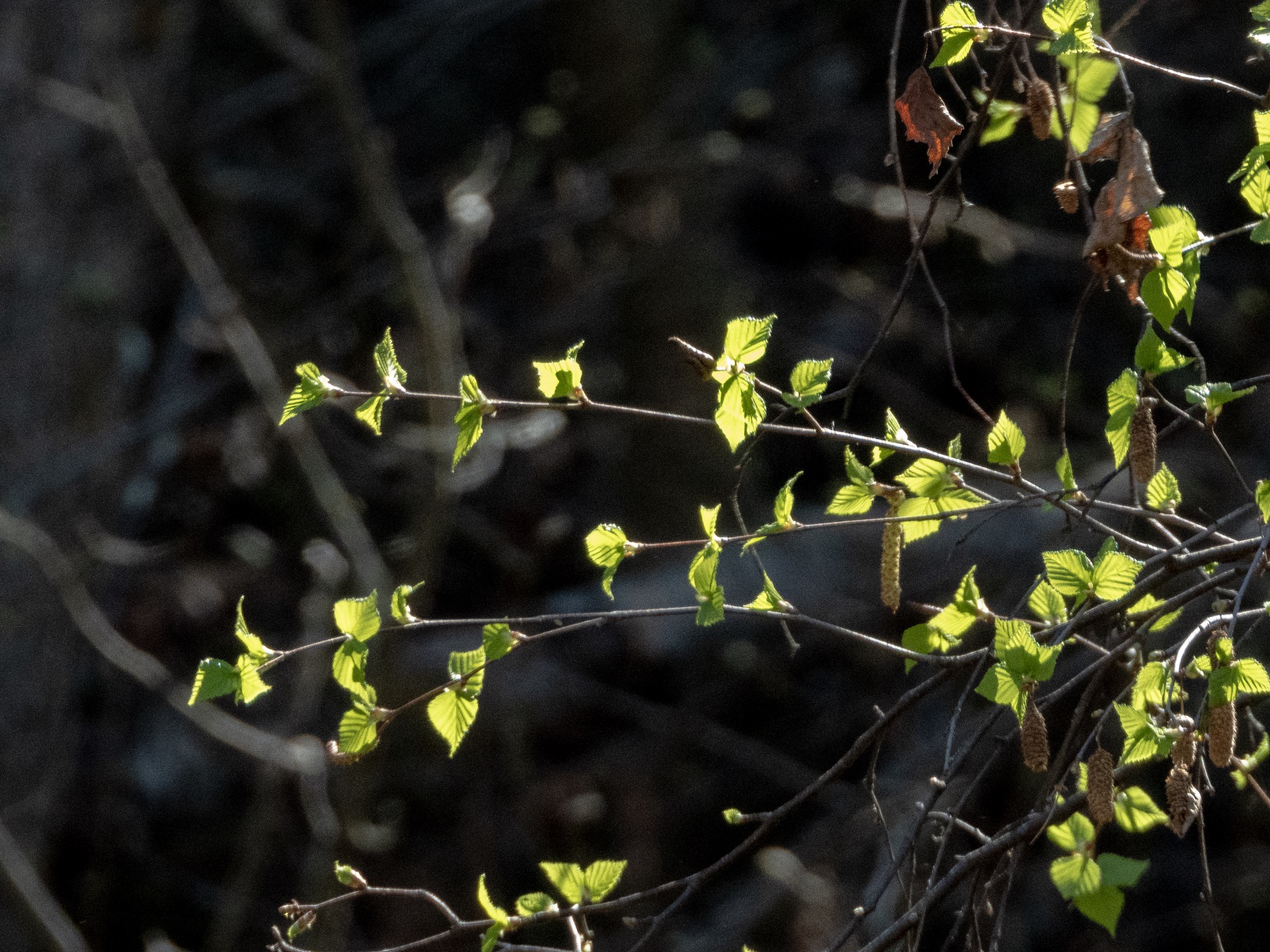
I have to admit there were days when I though this day would never come. The fact that the first day of spring technically was on March 20 almost seems like a cruel joke here in central Alberta. Its mid-May and it has not been until the last few days that we saw the first few green leaves bursting out. If white is the colour of winter, then the colour of budding foliage must be the colour of spring. This is not just any colour of green, it is a light, airy, fresh and rejuvenating color. Artist have a name for this particular hue of green – sap green. Some plain-air painters, in particular, prefer sap green for foliage because it is a warm, yellow green that mixes well for sunlight-infused trees.
Sun-infused objects make great subjects for photography. Today was a gorgeous sunny evening and it would have been criminal to spend it indoors. Said and done. After work I went out to Heritage Wetlands in Sherwood Park for some evening birding around the ponds. All in all, it was a great success with 23 species, including 4 lifers (indicated by *). I also managed to get a bunch of decent pictures of many of the species. After 6 weeks with the Nikon P1000 I am finally starting to feel that I am able to tame this beast of a camera.
Sherwood Park–Heritage Wetlands Park, Edmonton, Alberta, CA 13-May-2019 6:13 PM – 8:10 PM Protocol: Traveling 3.389 kilometer(s) 22 species (+1 other taxa)
Canada Goose (Branta canadensis) 2 American Wigeon (Mareca americana) 2 Mallard (Anas platyrhynchos) 10 Redhead (Aythya americana) 4 Ruddy Duck (Oxyura jamaicensis) 10 Red-necked Grebe (Podiceps grisegena) 3 American Coot (Fulica americana) 4 gull sp. (Larinae sp.) 1 Common Tern (Sterna hirundo) 5 * American White Pelican (Pelecanus erythrorhynchos) 2 Northern Flicker (Colaptes auratus) 2 Eastern Phoebe (Sayornis phoebe) 1 American Crow (Corvus brachyrhynchos) 3 Common Raven (Corvus corax) 2 Purple Martin (Progne subis) 4 * Tree Swallow (Tachycineta bicolor) 4 Black-capped Chickadee (Poecile atricapillus) 2 American Robin (Turdus migratorius) 3 White-crowned Sparrow (Zonotrichia leucophrys) 1 * Song Sparrow (Melospiza melodia) 1 Red-winged Blackbird (Agelaius phoeniceus) 30 Common Grackle (Quiscalus quiscula) 1 * House Sparrow (Passer domesticus) 3
Nikon P1000, 868mm @ 35mm, 1/500s, f/5.6, ISO 360. Postprocessed and cropped in Lightroom.
May the curiosity be with you. This is from “The Birds are Calling” blog (www.thebirdsarecalling.com). Copyright Mario Pineda.
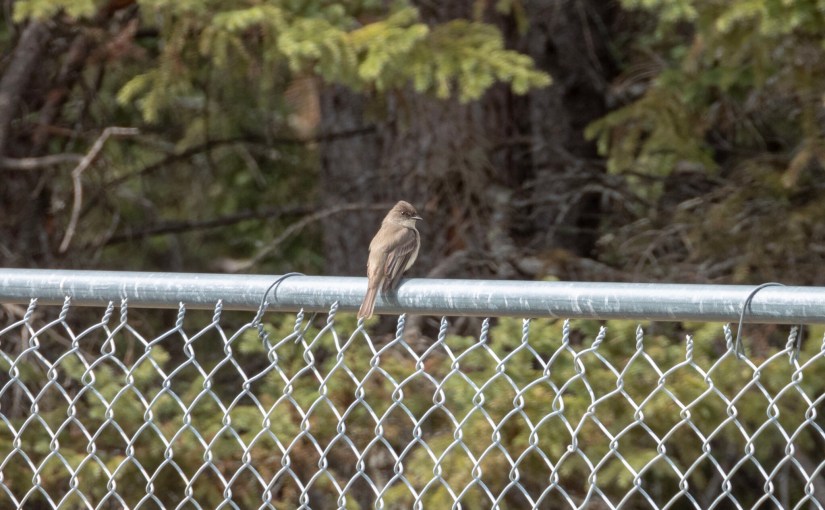
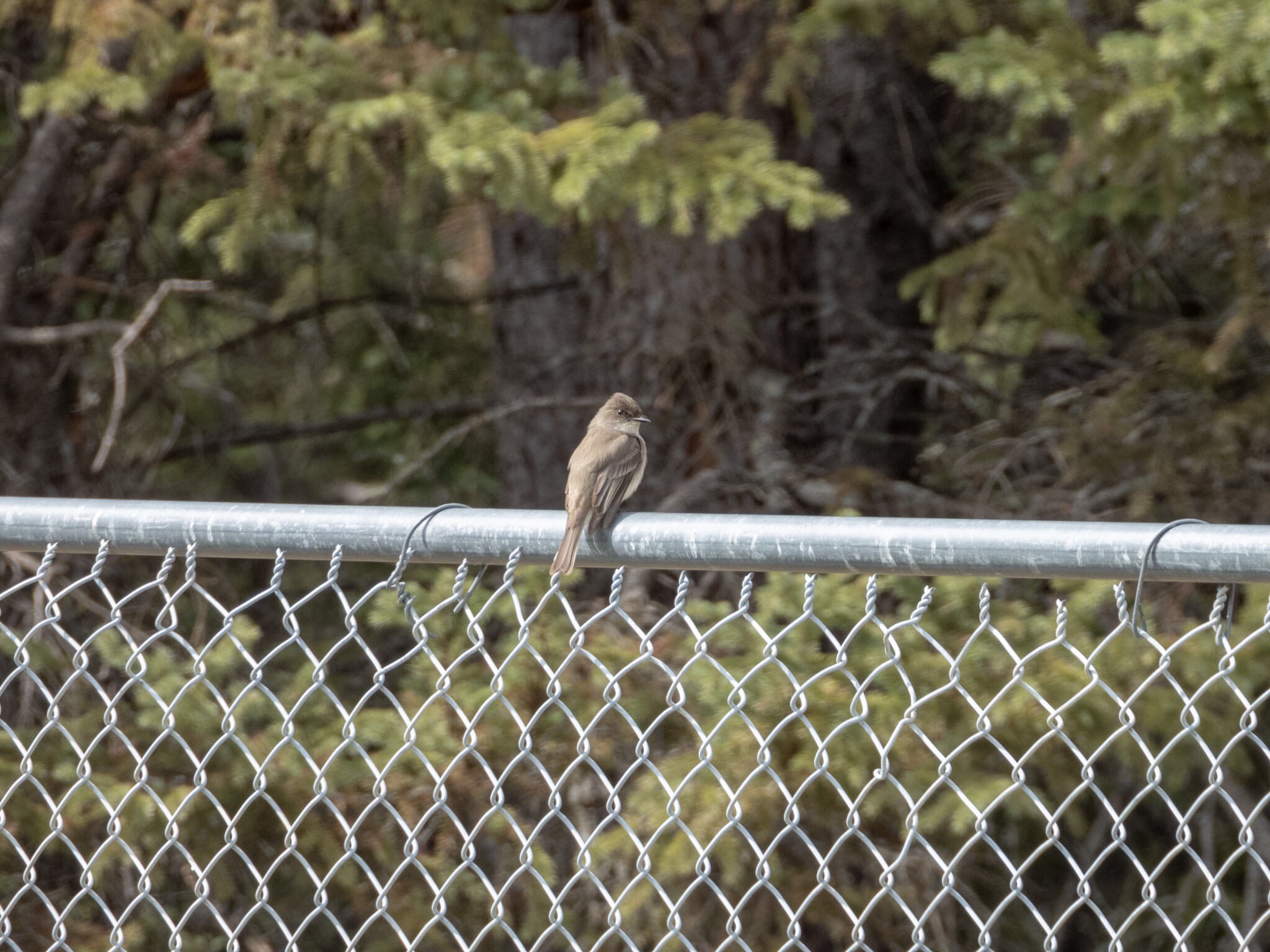
It was not until I saw my first Eastern Phoebe (Sayornis phoebe) that I even knew there was bird with this name. In my “pre-Phoebe” days Phoebe was a synonym for Lisa Kudrow in the sitcom Friends. The Eastern Phoebe is an unassuming small songbird, and if it would not have been hanging out on a fence I would likely have completely missed it. I managed to snap a picture of it before it flew of into the shrubbery. One can clearly see distinct “peaked head” which is due to the bird rising its feathers on top of its head. Based on submitted observations to eBird the Eastern Phoebe is at the eastern margin of its range here in Alberta, with the main part of its distribution being in central and eastern parts of the continent. We saw this bird at the tail end of our central Alberta tour with the Edmonton Nature Club during Global Big Day of Birding on May 4. The phoebe was the first bird we saw as soon as we pulled into the parking lot at Big Knife Provincial Park. It became bird #146 on our life list and #97 on our AB Big Year list.
Nikon P1000, 1100mm @ 35mm, 1/500s, f/5.6, ISO 125Same picture, just postprocessed and cropped in Lightroom
May the curiosity be with you. This is from “The Birds are Calling” blog (www.thebirdsarecalling.com). Copyright Mario Pineda.
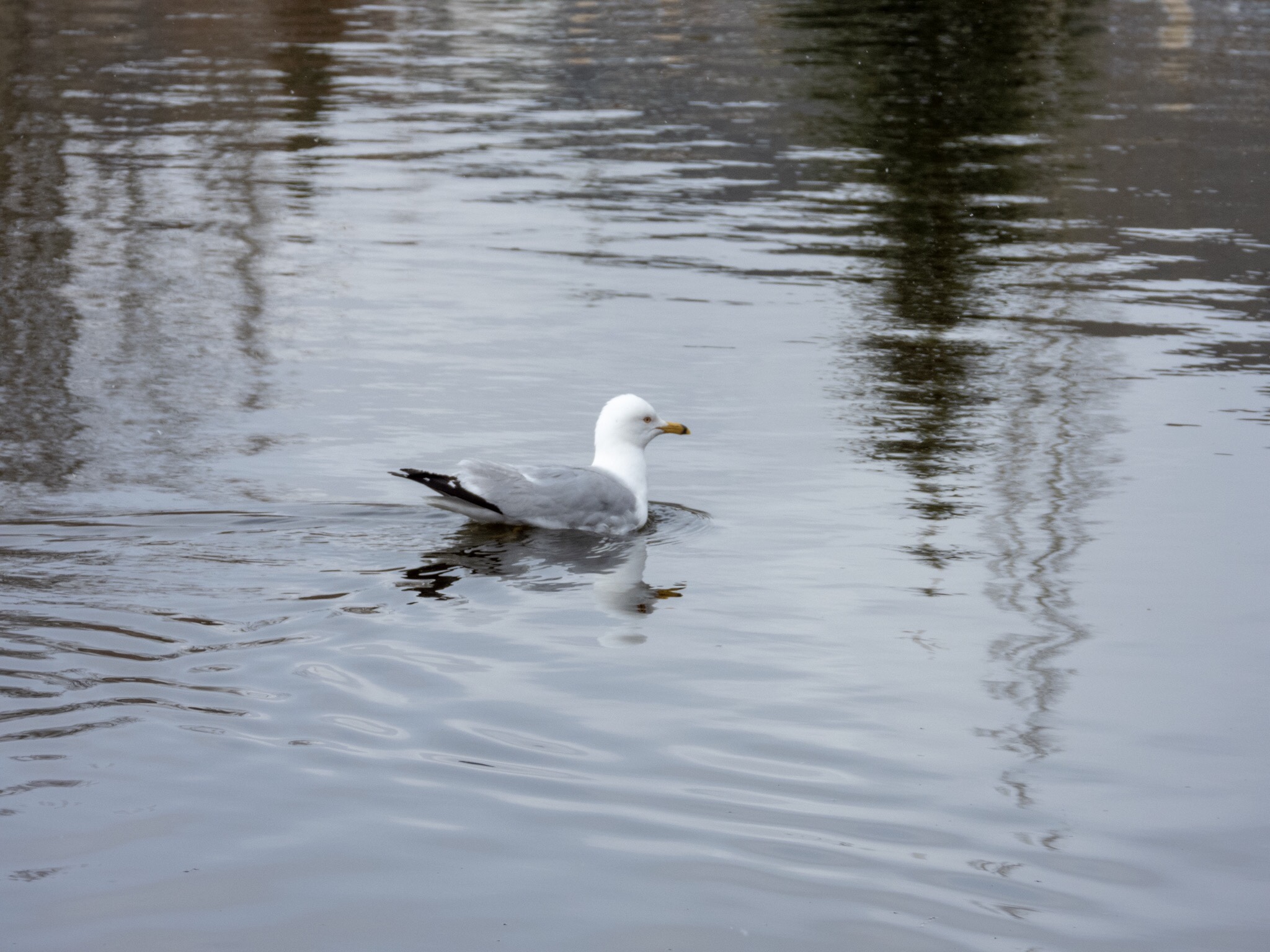
The Ring-billed Gull is perhaps the most ubiquitous gull in these neck of the woods (Alberta, Canada and North America). Sometimes it gets a bad rap as it tends to hang out where people either have food (Granville Island outdoor plaza in Vancouver comes to mind) or where we dispose of our trash (think landfills). It has no problems stealing your hotdog if you are inattentive to your hotdog. These gulls are intelligent, highly social and opportunistic. Any animal with these traits is bound to be successful and deserves our respect and admiration. They are also quite beautiful if you just take your time to look at them. This handsome fella was swimming around in Heritage Wetlands Park in Sherwood Park the other day.
Nikon P1000, 235mm equivalent, 1/800s, f/4.5, ISO 100
May the curiosity be with you. This is from “The Birds are Calling” blog (www.thebirdsarecalling.com). Copyright Mario Pineda.