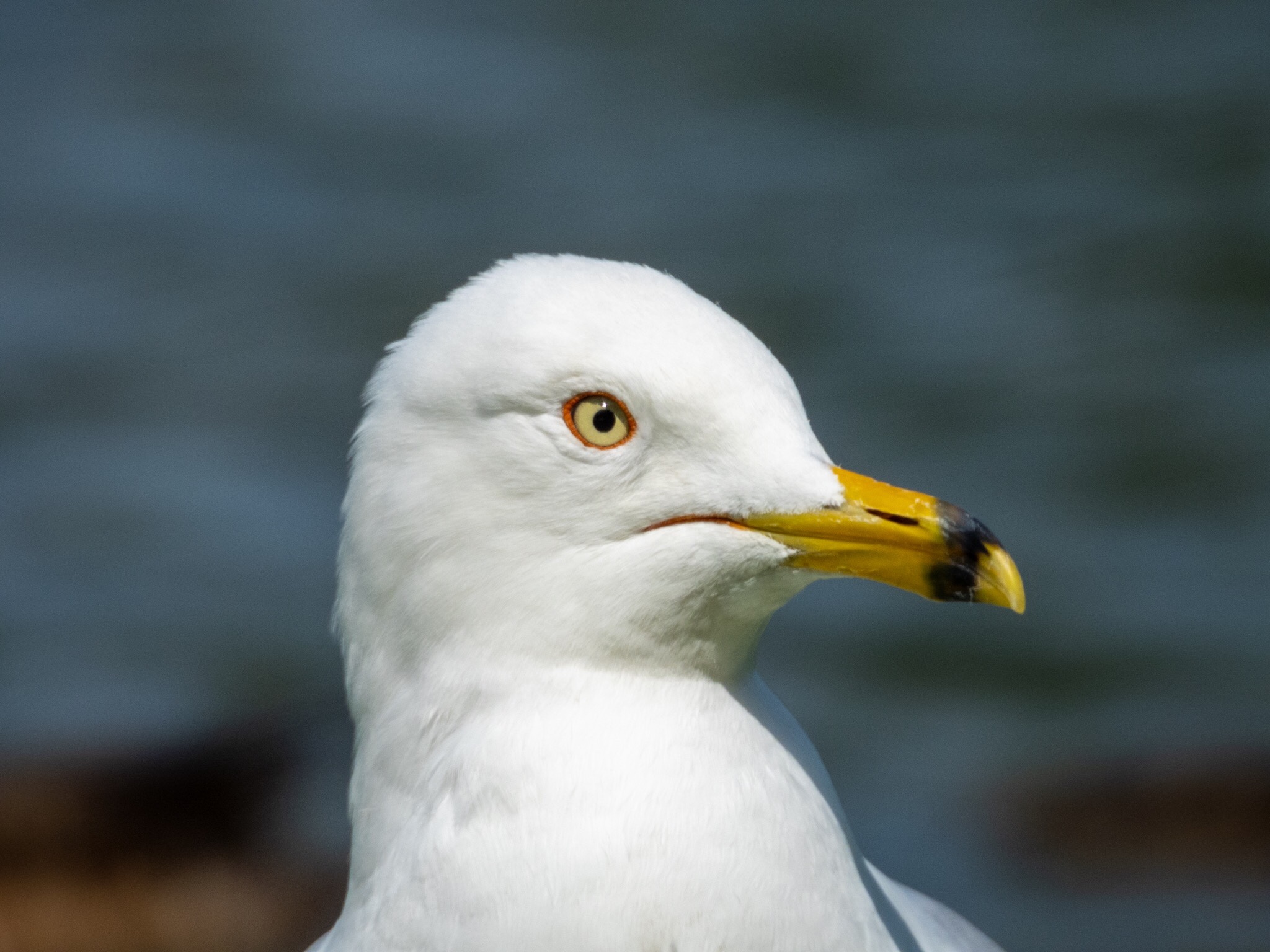
Another hot day and another mid-day birding walk, this time in Hawrelak Park. The Ring-billed Gulls were out in full force. We had a picnic lunch in the shade of a tree and as soon as we were done our eating the gulls arrived for their eating. A pair of them were particularly bold as they walk right up to us and scanned our surrounding looking for a morsel to eat. They did manage to find a piece of bread hiding in the lawn only an arms length away from us. Because they were close and the bright mid-day sun they were easy to photograph. I rarely push my P1000 past the 1000 mm mark as the image quality rapidly deteriorates at longer focal lengths. Today, however, with the bright light, the gulls standing still watching our every move I could not resist pushing the focal length up to 1411 mm for a close up mug shot of one of the fellas. It pretty obvious why they are called Ring-billed Gulls. Whatever your opinion is about these opportunistic omnivores they are quite handsome and clever for someone with a bird brain. Any bird that’s can take advantage of humans to improve their own fortunes deserves our respect.
Ring-billed Gull (Laura delawarensis) at Hawrelak Park, Edmonton. July 14, 2019. Nikon P1000, 1411mm @ 35mm, 1/250s, f/5.6, ISO 100
May the curiosity be with you. This is from “The Birds are Calling” blog (www.thebirdsarecalling.com). Copyright Mario Pineda.
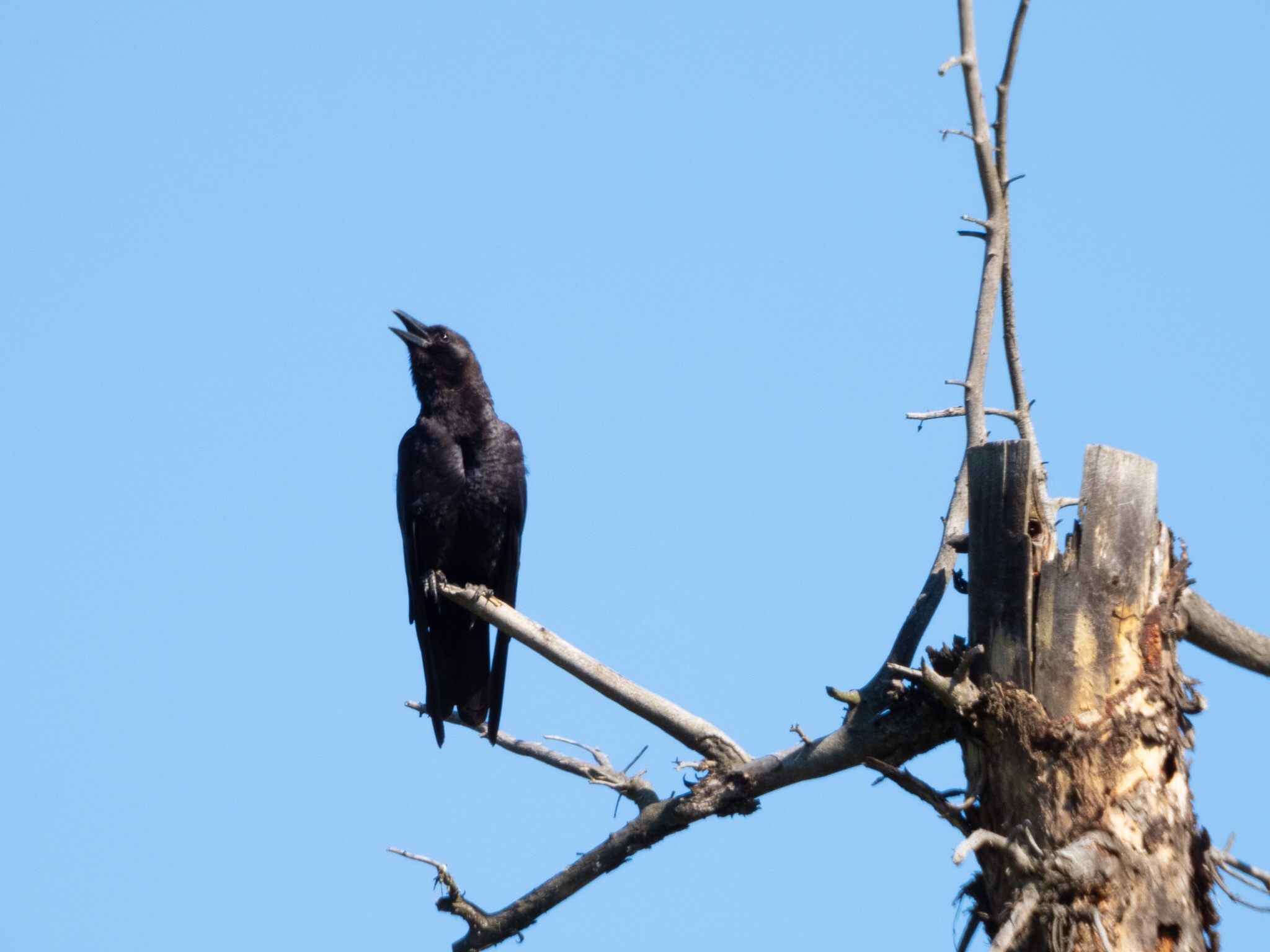
The sun was out today and by noon is was getting quite hot. Going birding at noon on a hot day is probably not the best timing, but sometimes you just have to take what you get. As we were about to enter the shaded forest around the creek I noticed a crow in a tall snag. It was not moving and was perched in peculiar posture. As I zoomed in on it it still did not move. I shot several pictures of it and it was completely frozen, with its head turned up and its bill slightly open. It almost looked as if it was panting, except I was not able to see any panting motion. Once I came home I did some research. My hunch was that it could have been a form of thermoregulation to cool down and avoid overheating. Apparently birds do pant to keep cool and get rid of excess heat. The behaviour is referred to as gulag fluttering where the bird rapidly flaps membranes below the bill to increase evaporative cooling. Looking at videos of gulag fluttering confirms that the beak is partially open the way the crow had it and one can usually see the fluttering in the throat right below the beak. While it is possible that this crow was doing gulag fluttering I did not see the fluttering movement of the skin. I was quite far away though and, at the time, I did not know to look for it.
American Crow (Corvus brachyrhychos) at the Whitemud Ravine, Edmonton. July 13, 2019. Nikon P1000, 1008mm @ 35mm, 1/125s, f/8, ISO 100
May the curiosity be with you. This is from “The Birds are Calling” blog (www.thebirdsarecalling.com). Copyright Mario Pineda.
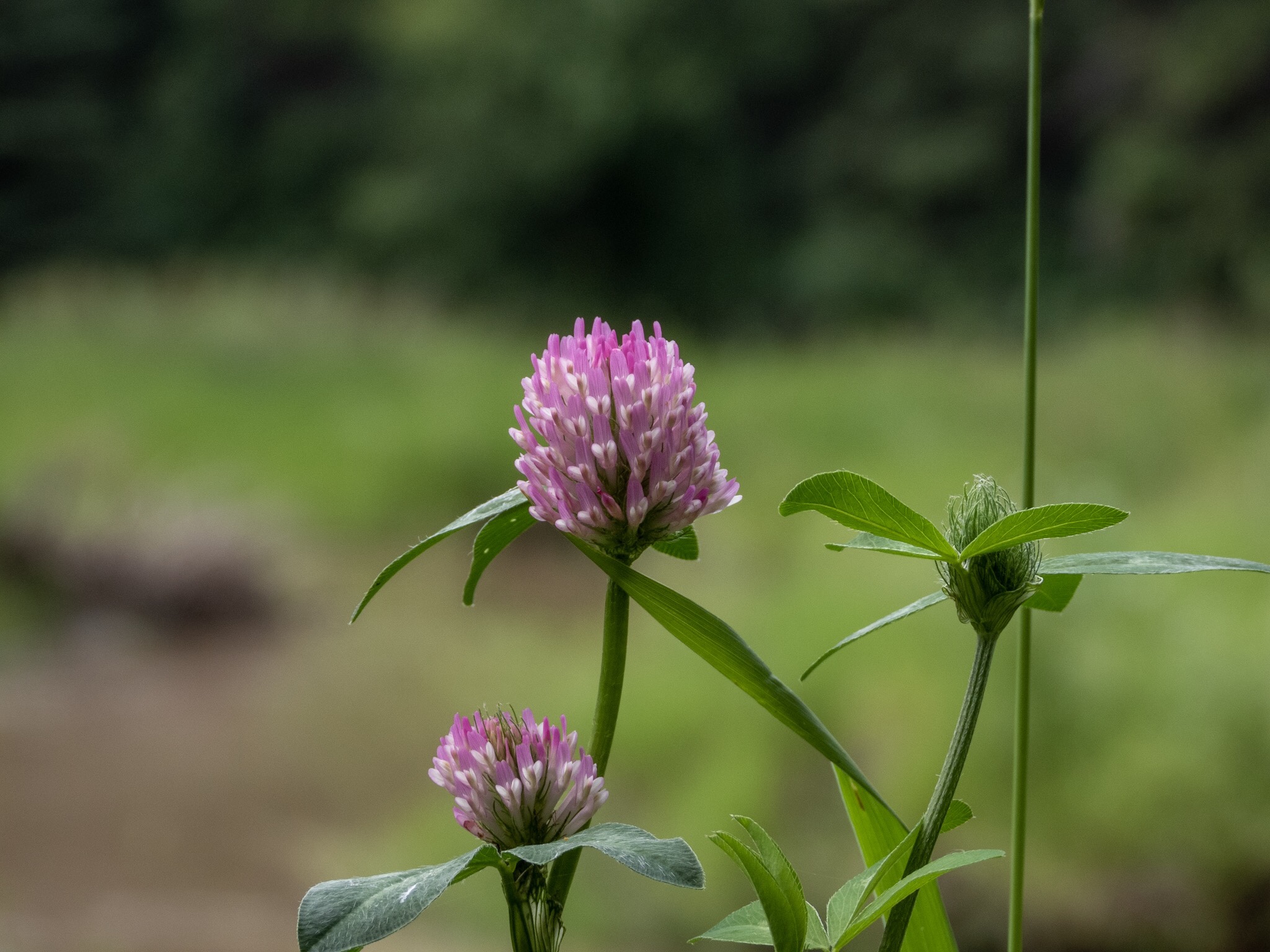
This time of year, middle of summer by central Alberta standards, any open meadow at the Whitemud Ravine has lots of Red Clover (Trifolum pratense) covering it. The bumble bees seem to like it and apparently all parts of the plant are edible, but can cause bloating and apparently should not be eaten in the fall as the plant accumulates alkaloids. It is native to Europe, Western Asia and northwestern Africa, but has been introduced to various part of the world and is now common through the americas. It has a pretty flower and is quite photogenic. This picture was taken on an embankment by the creek, which can sort of be seen in the blurry background.
Red Clover (Trifolium pratense) at the Whitemud Ravine, Edmonton. July 9, 2019. Nikon P1000, 218mm @ 35mm, 1/320s, f/4.5, ISO 100
May the curiosity be with you. This is from “The Birds are Calling” blog (www.thebirdsarecalling.com). Copyright Mario Pineda.
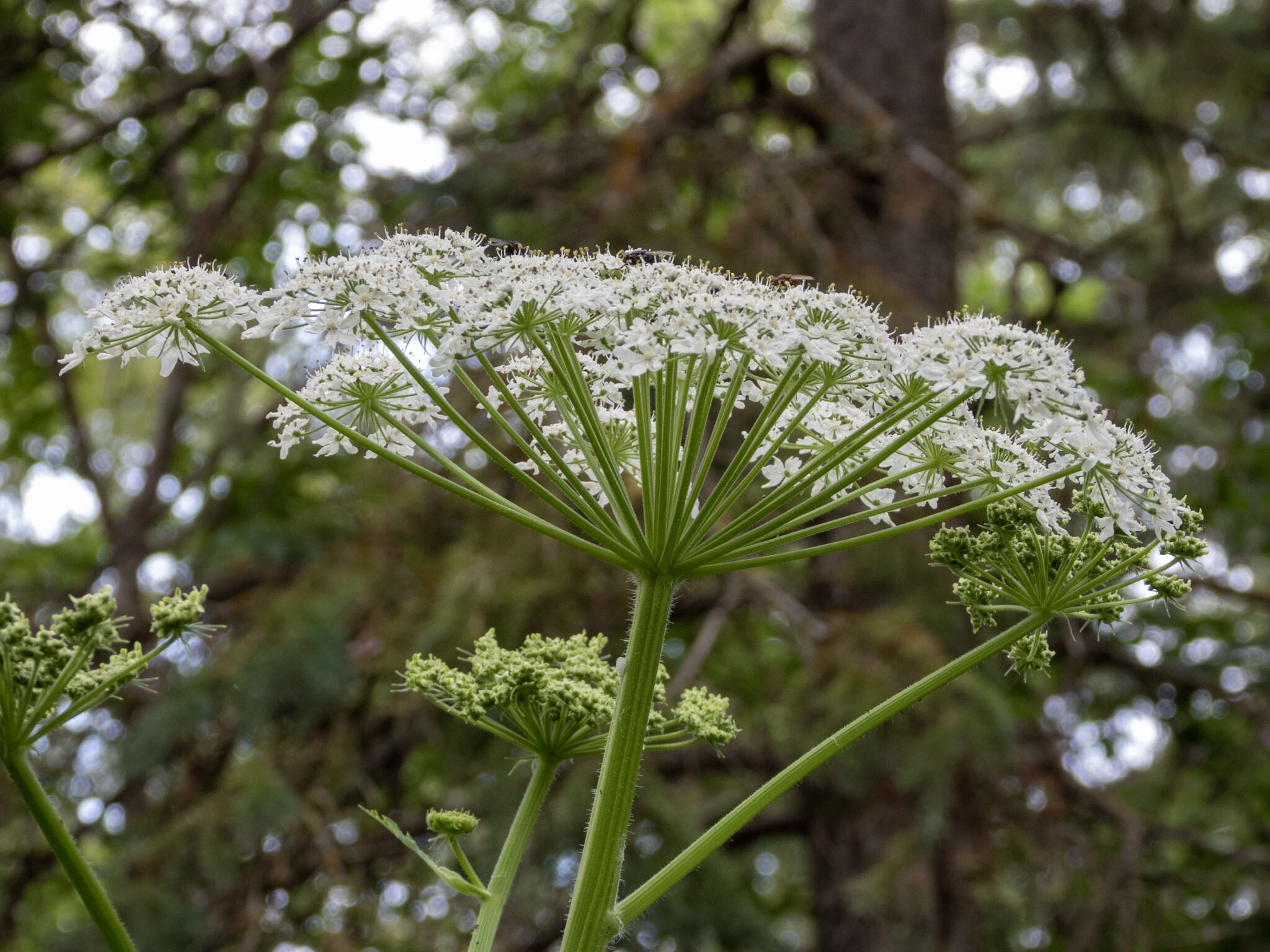
As we were approaching the parking lot at the Savage Centre by the Whitemud Ravine my teen suddenly said “That looks like a Giant Hogweed”. His words made me stop in in my tracks. The statement was remarkable in the first place? How would a run of the mill teen know of Giant Hogweed? Secondly, Giant Hogweed has not been found in Alberta (yet) and finding its here would be unprecedented and very bad news indeed. Giant Hogweed (Heracelum mantegazzianum) is native to Eurasia. It was introduced in North America as an ornamental plant and soon started to throughout the continent. As if that would not be bad enough, the really bad news is that it is that the weed is highly noxious as the sap causes severe burns, blistering and scarring and even blindness if it gets in the eyes. There is plenty of graphic images online of the horrific damage the plant causes to skin (Google it at your own risk). It is considered as one of Canada’s most dangerous plants and has, to date, been found in the Atlantic provinces, Quebec, Ontario and British Columbia. According to Alberta Agriculture and Forestry the plant has not been found in Alberta yet and all plants reported as possible Giant Hogweed in Alberta have turned out to be Cow Parsnip. The plants belong to the same family and look very similar. The Giant Hogweed is sometimes even referred to by the name Cow Parsnip. The key difference between the plants though is that Cow Parsnip is harmless. We learned a lot that afternoon as we carefully inspected and photographed the plant. I still don’t know, however, where my teen learned about the Giant Hogweed.
Cow Parsnip (Heracleum maximum) at the Whitemud Ravine, Edmonton. July 9, 2019. Nikon P1000, 146mm @ 35mm, 1/80s, f/4, ISO 100
May the curiosity be with you. This is from “The Birds are Calling” blog (www.thebirdsarecalling.com). Copyright Mario Pineda.
As we made our way along the Whitemud Creek I was struck by how much everything everything has changed since the last time I was here, about six weeks ago. Edmonton has received lots of rain over the last month and the vegetation has grown like crazy. Locations that had an unobstructed view of the creek six weeks ago are not completely overgrown with dense shrubbery and understory. The Great Horned Owl family (mom, dad and two chicks) have move on and it appears that their cavity now is uninhabited. The Least Chipmunks are out in full fore scurrying around along the creek wherever one turns. We also saw quite a few Dark-eyed Juncos that were quite curious about our activities. Although we spend some time looking (and listening) for Pileated Woodpeckers it was not until we got back to the parking lot that a large individual made a bee-line across the parking lot and into the forest. As soon as it was out of sight it let loose it’s characteristic vocalizations that sounds like a hysterically laughing monkey.
Dark-eyed Junco (Junco hyemalis) at the Whitemud Ravine, Edmonton. July 9, 2019. Nikon P1000, 437mm @ 35mm, 1/250s, f/5, ISO 110
May the curiosity be with you. This is from “The Birds are Calling” blog (www.thebirdsarecalling.com). Copyright Mario Pineda.
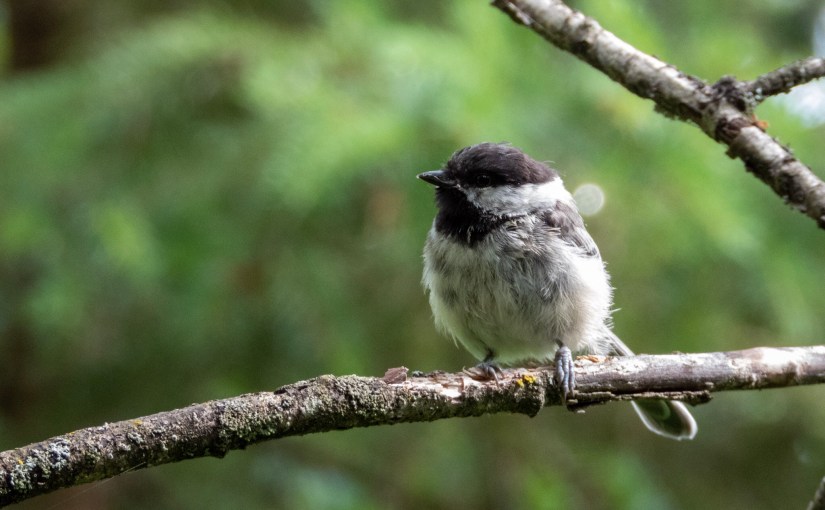
Came across the unusually fuzzy looking Black-capped Chickadee at the MacTaggard Sanctuary the other day. This chickadee looked bedraggled and mottled , like it was having a bad hair feather day. I have my suspicions that’s perhaps it could bear a juvenile, but I have not been able to find any conclusive information supporting my theory. During the winter the chickadees were very abundant and as soon as one would arrive at the trail, the chickadees would greet you, probably hoping for a treat. During the summer the situation is quite different. While one can hear their song in the forest they keep to them selves and rarely accost unsuspecting humans. This disheveled looking chickadee, however, came down to check me out. It did not stray long. Once it was clear that I was not offering any treats it took off and vanished in the shrubbery again.
Fuzzy Black-capped Chickadee (Poecile atricapillus) at the MacTaggard Sanctuary, Edmonton. July 7, 2019. Nikon P1000, 504mm @ 35mm, 1/160s, f/5, ISO 400
May the curiosity be with you. This is from “The Birds are Calling” blog (www.thebirdsarecalling.com). Copyright Mario Pineda.
If your look around the forest after a rain, you might notice that some leaves shed the water readily and appear dry while on other leaves the water pools in droplets. Leaves are covered in a waxy cuticle and the structure and chemistry of the cuticle determines how water on its surface behaves. The stronger the water is repelled from the surface of the leave the larger and more dome shaped the water droplets on the leaves are. It is the cohesive intermolecular forces between the water molecules (specifically the hydrogen bonds between water molecules) that result in surface tension That ultimately form the spherical shape. There is probably a lot more that could be said about this phenomenon but suffice to say that is quite photogenic.
Water droplets on a Prickly Wild Rose (Rosa acicularis) at the MacTaggard Sanctuary, Edmonton. July 7, 2019. Nikon P1000, 134mm @ 35mm, 1/200s, f/4, ISO 100
May the curiosity be with you. This is from “The Birds are Calling” blog (www.thebirdsarecalling.com). Copyright Mario Pineda.
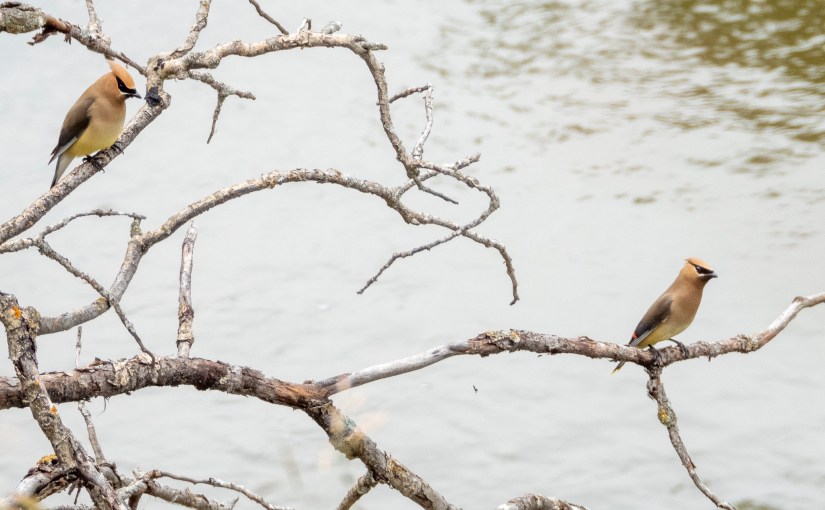
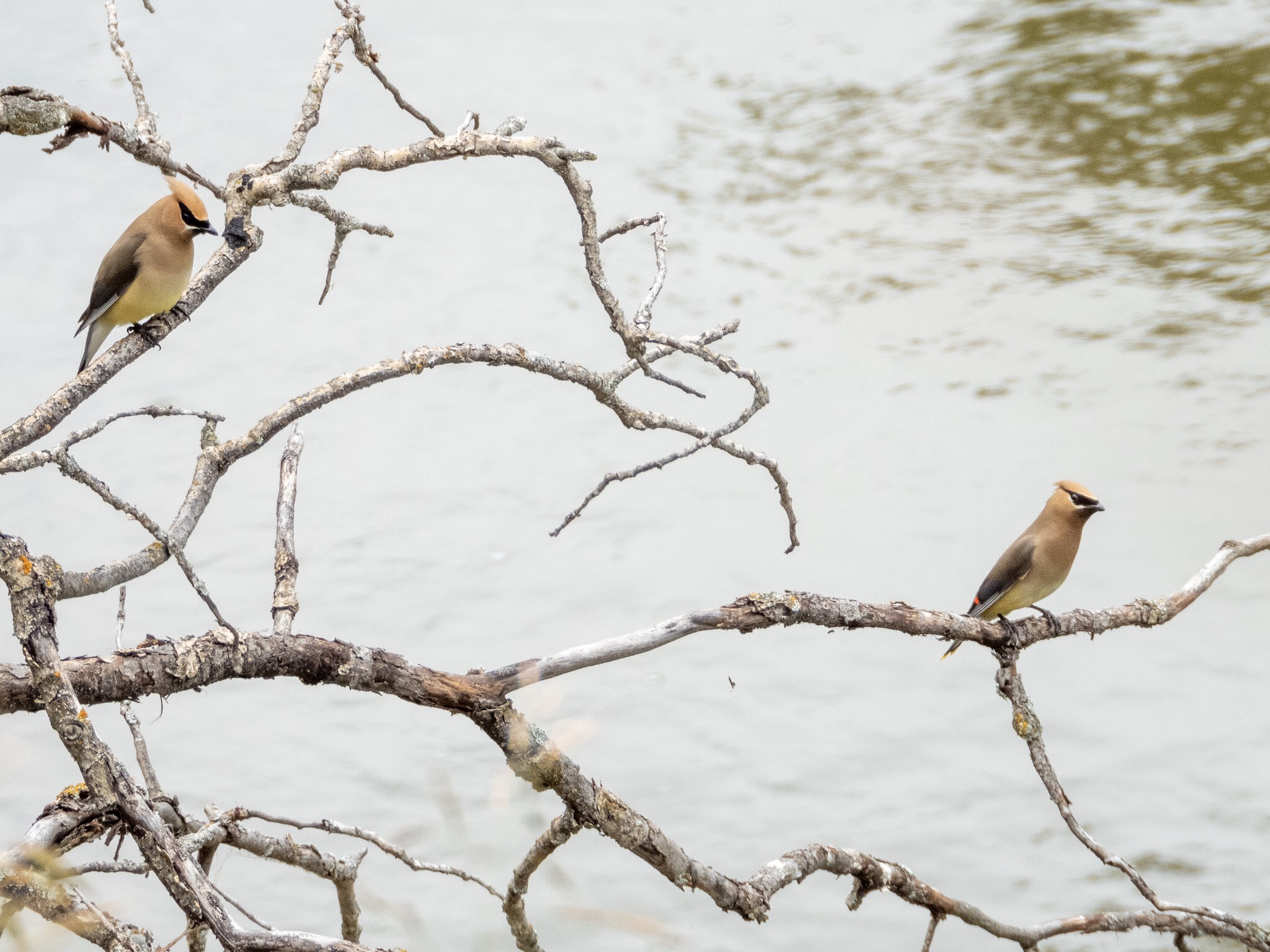
I had dropped off my teen at practice, there was a break in the never ending rain and I had 90 minutes to myself. Dark clouds loomed at the horizon so there was no time to waste. I raced as fast as it was legal to the nearest birding spot, which happened to be the MacTaggard Sanctuary. The MacTaggard sancturary straddles the Whitemud Creek south of 23rd avenue. I have been here once before, about three weeks ago at which point I was almost eaten alive by the mosquitoes. (See Post No. 078) With the copious amounts of rain we have received over the last few weeks the mosquito situation has not improved. With the trail covered in mud and mushrooms sprouting all around in the soggy leaf litter I set out with my sights set on the oxbow lake situated in sanctuary (See Post No. 075 for an explanation of what an oxbow lake is). I never made it to the lake. First I got sidetracked by a fleeting glimpse of an American Goldfinch. I spend some time trying to get a better look at it but to no avail. Then I spotted a Pileated Woodpecker perched high up on a dead tree. As I was watching it another one landed on the same tree. You simply do not walk away from a duet of Pileated Woodpeckers, so I spend quite some time checking out these cool fellas. They were flying too and fro between trees and seemed to have a jolly good time together. Once I decided to move on something in the corner of my eye caught my attention as I hiked over a bluff overlooking the creek. I stopped and scanned the creek and the dense riparian vegetation below me. It took a while, but then I saw them. Five magnificent and regal Cedar Waxwings were playing hide and seek in the thick riparian vegetation with an occasional foray out into the open over the creek. Cedar Waxwings have been on my birding wanna-see list ever since the beginning of the year. Way back on March 29 my very first Project 366 post was about Bohemian Waxwings (See Post No. 001). I ended seeing lots of Bohemian Waxwings along the Whitemud Creek as the winter petered out. The almost identical Cedar Waxwings, however, evaded me.., until today. The two species look almost identical and the physical differences between them are subtle. While Bohemian Waxwings are bigger and chunkier than Cedar Waxwings, for the uninitiated noob (like me) that does not really help. The key distinguishing feature for me was the orange under-tail of the Bohemian Waxwings versus the white under-tail of Cedar Waxwings. Today’s Cedar Waxwings brings my AB Big Year total to 115 and my Life list to 163. The last month has been a bit of a dry spell in terms of spotting new species as the birding has been a bit of hiatus in favour of a focus on bison. Hopefully the Cedar Waxwings are a sign of being back in the swing of things.
Cedar Waxwings (Bombycilla cedrorum) at the MacTaggard Sanctuary, Edmonton. July 7, 2019. Nikon P1000, 538mm @ 35mm, 1/250s, f/5, ISO 125
May the curiosity be with you. This is from “The Birds are Calling” blog (www.thebirdsarecalling.com). Copyright Mario Pineda.
Instead of a nature walk we went on a bike ride today in the Edmonton River Valley. Although no birding was part of the plan I did pack my binoculars and camera in the paniers, just in case we would bump into anything interesting. Sure enough, as we were approaching Quesnell Bridge I spotted these large white birds in the water along the opposite shore. There were not too many options as to what it could be. Five Americans White Pelicans were frolicking in the murky waters of the river. As we were crossing the bridge we got a closer look and I managed to take a few pictures from my high vantage point. This is the first time I have seen pelicans in the river and I guess, for a water bird, the river is probably as good of a place to hang out as any other body of water. Right along the shore where the pelicans were there were some people fishing. Perhaps the fishermen and the pelicans chosen the same location because it is a good fishing spot.
American White Pelicans by the Quesnell Bridge in the North Saskatchewan River in Edmonton. July 6, 2019. Nikon P1000, 1008mm @ 35mm, 1/500s, f/5.6, ISO 220
May the curiosity be with you. This is from “The Birds are Calling” blog (www.thebirdsarecalling.com). Copyright Mario Pineda.
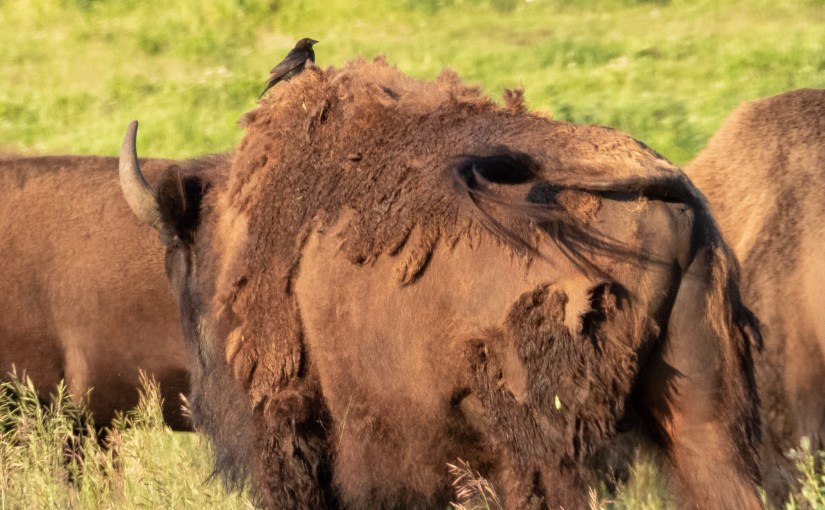
Intermingled with the massive bison were these small brown birds that were mostly hiding in the tall grass and occasionally emerging and landing on the back of a bison before diving down into the grass again. These were Brown-headed Cowbirds (Molothrus ater), a species commonly associated with grazing animals. The tend to look for insects and seeds to eat on the ground stirred up by the larger animal. Before European settlement, the Brown-headed Cowbird followed bison herds across the plains. Because of their nomadic lifestyle they engage in brood parasitism laying their eggs in the nest of unsuspecting birds of other species. These days the species is commonly seen around domesticated livestock and at suburban bird feeders. At Elk Island, however, they still live their traditional lifestyle in close association with bison herds.
Brown-headed Cowbird (Molothrus ater) going for a ride on a Plains Bison at the Bison Loop at Elk Island National Park. June 30, 2019. Nikon P1000, 756mm @ 35mm, 1/500s, f/5.6, ISO 280
May the curiosity be with you. This is from “The Birds are Calling” blog (www.thebirdsarecalling.com). Copyright Mario Pineda.