Project 366 – Post No. 337 – Lonesome Pileated Woodpecker

What is Project 366? Read more here.

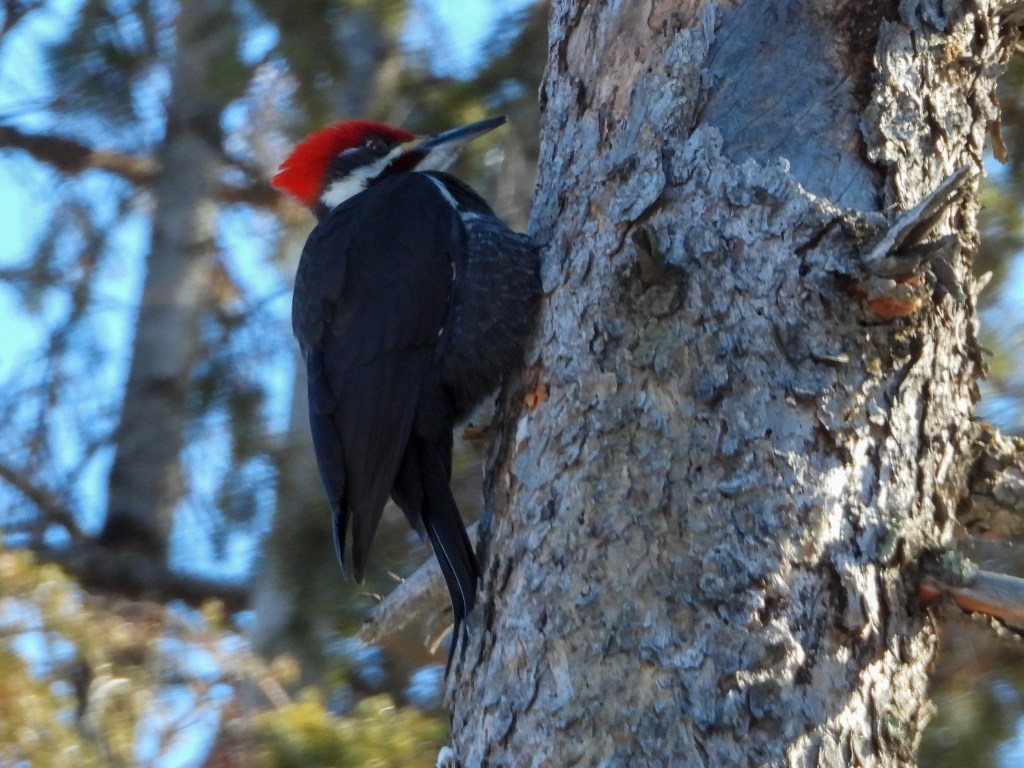
It was clear and sunny day and the forest was full of bird song. The spring was definitely in the air at the Grey Nun’s Spruce Woodlot on this Sunday. My ear caught the distance reverberating and hollow sound of a drumming Pileated Woodpecker. The sound was unmistakable and the only creature in these neck of the woods capable of producing it is the charismatic Pileated Woodpecker. I decided to try track down the woodpecker by following the drumming sound. The woodpecker was not hard to find as it was perched high up on a tree stump in a clearing. Every few minutes it got to work drumming up a loud hollow sound that traveled far through the forest. It clearly was not foraging as there was no damage to the tree. It looked like it was using the sound to communicate. What was it trying to say? Was it lonesome and looking for company or was it telling other Pileated Woodpeckers in the vicinity to stay away?
May the curiosity be with you. This is from “The Birds are Calling” blog (www.thebirdsarecalling.com). Copyright Mario Pineda.
Project 366 – Post No. 336 – Mom and pops Great Horned Owls are back

What is Project 366? Read more here.

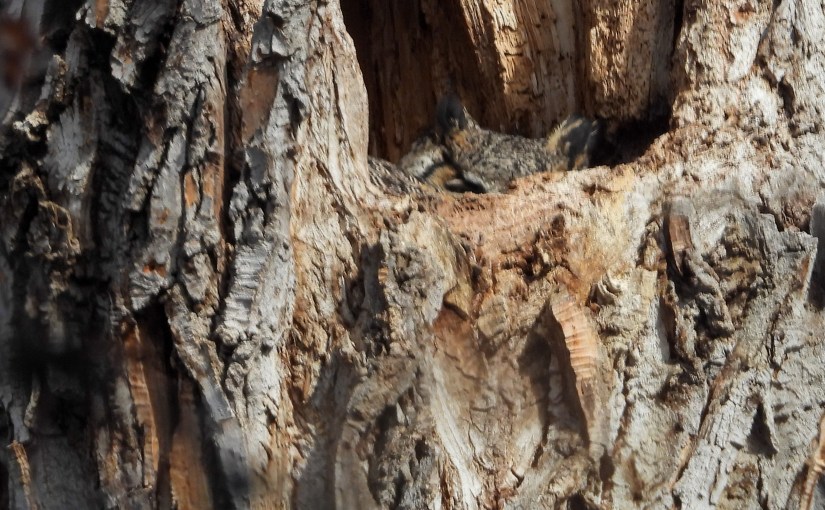
March 1 and mom and pops Great Horned owl team is back in their cavernous tree down in the Whitemud Ravine. This couple are a bit of celebrities and people flock to their tree to watch them snooze. Last year they raised a pair of fluffy chicks using the same nesting location. I wrote several posts about the event: here, here, here and here. Assuming there female is sitting on eggs (or will be shortly) based on last year’s time line we are probably not going to see any owlets until end of April or beginning of May at least. So we are in for a bit of a waiting game.

May the curiosity be with you. This is from “The Birds are Calling” blog (www.thebirdsarecalling.com). Copyright Mario Pineda.
Project 366 – Post No. 335 – Longer days

What is Project 366? Read more here.

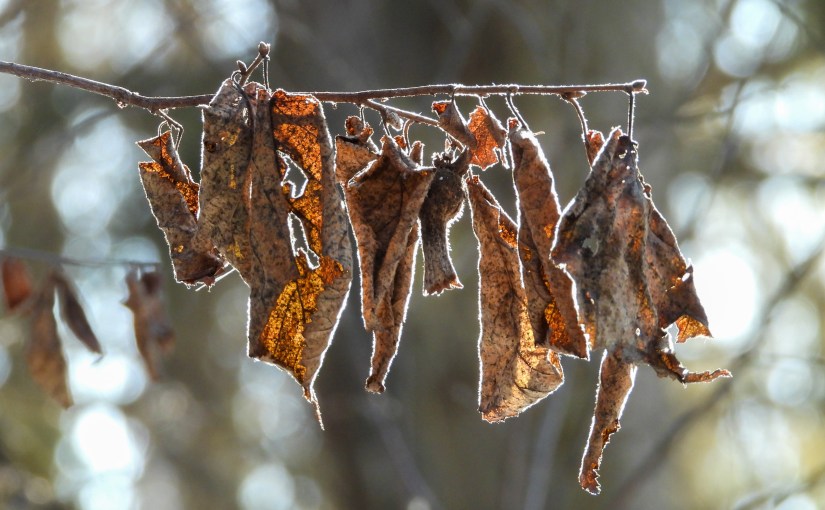
The number of hours of daylight is not noticeably longer than just a few weeks ago. Currently the length of time between sunrise and sunset is increasing by about 4 minutes and 13 seconds every day. By the end of the month the days will be 4 minutes and 14 minutes longer every day. The season changes are happening fast now. The changes are also evident in the behavior of the local birds with more song, starting to prep nests and more social interactions in species that normally are solitary. Breeding season is definitely coming up. It will be interesting to see how long it will take before the first returning migrant show up…, and who it will be.

May the curiosity be with you. This is from “The Birds are Calling” blog (www.thebirdsarecalling.com). Copyright Mario Pineda.
Project 366 – Post No. 334 – Downy Woodpecker tail

What is Project 366? Read more here.

I came across this female Downy Woodpecker that was thoroughly enjoying the sunflower seeds someone had left on a stump at the Grey Nun Spruce Woodlot in St. Albert. I managed to snap the following picture that nicely illustrates why woodpeckers have stiff tail feathers. Woodpeckers commonly use their tails for support when their are climbing or working on trees. This behavior is possible as a result of adaptations such as pointed, strong and rigid tail feathers and larger and stronger tail bone, lower vertebrae and the tail’s supporting muscles in comparison to other birds.

May the curiosity be with you. This is from “The Birds are Calling” blog (www.thebirdsarecalling.com). Copyright Mario Pineda.

Project 366 – Post No. 307 – Deciduous pioneers

What is Project 366? Read more here.

Along the Whitemud Creek old coniferous forest tends to grow at the bottom of the ravine along the creek while deciduous forest tends to cover bank slopes. The deciduous stands consists of trembling aspen and balsam poplar trees along with white birch. These species are typically considered “pioneer” deciduous species, because they can establish and grow where there are not already many other trees. Coniferous trees, such as White spruce, on the other hand, are “shade tolerant”, and can survive and grow under a canopy of aspen/poplar. Eventually the spruce exceed the aspen and poplar trees in height and they become dominant in the upper canopy.


May the curiosity be with you. This is from “The Birds are Calling” blog (www.thebirdsarecalling.com). Copyright Mario Pineda.

Project 366 – Post No. 306 – Balmy winter land

What is Project 366? Read more here.

While winter is still holding our neck of the woods in a solid grip the temperatures have climbed up to more balmy temperatures after a few weeks of deep freeze. It is interesting to notice how a few week weeks of sub -30 C temperatures make the -20 C to -10 C range feel like spring. It appears the the birds feel the same way as they certainly seem to be more active. The snow is still covering the forest in a thick blanket but it is nice when birding is not a physically painful experience.

May the curiosity be with you. This is from “The Birds are Calling” blog (www.thebirdsarecalling.com). Copyright Mario Pineda.
Project 366 – Post No. 305 – Pigeons at the grain terminal

What is Project 366? Read more here.

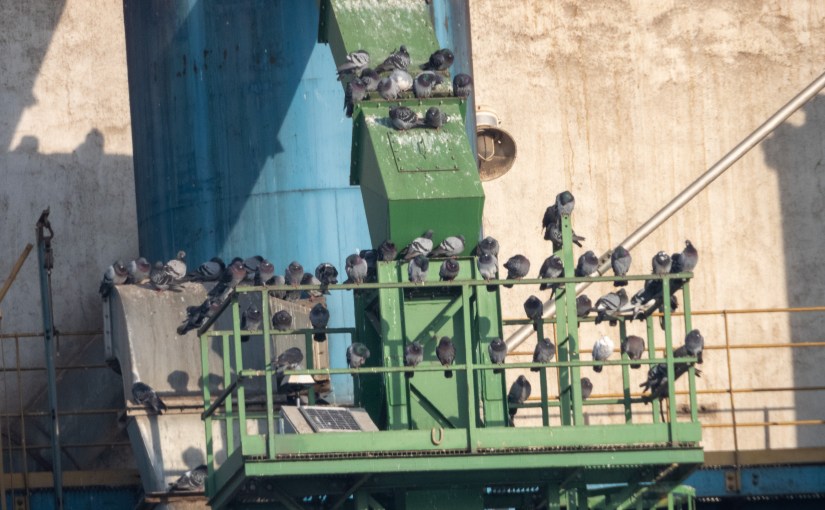
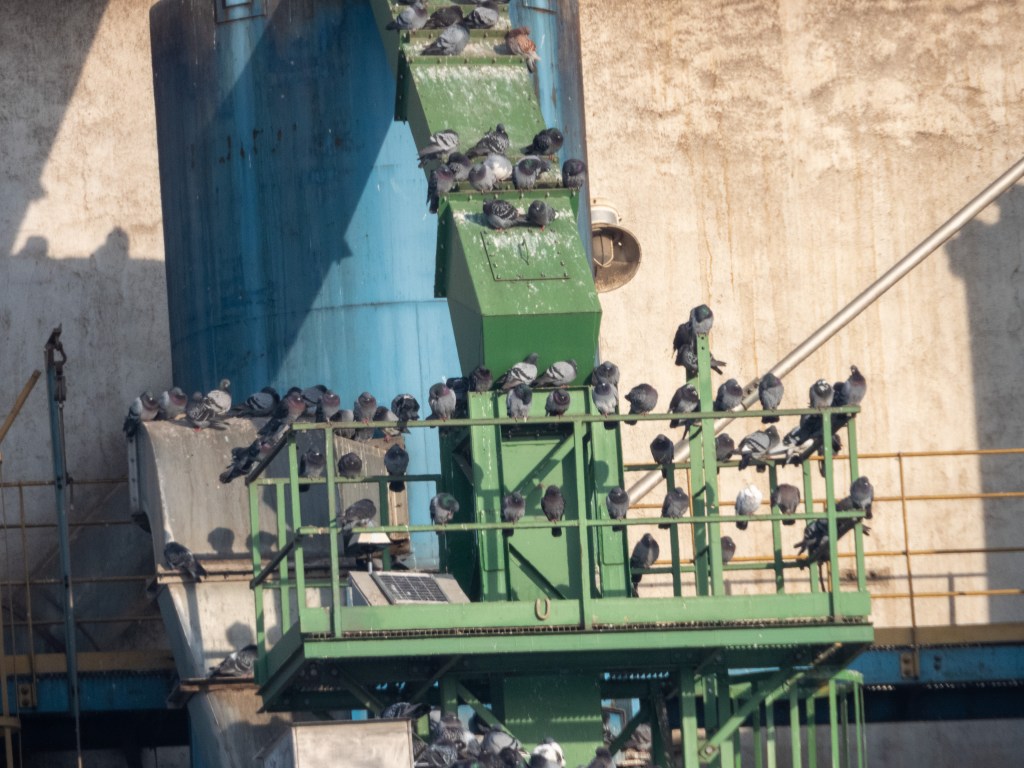
In the northern part of Edmonton, in an industrial area along a major highway there is a large grain terminal. Pigeons flock to the site as the spilled grain is an easy source of food, particularly in the winter. On any given day there are thousands of pigeons roosting on the beams and ducting of the large terminal building. As a result of the abundant food source (not the grain, but the pigeons) the site attracts birds of prey, such as gyrfalcon and bald eagles. I have been wanting to visit the grain terminal for a long time but it was not until this week that I managed to make it. It was a sunny and mild day and sure enough the pigeons were there. I spend most of my lunch hour carefully scanning the pigeons and the duct work on the grain terminal in the hopes of spotting a raptor, it with no luck. The only action I saw were kanoodling pigeons.

May the curiosity be with you. This is from “The Birds are Calling” blog (www.thebirdsarecalling.com). Copyright Mario Pineda.

Project 366 – Post No. 304 – Gutsy squirrel

What is Project 366? Read more here.

The view of the Great Horned owl from the boardwalk was perfect. After a while of admiring the Great Horned Owl basking in the sun I noticed a Red Squirrel sitting the snow covered railing. Considering the apex predator perching in the tree right across the creek it seemed like an ill-advised choice for a piece of fresh warm meat…, I mean squirrel to strut around right below the owl. I find it unlikely that the squirrel would be unaware of the owl. It is also possible that the squirrel is well aware of the owls diurnal habit of snoozing and that the tables turns after dark.

May the curiosity be with you. This is from “The Birds are Calling” blog (www.thebirdsarecalling.com). Copyright Mario Pineda.
Project 366 – Post No. 304 – A duo of Pileated Woodpeckers

What is Project 366? Read more here.

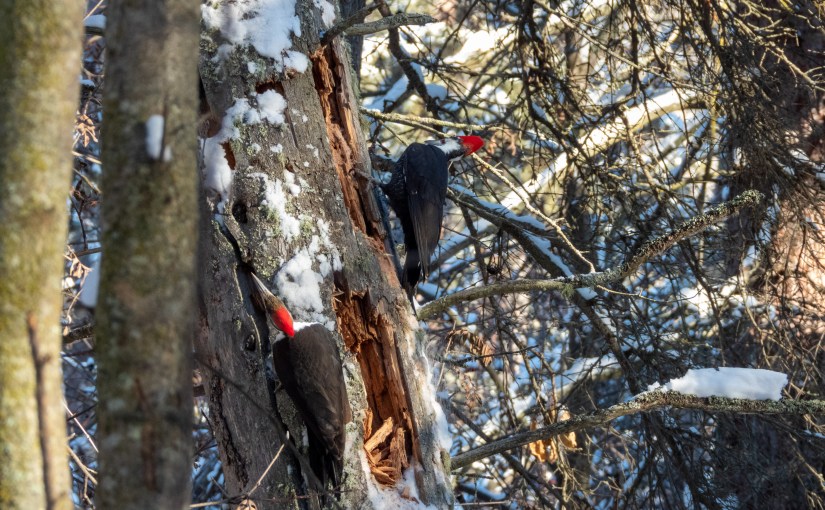
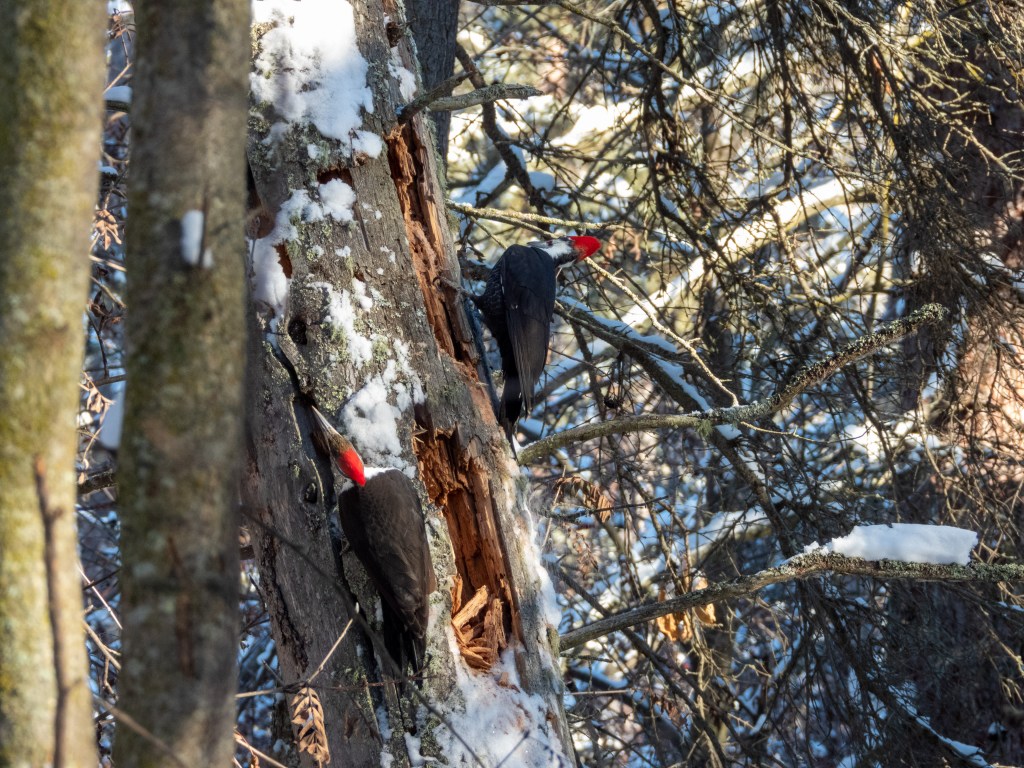
Pileated Woodpeckers hold a special place in my heart. Many years ago, long before I got into birding a friend of mine was sharing stories about his encounters with these magnificent birds. He was not a birder, he just had the fortune of seemingly bumping into Pileated Woodpeckers on a regular basis. I on the other hand, had no such luck. Through his stories and my lack of ability to spot Pileated Woodpeckers these birds became a legend. A seemingly unattainable mythical creature that continuously eluded me. It was only years later that I spotted my first Pileate Woodpecker. How things have changed. These days I not only see them on a regular basis, but I can identify them by sound, whether they are vocalizing or going to town on a tree. The sounds they produce are unmistakable. Spotting a Pileated Woodpecker is always a special treat, spotting two next to each other is an unforgettable experience. The other day two Pileate Woodpeckers were at work on the same tree trunk. Higher up the trunk a Northern Flicker was also busy working away. It must have been a particularly good woodpecker tree.

May the curiosity be with you. This is from “The Birds are Calling” blog (www.thebirdsarecalling.com). Copyright Mario Pineda.

Project 366 – Post No. 303 – Norther Flicker

What is Project 366? Read more here.

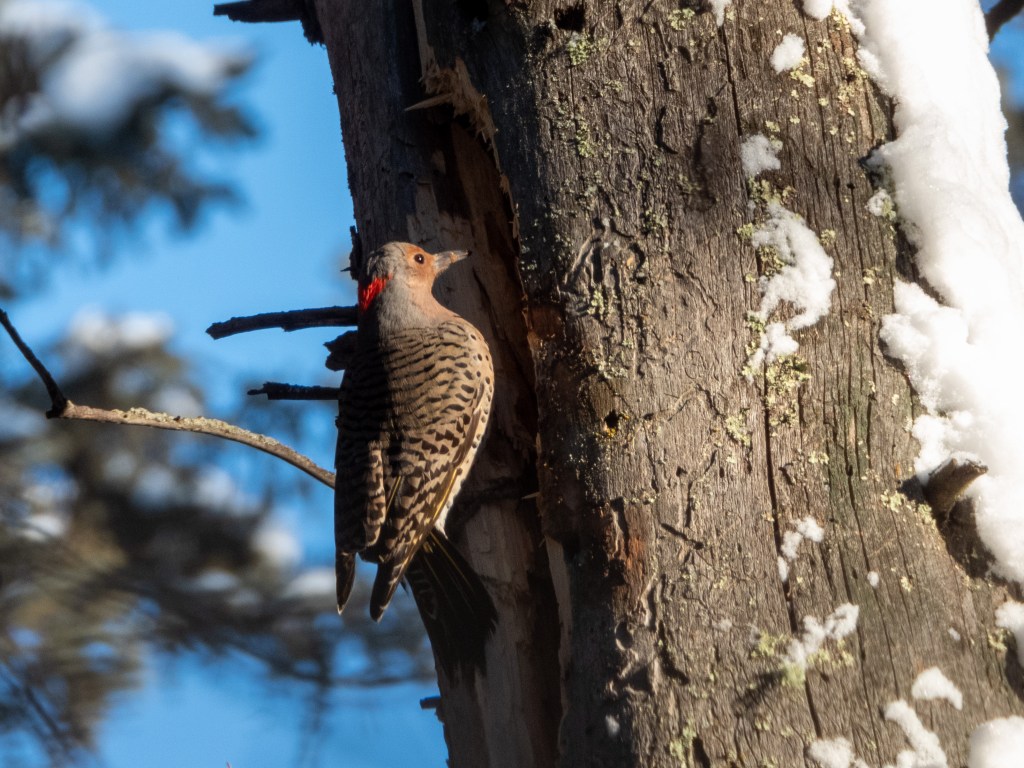
Next to a pair of hardworking Pileated Woodpeckers there was a solitary Northern Flicker working away on the same dead tree. Was it a coincidence that the two woodpecker species were at the same tree? Perhaps this a tree was particularly good for woodpeckers? Or perhaps the flicker was opportunistic and followed the Pileated Woodpeckers along through the forest taking advantage of the large gashes in the trunks the Pileated Woodpeckers leave behind? The Norther Flicker was illuminated by the late afternoon sun which made it particularly splendid against the blue sky. As the Pileated Woodpeckers moved on, so did the Northern Flicker.

May the curiosity be with you. This is from “The Birds are Calling” blog (www.thebirdsarecalling.com). Copyright Mario Pineda.