Project 366 – Post No. 008 – Muskrat Spring Grooming

What is Project 366? Read more here!

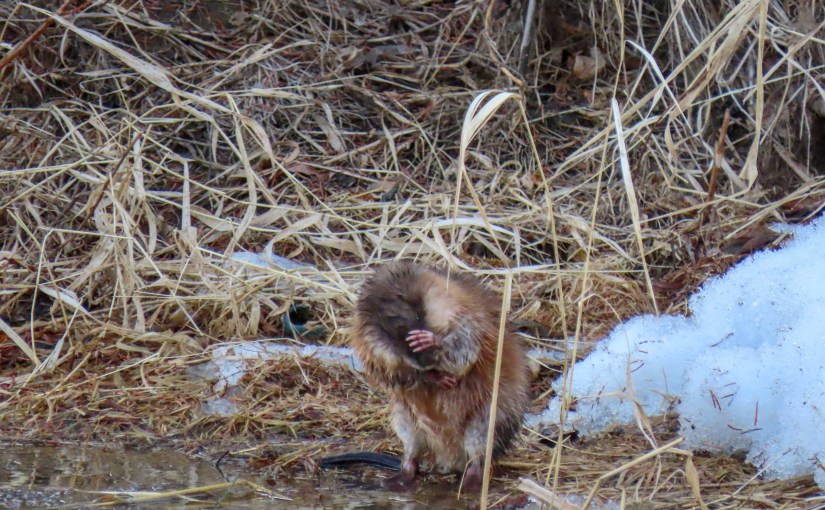
A few weeks ago, as the ice on the creek still was breaking up, we came across this fuzzy Muskrat sitting on a muddy back grooming himself. I imagine it must have just woken up from the long winter hibernation and was doing his “spring cleaning” of the fur. Muskrats are often found in association with beavers, and indeed, further down on the same muddy bank there were two adult beavers Also busy grooming themselves. While both Muskrats and beavers are rodents, they are not particularly closely related. Contrary to what the name suggests, Muskrats are not a species of rat. It’s closest relative are mice, voles and lemmings. It is basically a large field mouse adapted to an aquatic life. I was on the opposite side of the creek when I spotted it. Over the next few minutes I managed to slowly sneak through the vegetation until I was at the water’s edge right across from it, no more than 10 m away. While the both the Muskrat and the beavers must have known I was there, they completely ignored me and just minded their own business. While I have seen Muskrats before, this was the first time I have been able to study one this closely for an extended period.

May the curiosity be with you. This is from “The Birds are Calling” blog (www.thebirdsarecalling). Copyright Mario Pineda.
Project 366 – Post No. 007 – AB Big Year Bird #44

What is Project 366? Read more here!

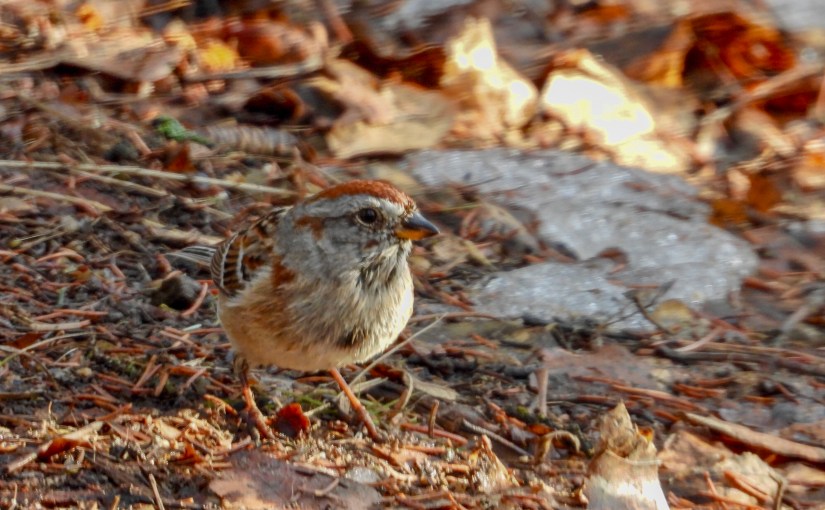
Yesterday my son and I went for a nature walk at the Whitemud Ravine. We quickly encountered the usual suspects. The Black-Capped Chickadees where out in full force as usual, Mr. and Ms. Mallard were swimming around in the swollen creek but got tired of the strong current and waddled up on a sand bank, a few Canada Geese flew noisily overhead, a lonely Downy Woodpecker made a brief appearance and a few dozen Bohemian Waxwings were gobbling down Mountain Ash berries, drinking water from puddles and eating snow. After a few hours, thinking we had seen it all for the day, we started heading back to the trail head. On our way back a subtle movement in the dense understory caught my eye. It was definitely a small bird. About the size of a chickadee, but the way it moved was different. We quickly focused in on the bird with our binoculars and camera. With a rufous coloured crest and a bi-coloured beak, it’s was definitely a new species. I managed to coax the camera into action and snapped a few pictures before a fitness buff came steaming down the trail and the bird took off. As we inspected the images and consulted Merlin Bird the verdict was unanimous. It was an American Tree Sparrow. A lifer for both of us and bird number 97 on our life list and number 44 on our AB Big Year list. It’s amazing how such small and and unassuming creature can make you so excited and happy. On our way back to the car my son and I talked about the significance of lifers and while it may be just another bird, it is also a once-in-a-lifetime experience that we can cherish for the rest of our life. Welcome to our life little American Tree Sparrow.

May the curiosity be with you. This is from “The Birds are Calling” blog (www.thebirdsarecalling). Copyright Mario Pineda.
Project 366 – Post No. 006 – Black-capped Chickadee

What is Project 366? Read more here!

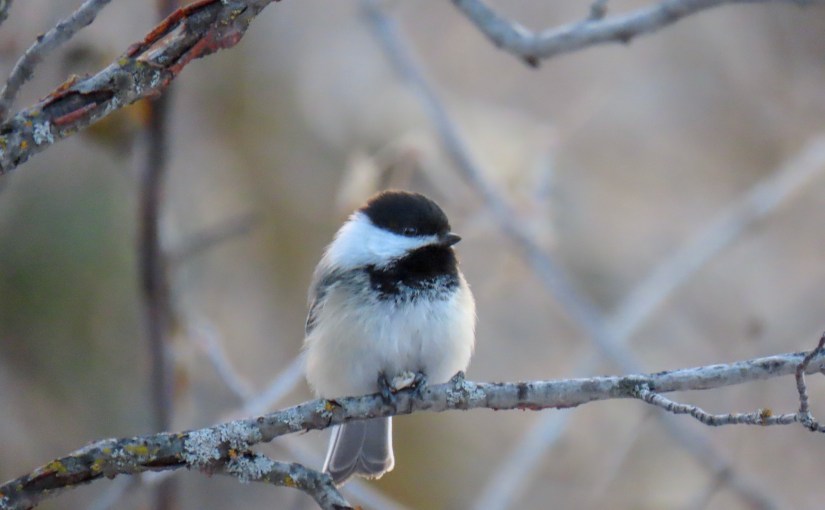
This picture was taken by my son when he first put his hands on our new Canon PowerShot SX70 HS. He took this image in the low light conditions of the understory with full zoom at 1365 mm (35 mm equivalent) at ISO 800. I like how the picture shows the “fluffiness” of the Black-capped Chickadee, which helps to keep them warm in the winter. It also shows a rarely seen phenomenon…, a Black-capped Chickadee sitting still for more than a blink of an eye. These small nonmigratory songbirds seem to be in perpetual motion even during the coldest of winter days. We saw an abundance of Black-capped Chickadees flittering around in the understory during the recent February cold-spell even when temperatures dropped to below -40 °C. It is remarkable how well-adapted these birds are to our harsh climate. To conserve energy on cold nights, they have the ability to go into a state of torpor by lower their body temperature by as much as 10 to 12 °C (their normal body temperature is 42 °C). They may be small, but what they lack in size they make up for in sheer feistiness and awesome attitude. They are constant companions on our nature walk along the creek and are always checking if we bring any treats.

May the curiosity be with you. This is from “The Birds are Calling” blog (www.thebirdsarecalling). Copyright Mario Pineda.
Project 366 – Post No. 004 – A Celebrity Couple

What is Project 366? Read more here!

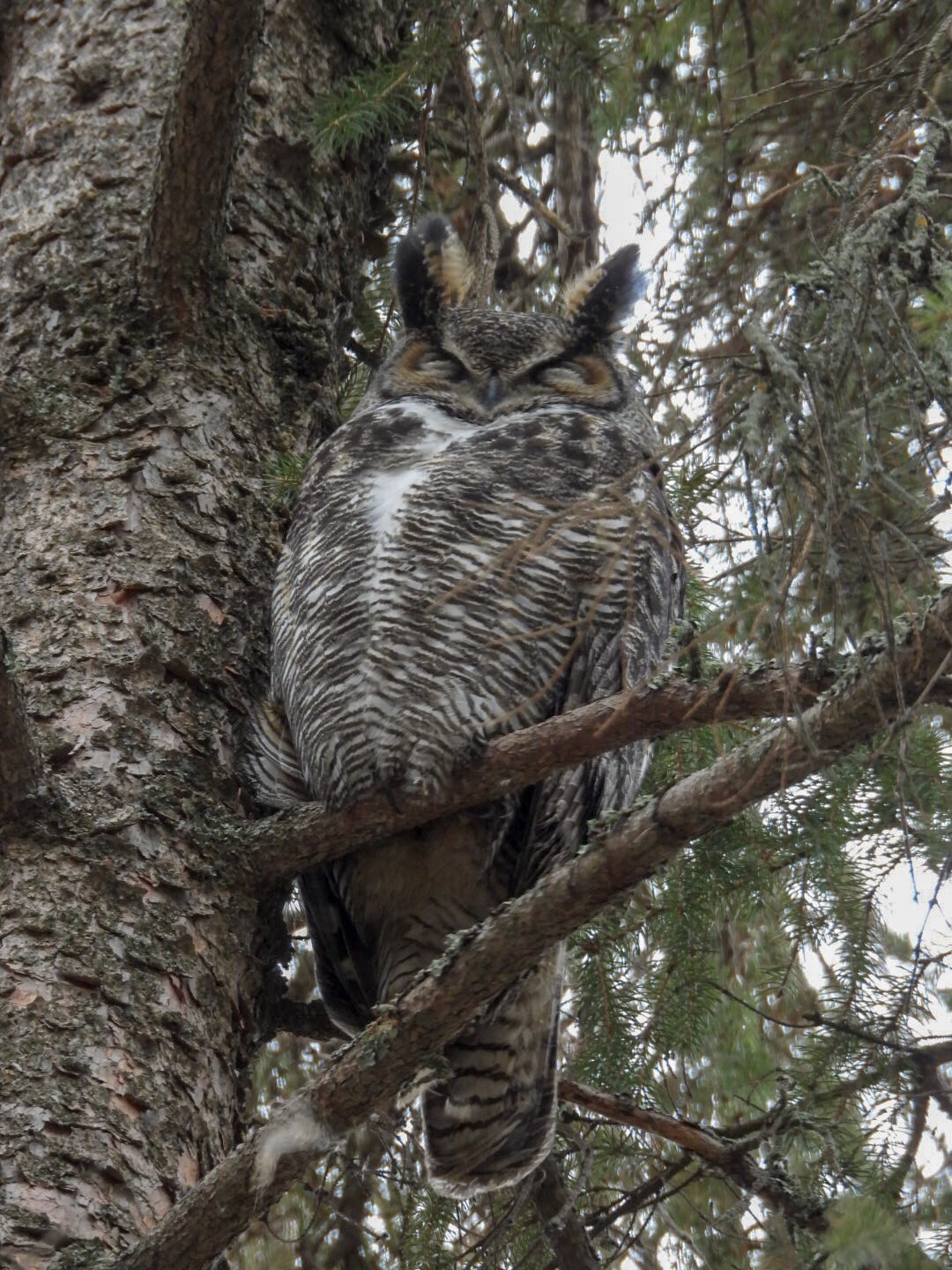
If you spend any time down in the Whitemud Ravine, whether you are a birder, dog walker or fitness buff, you soon realize that someone is hiding high up in the trees along the trail. It’s an expecting pair of Great Horned Owls. They are discrete and quiet with the female hiding in a large tree cavity while sitting on eggs and the male, always close by, hiding among the branches high up in a nearby tree. You could easily walk by them not realizing they are there. The only reason one cannot miss them is because of all the photographers hanging out by their nesting site. These owls are truly a celebrity couple with paparazzis-style nature photographers and nature buffs breathlessly watching their every move and counting the days the female has been sitting on the eggs. Apparently today is day 23. Great Horned Owls incubate their eggs for about 30-37 days which would give a predicted hatch date somewhere between April 8 and April 15. With the Whitemud Ravine being the closest birding hotspot for us, we typically head down to the creek several times a week. It is always exciting, refreshing and suspenseful as you never know what you see or who you bump into, birds, animals or fellow nature buffs. On our walk yesterday I managed to snap the following picture of the male. He seemed tired and could not care less about the photographers below the tree. For a moment a feisty Black-capped Chickadee tried to get his attention, but he dismissed the diminutive critter like it would be nothing more than a buzzing mosquito. The chickadee deserves our respect though. It takes some big cojones for someone that small to pick a fight with someone that much larger with those formidable talons and beak.

May the curiosity be with you. This is from “The Birds are Calling” blog (www.thebirdsarecalling). Copyright Mario Pineda.

Project 366 – Post No. 002 – Quite a Looker

What is Project 366? Read more here!

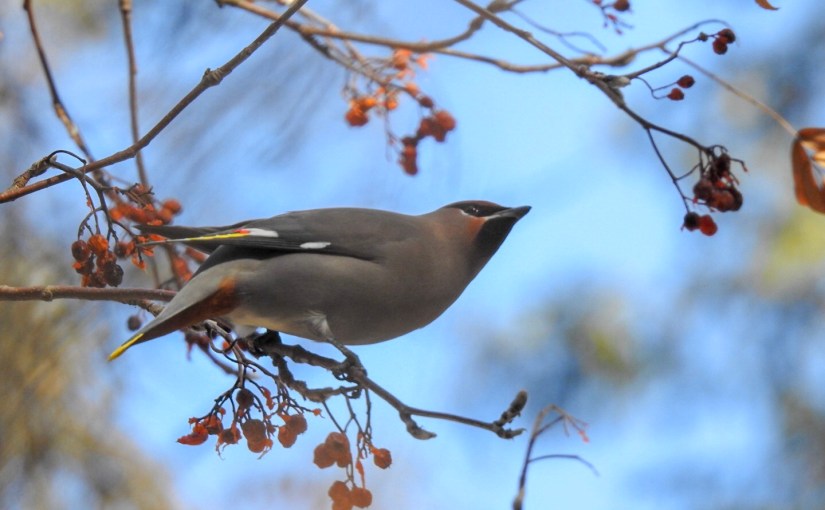
Bohemian Waxwings like to hang out in fruit tree. They are frugivores with an attitude. They can be found roaming around in large groups, descending on fruit trees and engaging in noisy fruit eating feasts before moving on. Over the last few weeks we have been seeing Bohemian Waxwings regularly in the Whitemud Ravine. They are handsome birds with facial markings resembling the makeup of a Chinese opera performer, wingtips with distinct bright yellow, white and red markings, dark orange under tail feathers and bright yellow tail tip. You can never have enough Bohemian Waxwings in your life.

May the curiosity be with you. This is from “The Birds are Calling” blog (www.thebirdsarecalling). Copyright Mario Pineda.
Project 366 – Post No. 001 – A Gaggle of Bohemian Waxwings

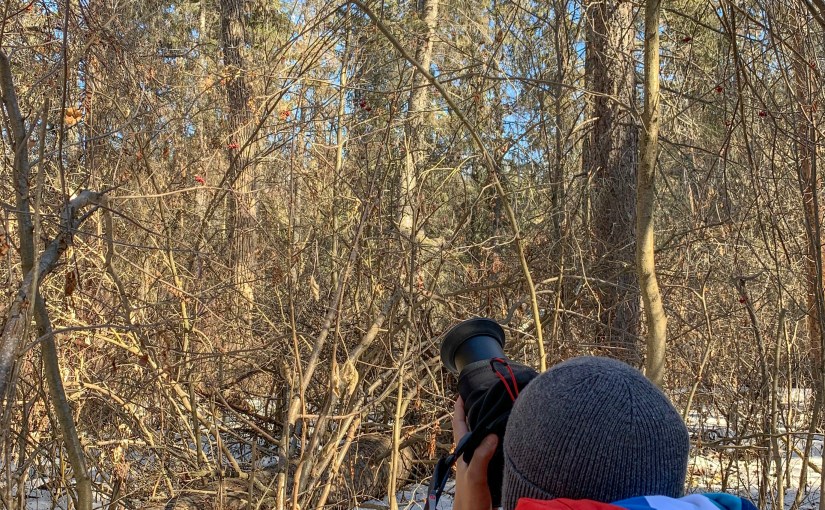
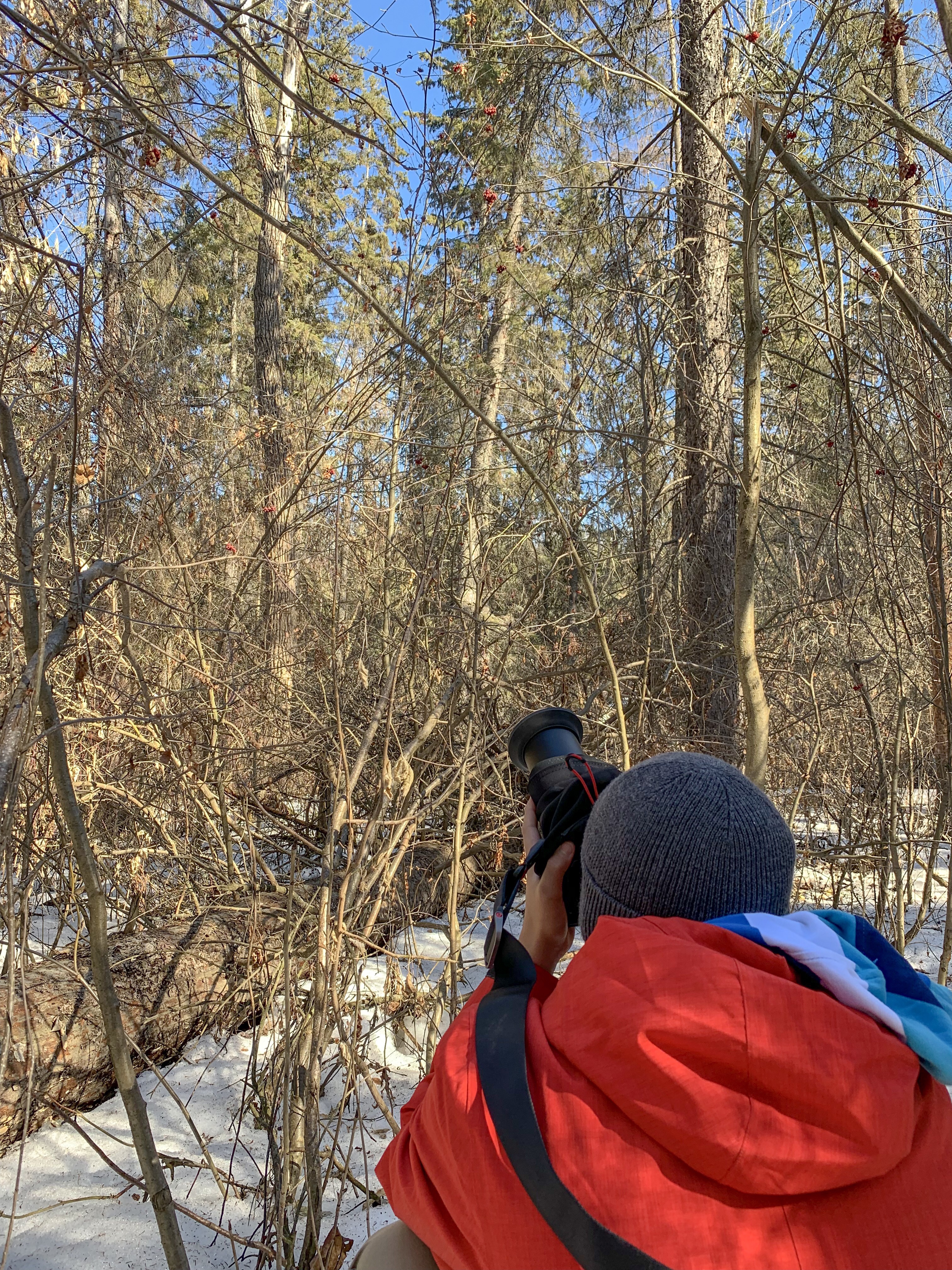
You could hear them all around. Chattering and singing. Like a rambunctious social gathering. Like a large group of old friends all talking at the same time around the dinner table. First we could only hear them, but once our eyes managed to see beyond the tangled branches we could see them, the Bohemian Waxwings. They were everywhere and once we started observing the gaggle we soon realized what all the commotion was about. It was dinner time and the trees were full of fruit. With all the chattering it made you wonder if, by any chance, some of those berries may have something stronger in them just virgin fruit juices. A gaggle of drunken waxwings? Fancy that.

May the curiosity be with you. This is from “The Birds are Calling” blog (www.thebirdsarecalling). Copyright Mario Pineda.