Project 366 – Post No. 143 – Butter-and-eggs

What is Project 366? Read more here!

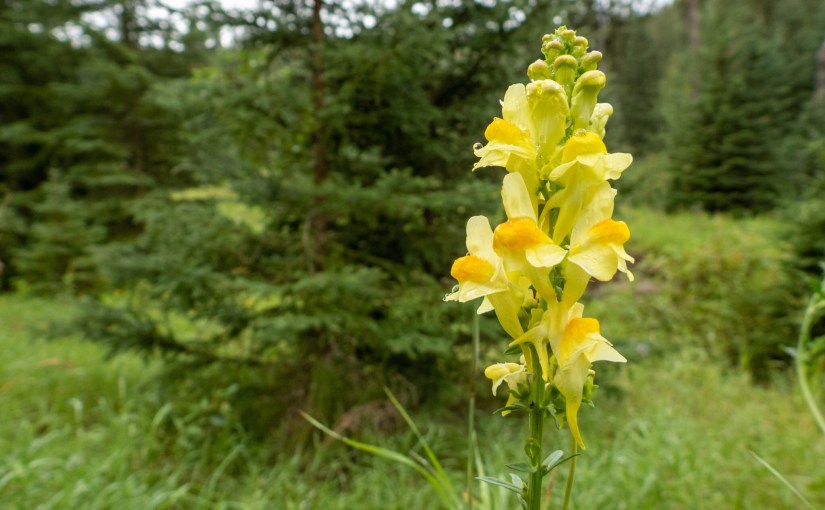
Another pretty face and another invasive species. The striking Butter-and-egg plant (Linaria vulgaris) is native to Europe and Asia. It was introduced in North America as a decorative garden plant. It did not take long for it to escape and the rest is history. These days it is common throughout North America, from Canada in the north to Mexico in the south. While this plant is also know as Common Toadflax and Yellow Toadflax the Butter-and-eggs name seems most imaginative. Where does it get such an odd name from? I am not sure, but perhaps it has to do with the color of the snap-dragon shaped flower with the darker yellow/orange being the yolk and the lighter yellow being the butter. It turns out that orange center part is known as a “honey guide” guiding pollinators along the long spur of the flower. My teenager disagrees with this interpretation and has concluded that the name does as much sense as calling it “Yellow-and-green”. “I went for a walk and saw some Yellow-and-green and some Purple-and-green”. Perhaps he is right, the name seems quite silly, so I guess it is a silly and pretty invader.
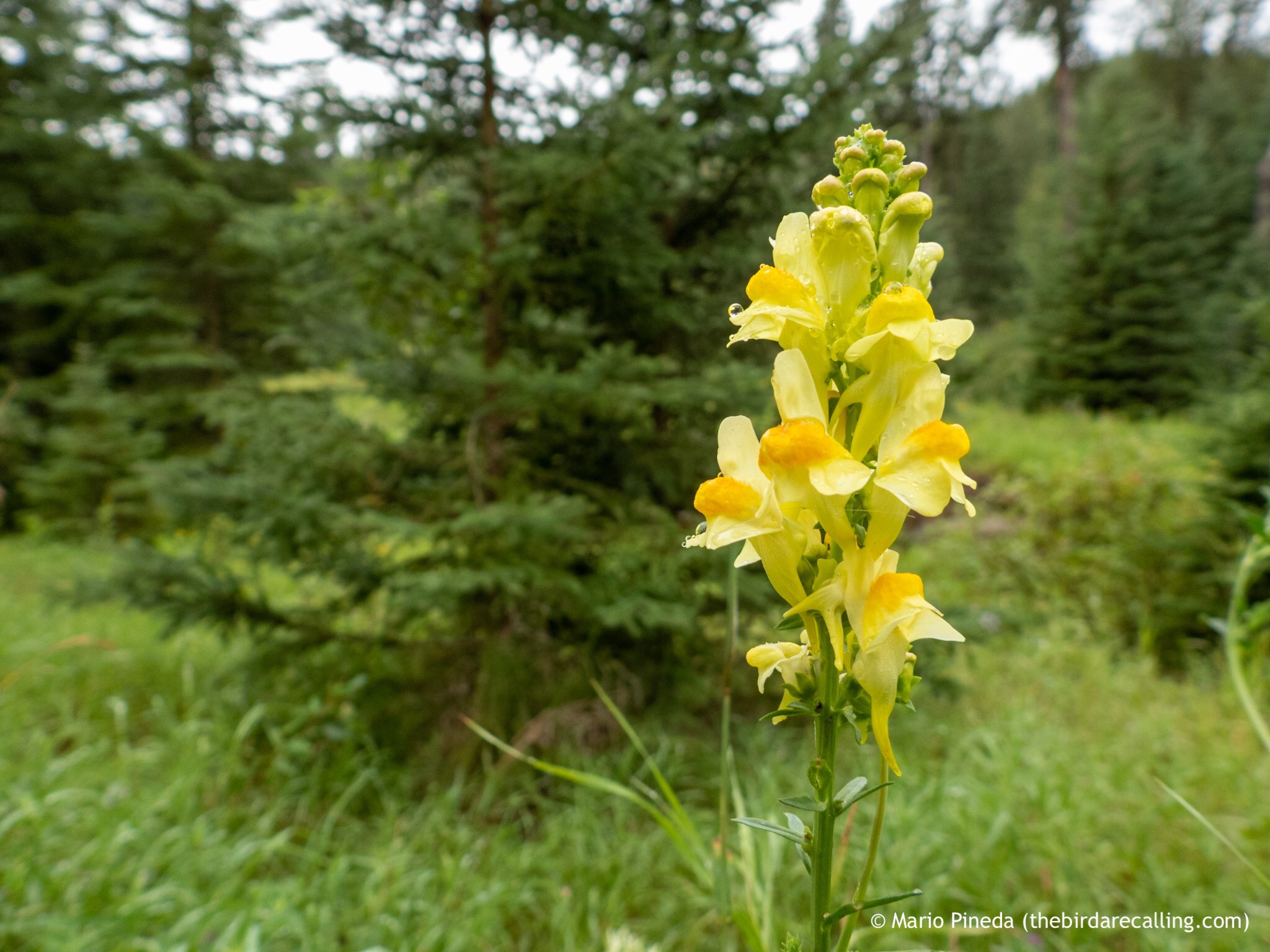
Butter-and-egg (Linaria vulgaris) at the Whitemud Creek. August 18, 2019. Nikon P1000, 24mm @ 35mm, 1/100s, f/2.8, ISO 100

May the curiosity be with you. This is from “The Birds are Calling” blog (www.thebirdsarecalling.com). Copyright Mario Pineda.

Project 366 – Post No. 142 – The Chickadees of Fee-bee

What is Project 366? Read more here!

[Walking softly through the forest]
BIRD: Fee-bee! Fee-bee! Fee-bee! Fee-bee!
HUMAN: Who are you?
BIRD: We are the Chickadees that say... Fee-bee!
HUMAN: No! Not the Chickadees that say Fee-bee!
BIRD: The same!
HUMAN: Those who hear them seldom live to tell the tale!
BIRD: The Chickadees Who Say Fee-bee demand a sacrifice!
HUMAN: Chickadees of Fee-bee, I am but a simple birder who seek the enchanter who lives beyond these woods.
BIRD: Fee-bee! Fee-bee! Fee-bee! Fee-bee!
HUMAN: Oh, ow!
BIRD: We shall say 'Fee-bee' again to you if you do not appease us.
HUMAN: Well, what is it you want?
BIRD: We want... sunflower seeds!

Black-capped Chickadees have a remarkably complex and varied repertoire of vocalizations, but perhaps the most common song carrying through the forest is their characteristic fee-bee (aka as ‘Hey, sweetie’). You can listen to recordings of their vocalizations here. As I was making my way along the Whitemud Ravine trail the Black-capped Chickadees came out in full force confronting me. The exchange that followed was remarkably reminiscent of the exchange King Arthur has with the Nights of Ni in Monty Python and The Holy Grail. In case you are not familiar with this scene you can enjoy it in all its glory right here. This band of Chickadees meant business. A dozen chickadees quickly surrounded me, perching in the shrubbery and on the ground around my feet and said ‘fee-bee, fee-bee, fee-bee’. One of them landed on my leg. Another one went straight for my outstretched hand. When it realized that I had not brought an offering I received a condescending look of disbelieve and indignation. I had no other choice than continue walking with a dozen chickadees tagging along fee-bee’ing me incessantly.

The Black-capped Chickadees of Fee-bee demanding an offering at Whitemud Creek. August 18, 2019. Photo using iPhone.

May the curiosity be with you. This is from “The Birds are Calling” blog (www.thebirdsarecalling.com). Copyright Mario Pineda.
Project 366 – Post No. 141 – Coral Fungus

What is Project 366? Read more here!

So a mushroom walks into a party and the bouncer says, “Sorry we are full”. The mushroom replies: “But I don’t take up mushroom”.

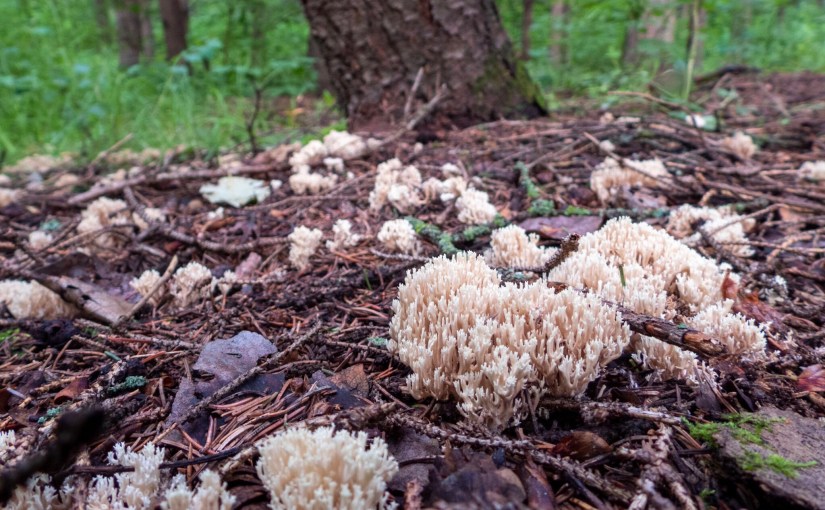
Now that we have that out of the way,… this is without question the funkiest looking fungus I have come across so far. Initially I was even questioning if it was a fungus or something else altogether. But it turns out it is a fungus, a fungus that looks like no other fungus. The fruiting body seems to defy every notion of how a fungus should look. Where is the cap and the stalk? It turns out this one belongs to the clavarioid fungi group (after the genus Clavaria). These fungi are more commonly referred to as coral fungi. Despite the absence of the classical fairytale “mushroom look” it turns out that coral fungi do not only have a worldwide distribution but are one of the most common groups of fungi. With over 1200 species of coral fungi identifying the exact species is well beyond my ability, but apparently these fellas are edible.

Coral Fungus at Whitemud Creek. August 2, 2019. Nikon P1000, 24mm @ 35mm, 1/30s, f/2.8, ISO 140

May the curiosity be with you. This is from “The Birds are Calling” blog (www.thebirdsarecalling.com). Copyright Mario Pineda.
Project 366 – Post No. 139 – Prickly Wild Rose hips

What is Project 366? Read more here!

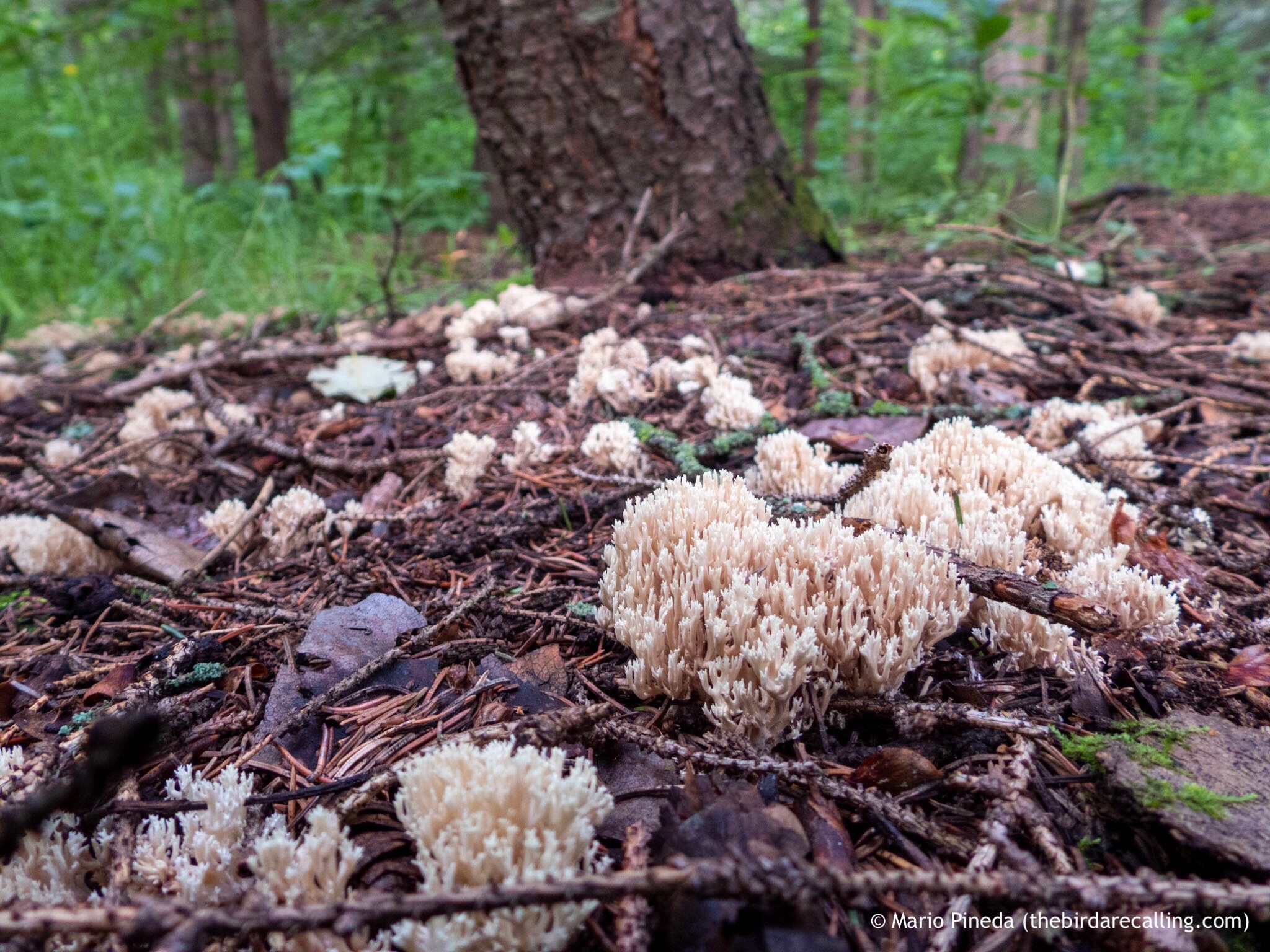
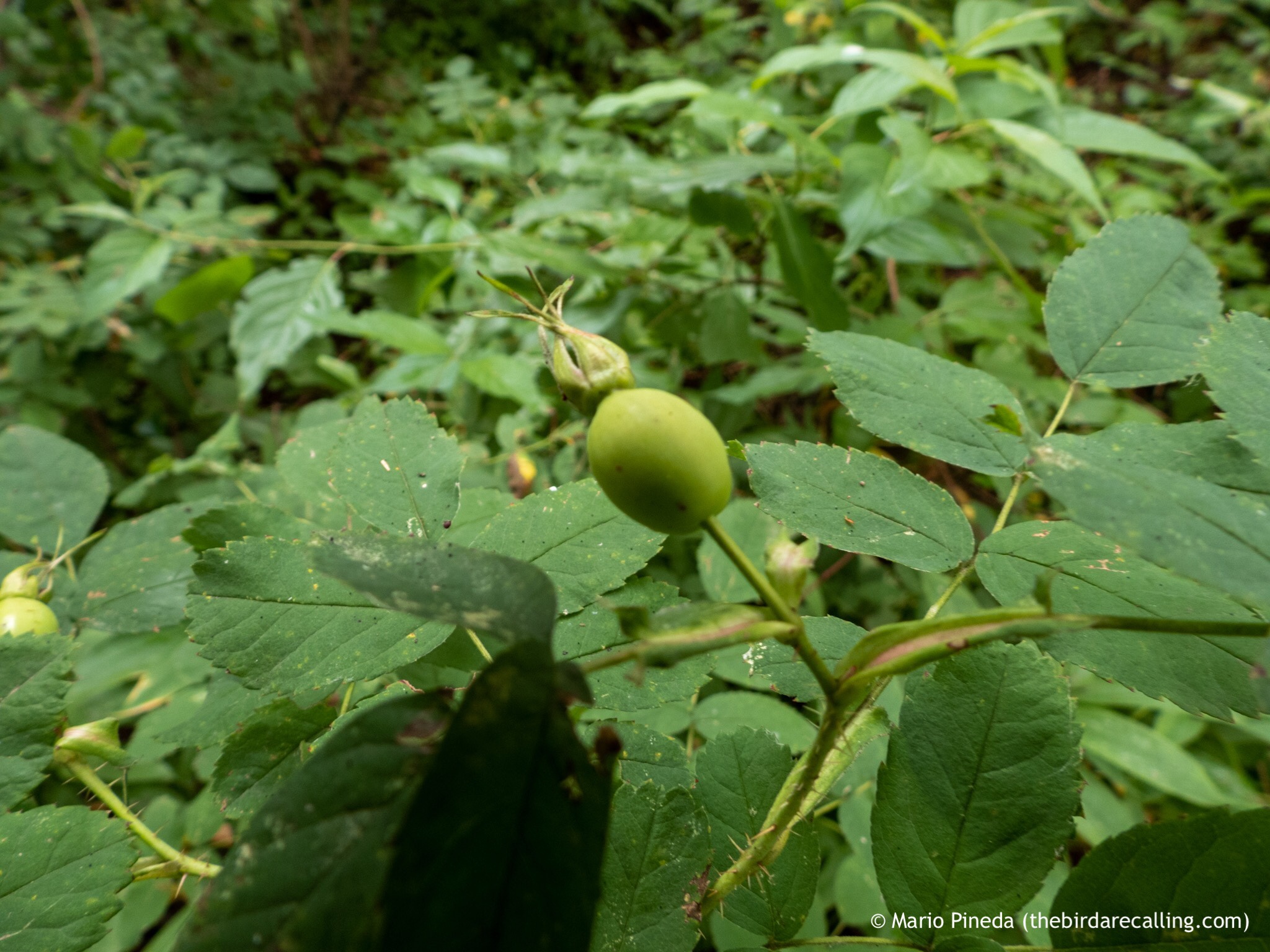
The flowers of the Prickly Wilde Roses are long gone and have been replaced by green hips. As they ripen they will turn orange and then red. The hips are edible, something the First Nations and Swedes have known since the dawn of time. I’ll be keeping my eyes on the rose hips to harvest some when they become ripe. Making rose hip tea might be the easiest way of reaping some of the health benefits of these fruits or, if I feel adventurous, I might just make a batch of rose hip soup. The wilting of the flowers and the ripening of fruits signals the impeding end of the summer. Technically September 23 is the last day of summer but typically things turn fall’ish much earlier in these neck of the woods.

Prickly Wild Rose hip at Whitemud Ravine. July 31, 2019. Nikon P1000, 24mm @ 35mm, 1/30s, f/2.8, ISO 100

May the curiosity be with you. This is from “The Birds are Calling” blog (www.thebirdsarecalling.com). Copyright Mario Pineda.
Project 366 – Post No. 138 – Shaggy Mane

What is Project 366? Read more here!

Most mushrooms I have encountered are difficult to identify to say the least. When I came across this fungi growing out of a rotting log on the moist forest floor I figure that something this distinct looking should be easier to identify. I did nevertheless take me quite some time to identify it, mainly because it took me a while to find an appropriate online reference for Alberta fungi. My best educated guess is that it is a Shaggy Mane, also known as Shaggy Ink Cap or Lawyer’s Wig (Coprinus comatus). In this fungi the young fruit bodies first appear as white cylinders emerging from the ground, reminiscent of The Gherkin. As the fruit bodies mature a bell-shaped cap opens out (you can see one in the far right foreground in the picture). It is edible, but I am not about to take any chances just in case I got the identification wrong. The species is carnivorous specializing in trapping, killing and digesting underground nematodes (microscopic underground roundworms) to obtain nutrients (so called nematophagy).

Shaggy Mane (Coprinus comatus) at Whitemud Ravine.July 31, 2019. Nikon P1000, 24mm @ 35mm, 1/30s, f/2.8, ISO 100

May the curiosity be with you. This is from “The Birds are Calling” blog (www.thebirdsarecalling.com). Copyright Mario Pineda.
Project 366 – Post No. 135 – White Cockle

What is Project 366? Read more here!

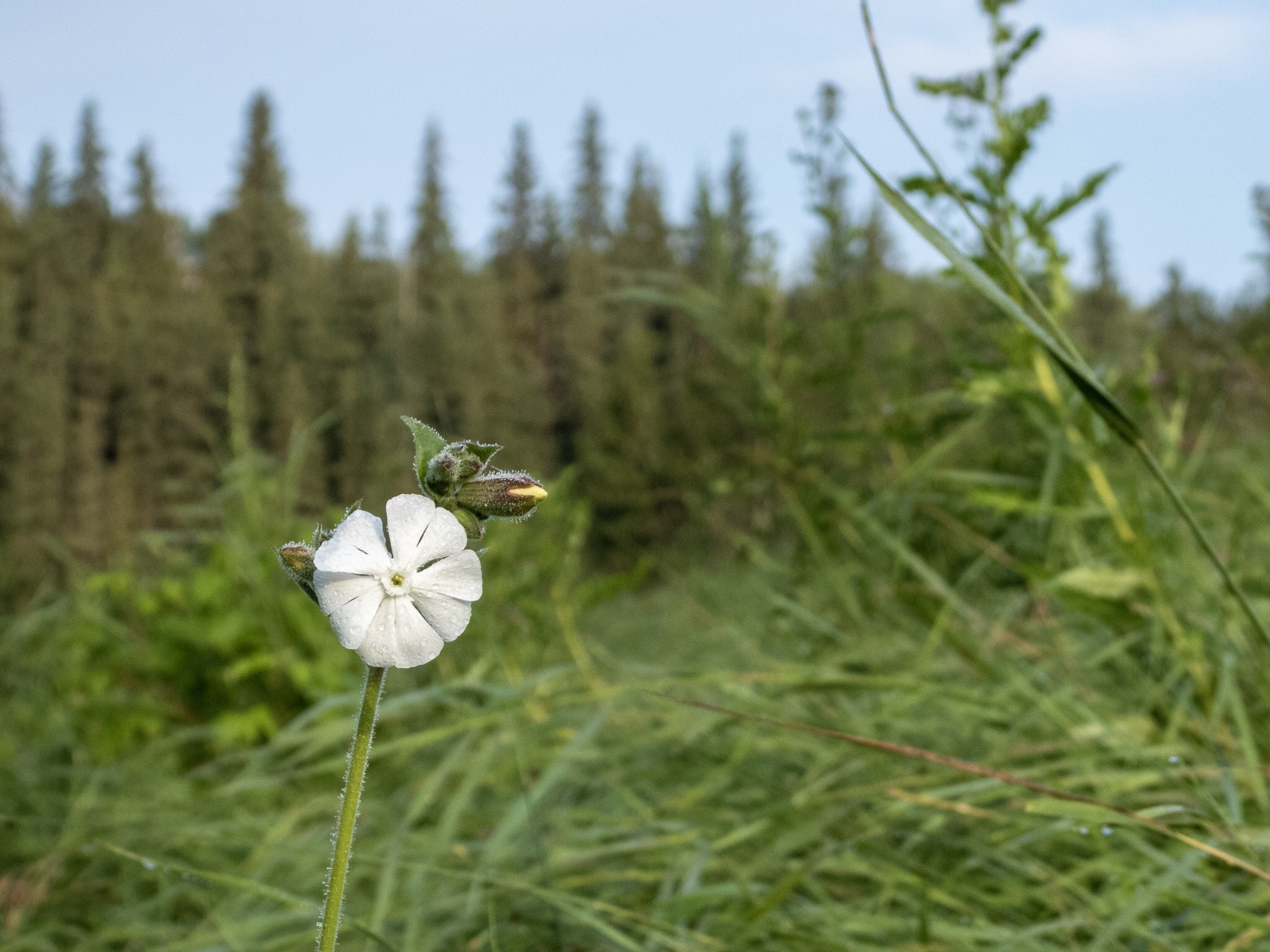
Going birding mid-day is not ideal. Most birds are out of sight, but if you put your mind to it you might be able to hear them skulking in the shrubbery. For a birding noob like me the only thing more frustrating than no birds is hearing birds and being unable to see them and identify them. Plants have none of these problems. Be it dawn, mid-day or dusk – the plants are there. So on this late afternoon down by the Whitemud Creek I did not see much in terms of birds but I did encounter this patch of White Cockles. Like many of the pretty flowers I have encountered, this one is also an invasive species. White Cockles are commonly found in pastures, roadsides, waste areas, gardens and occasionally in cultivated fields. The White Cockle, also known as White Campion (Lychnis alba syn. Silene alba S. latifolia) was introduced from Eurasia and rumor has it that it was introduced with ship ballast.

White Cockle (Lychnis alba) at the Whitemud Creek. July 31, 2019. Nikon P1000, 67mm @ 35mm, 1/800s, f/3.5, ISO 100

May the curiosity be with you. This is from “The Birds are Calling” blog (www.thebirdsarecalling.com). Copyright Mario Pineda.

Project 366 – Post No. 134 – Fly-through fast food

What is Project 366? Read more here!

Black-capped Chickadees may be one of our smallest birds but they are definitely one of the most resourceful and intelligent birds in these neck of the woods. There have learned to take full advantage of our weakness for cuteness and manipulated our feeble human minds to provide them with free snacks year round. Although I do not bring snacks, plenty of other people do. There are always piles of sun flower seed strewn about along the trail and on the bridge railings along Whitemud Creek. They swoop down, grab a sunflower seed and then fly off to a nearby shrub where they get to work on the seed. It’s basically like a fly-through fast food joint. Chickadees are also known for hoarding food for leaner times. Although chickadees undeniably have small brains, they are no bird brains. They are very capable of remembering where they hide food stashes when they need to find them in the middle of the winter.

Black-capped Chickadee (Parus atricapillus) grabbing a quick snack at the Whitemud Creek. July 30, 2019. Nikon P1000, 1008mm @ 35mm, 1/320s, f/5.6, ISO 400

May the curiosity be with you. This is from “The Birds are Calling” blog (www.thebirdsarecalling.com). Copyright Mario Pineda.

Project 366 – Post No. 133 – Morning dew in spiral orb web

What is Project 366? Read more here!

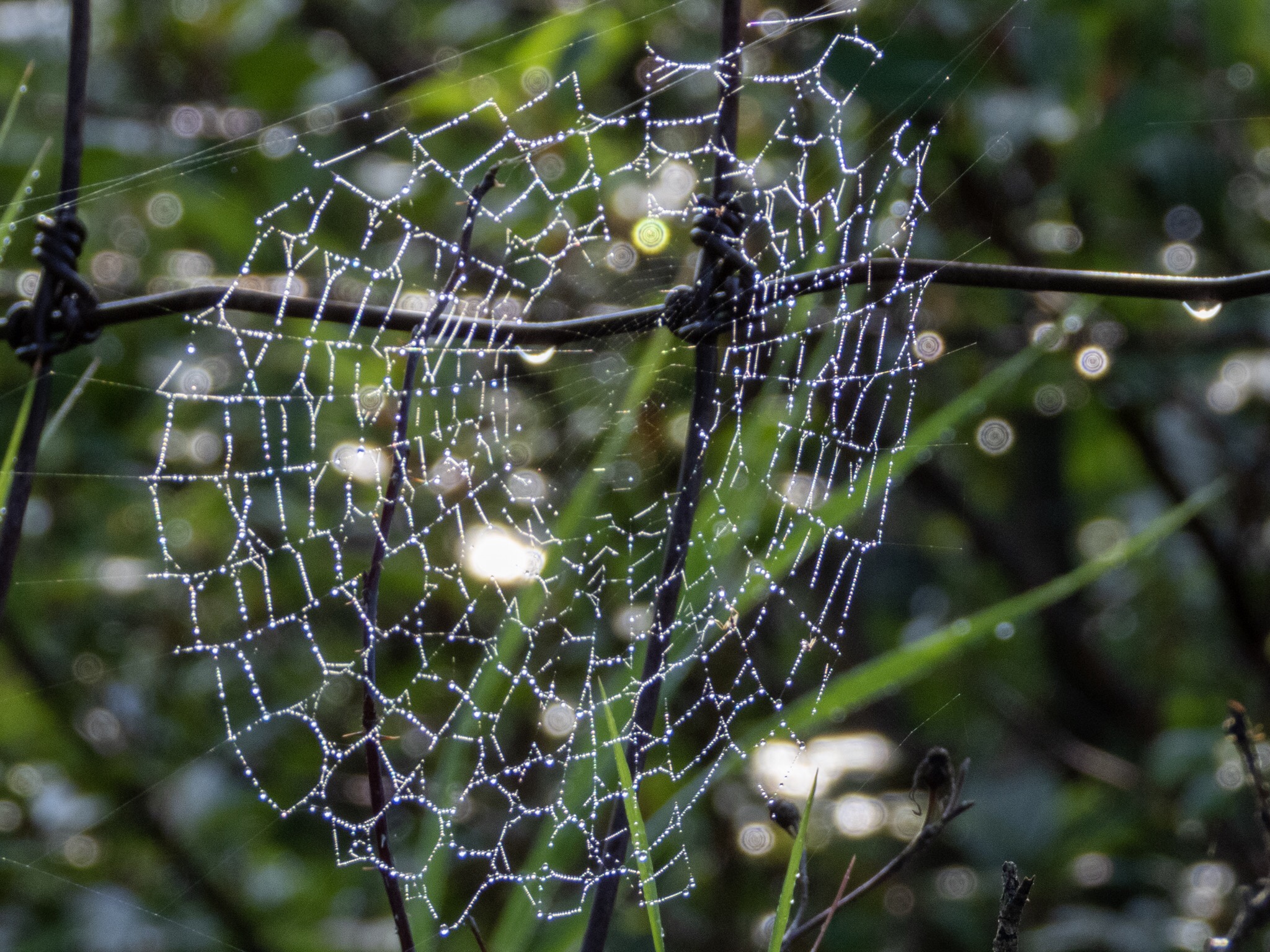
Different species of spiders create different types of spider webs. The spider web type that probably come to your mind first is the classical spiral orb web design. This type of web is created by spiders in the Araneidae family, aka as orb-weaving spiders. With 3122 species these are the most commonly found spiders across the world. Many orb-weaving spiders build a new web each day. They tend to hide during the day and become active during the evening hours when they consume the old web before spinning a new web in the same general location. As a result the webs of orb-weaving spiders are generally clean and free of accumulated debris. This spider web that I came across on an early morning down by the Whitemud Creek was covered in morning dew. Tiny water droplets were strung up on the silk fibres like bright pearls strung on a sting. The ability of spider webs to collect water is unique and difficult to understand. For example, human hair cannot do this. As it turns out a recent study showed that the water collection ability of spider silk is an artefact of the microscopic structure of the silk. As far as we know the ability for spiders silk to collect water does not seem to serve any biological purpose. On the contrary, when the spider silk is wetted it reduces its ability to capture prey, an obviously bad thing from the spider’s perspective. One cannot deny, however, that morning dew captured on a spider web is a very photogenic effect that we humans probably enjoy more than the spider itself.

Dew in spiral orb web at the Whitemud Creek. July 30, 2019. Nikon P1000, 258mm @ 35mm, 1/250s, f/4.5, ISO 100

May the curiosity be with you. This is from “The Birds are Calling” blog (www.thebirdsarecalling.com). Copyright Mario Pineda.

Project 366 – Post No. 132 – High-bush Cranberry

What is Project 366? Read more here!

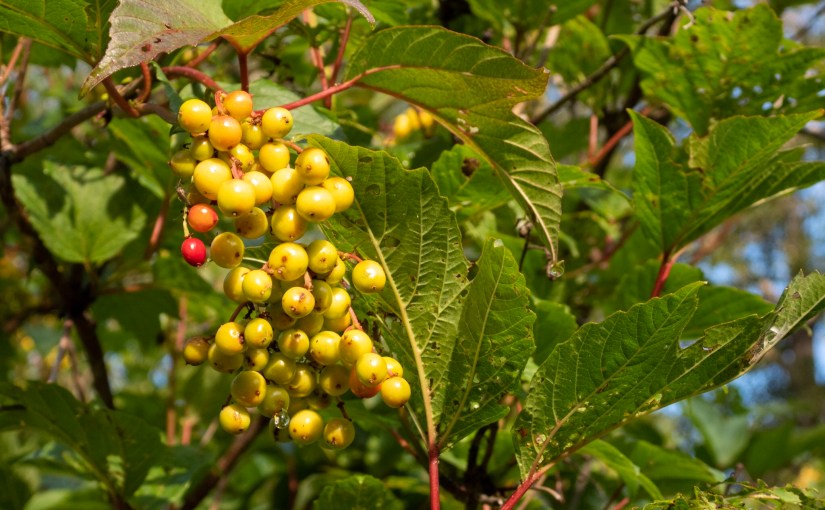
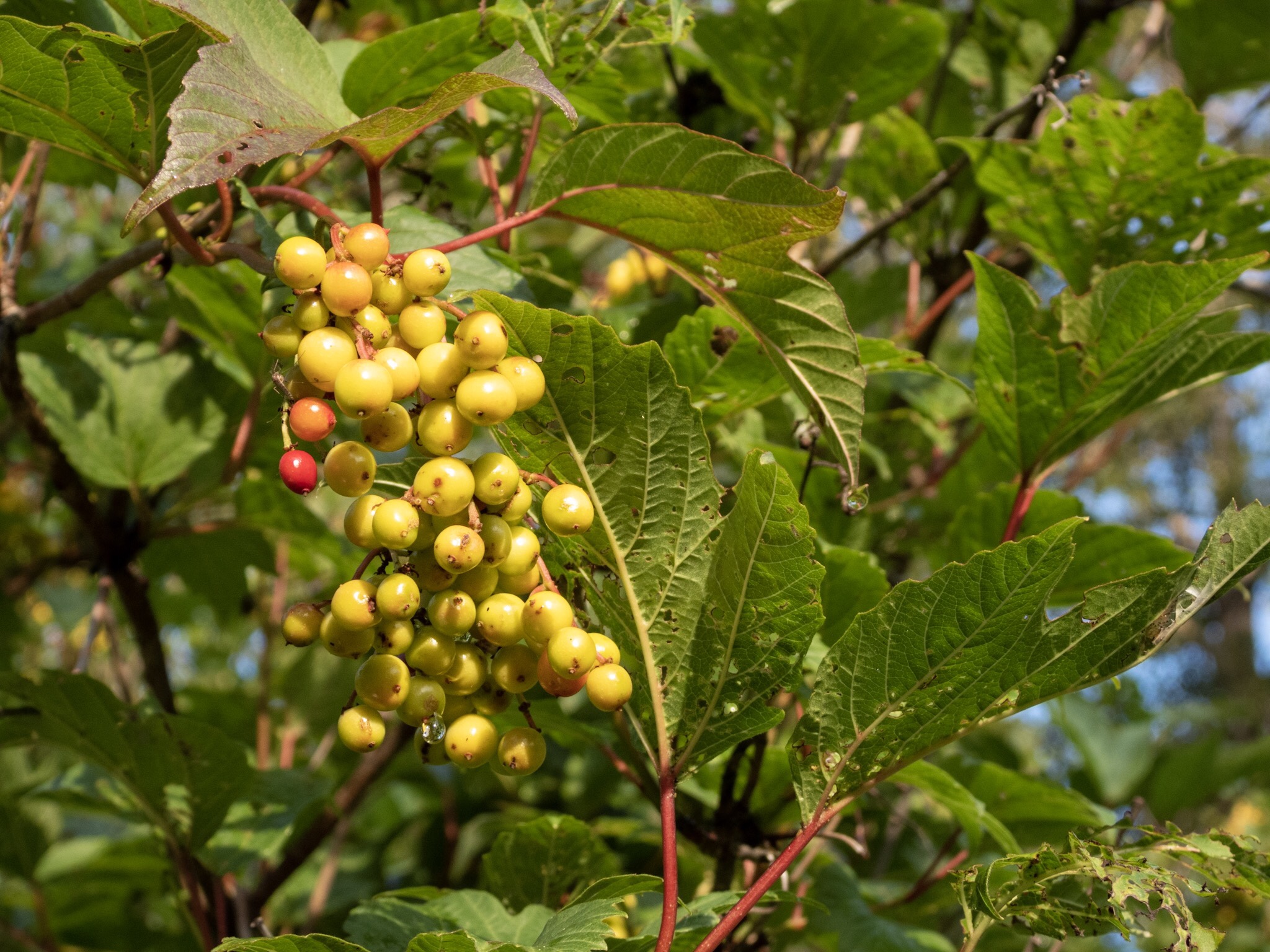
Along the trail at the Whitemud Creek one can find Low-bush (Viburnum opulus) and High-bush Cranberries (Viburnum edule). Calling these shrubs cranberries is misleading as they are more closely related to elderberries than to the true cranberry. They produce a stone fruit called a drupe (a drupe is fleshy fruit with a central stone like core containing one or more seeds), like a cherry, whose acidic flavour resembles that of the cranberries. The fruit have a tangy musky odour and not a favourite food of birds. During the winter, when other sources of food are scarce, the berries often become survival food for birds such as waxwings and robins. Both the Low-bush and High-bush Cranberry shrubs are native to North America and can be found in thickets along shorelines and creeks, swamps and forest edges. Both species appear identical, except one of the grows low (up to 2 m) and the other species grows high (up tp 4 m). It is left to the reader to deduce which one is which.

High-bush Cranberry (Viburnum opulus) at the Whitemud Creek. July 30, 2019. Nikon P1000, 78mm @ 35mm, 1/320s, f/3.5, ISO 100

May the curiosity be with you. This is from “The Birds are Calling” blog (www.thebirdsarecalling.com). Copyright Mario Pineda.
Project 366 – Post No. 131 – Foam lines

What is Project 366? Read more here!

All of a sudden last week foam started to appear in the Whitemud Creek. Large floating rafters of yellowish foam floating down the creek and getting stuck in the vegetation along the shorelines. Most people’s first reaction is probably that the foam is due to pollution. While pollution can certainly cause foam in fresh and salt water it turns that foam also can be created through natural processes. These so called foam lines are often found on streams and river surfaces when water is strongly mixed with air, for example at water falls where rocky substrate have fast currents passing over its. Foam lines are common in streams with brown water which contain high levels of dissolved organic carbon from decomposing algae and other plant matter. Much of the foam is formed after snowmelt and after prolonged heavy rains. The Whitemud Creek fulfills all these criteria, we have had large amounts of rain this summer, the water level is high, the current is strong in the creek and the water is murky brown. Things always change at the creek, from it being frozen in the winter, ice floes and water-ice slurry in the spring, high water levels during the spring melt and during the rainy summer to low and clear waters during the end of the spring and before the rainy season.

Foam lines in Whitemud Creek. July 30, 2019. Nikon P1000, 202mm @ 35mm, 1/200s, f/4.5, ISO 100

May the curiosity be with you. This is from “The Birds are Calling” blog (www.thebirdsarecalling.com). Copyright Mario Pineda.