Project 366 – Post No. 169 – Lichen fungal tree-some

What is Project 366? Read more here!

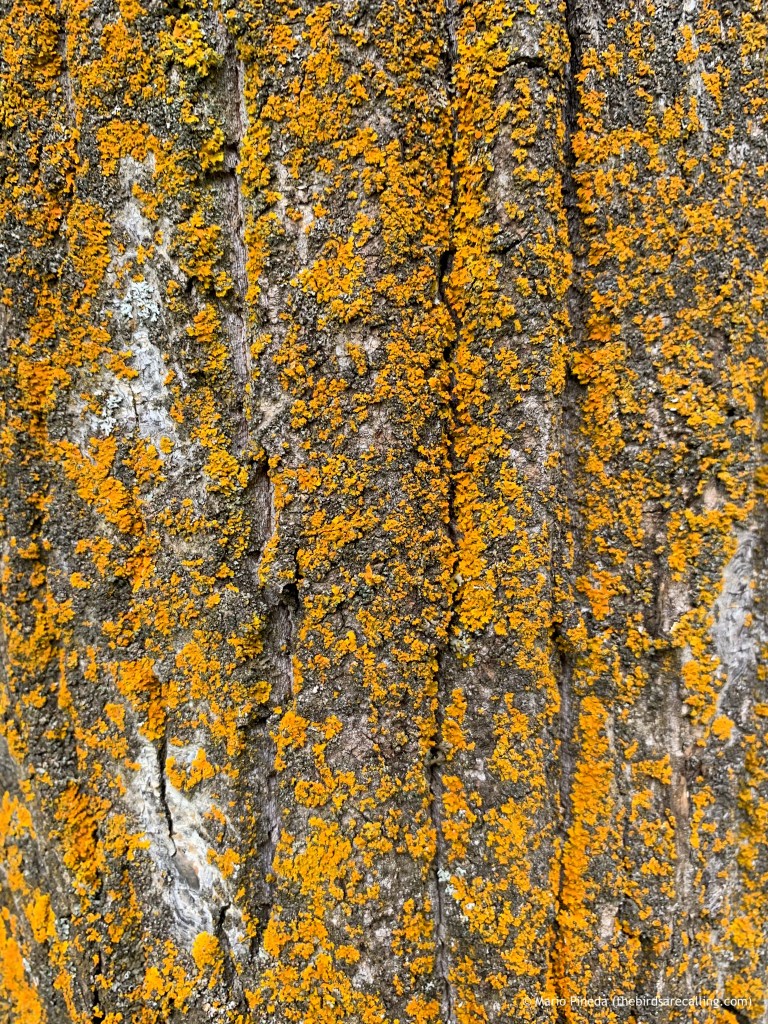
The prevailing view of lichens for the last 150 years or so has been that they a composite organism resulting from a mutually beneficial relationship between a fungus and an algae. It turns out that recent research from the University of Alberta (which is in my neck of the woods) has found that this relationship is more complex than previously thought. Researchers found that a lichen may be made up of up to three different fungi and that no two lichens necessarily have the same mix of fungal partners. Most lichens are rather plain looking, not particularly flashy and are easily overlooked. What this research shows is how little we know and understand about nature that is right under our noses. One could easily spend an entire lifetime understanding and studying nature that is right outside ones doorstep without needing to go to any more exotic locations.
May the curiosity be with you. This is from “The Birds are Calling” blog (www.thebirdsarecalling.com). Copyright Mario Pineda.

Project 366 – Post No. 168 – Perennial Sow Thistle

What is Project 366? Read more here!

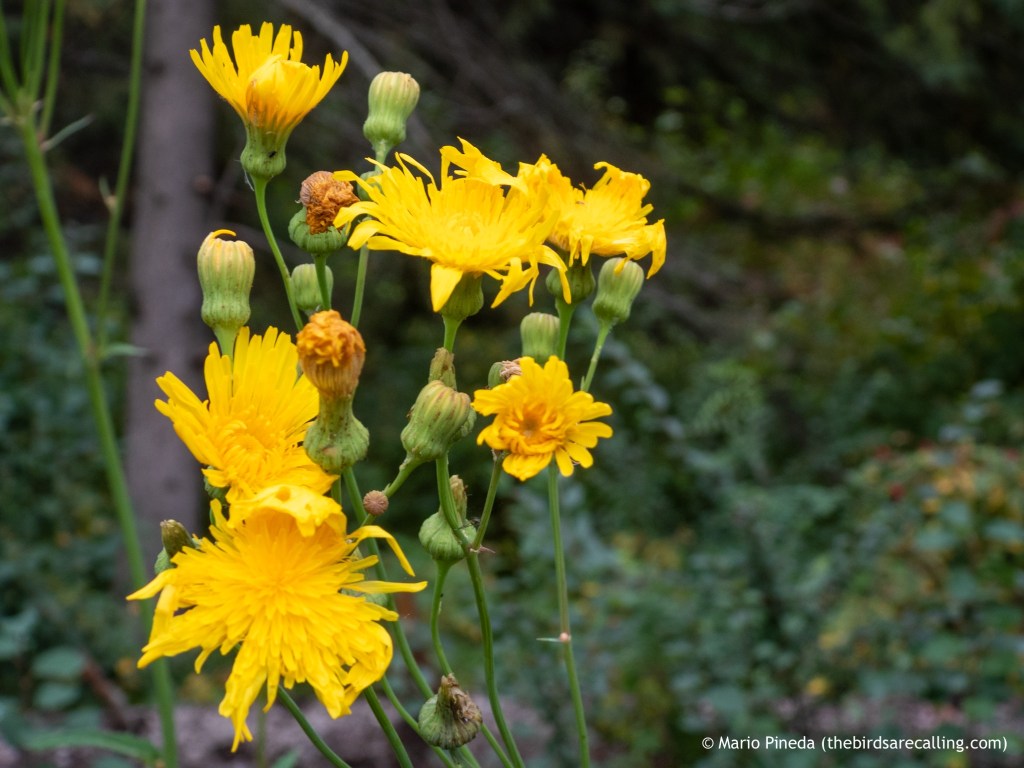
The Identification Guide for Alberta Invasive Plants has nearly 90 species listed. Twenty one of the species have yellow flowers. The other flower colours include white, purple, pink, red, green, blue and orange. Today’s invasive plant is the Perennial Sow Thistle (Sonchus arvensis), a member of the sunflower family. It has yellow, dandelion-like flowers that are grouped in loose clusters at the ends of stem. Like most invasive species in Alberta it was introduced to North America from Europe and Asia. It reproduces prolifically through underground rhizomes and wind dispersed seeds. Apparently a single plant can produce up to 13000 seeds and each seed can remain viable for 3-6 years. Along the Whitemud Creek there are still large stands of flowering Perennial Sow Thistle

Perennial Sow Thistle (Sonchus arvensis) at Whitemud Ravine. September 9, 2019. Nikon P1000, 67mm @ 35mm, 1/60, f/3.5, ISO 100

May the curiosity be with you. This is from “The Birds are Calling” blog (www.thebirdsarecalling.com). Copyright Mario Pineda.

Project 366 – Post No. 167 – Shield lichen

What is Project 366? Read more here!

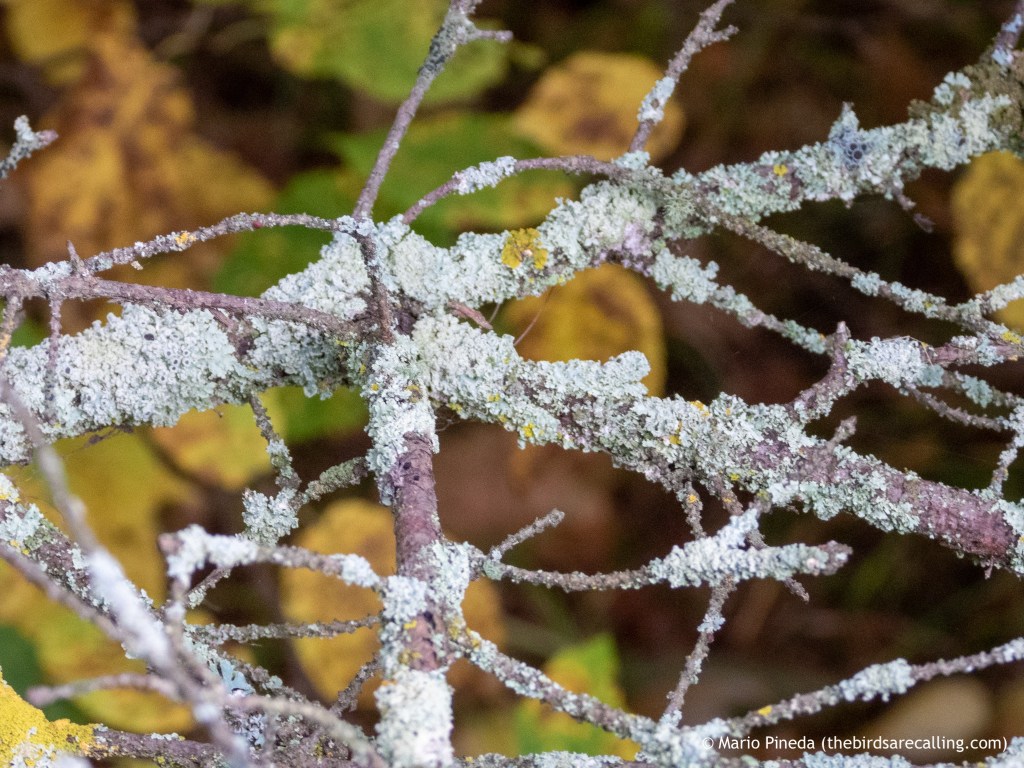
Lichens are cool critters. They are a composite organism consisting of an algae or bacteria living in a mutualistic relationship with a fungus. The resulting lichen has properties different from those of its component organisms. While lichens share features with plants, e.g. growing in a specific location, the inability to move and sometimes a plant-like shape, they are not plants. A mutualistic relationship is characterized by two different organisms coexisting and working together, each benefiting from the relationship. It’s sort of reminiscent of a marriage. Lichen s can be tricky to identify, but this one appears to be a species of shield lichen, possibly a Common Greenshield Lichen (Flavoparmelia caperata).

Shield lichen at Whitemud Ravine. September 9, 2019. Nikon P1000, 158mm @ 35mm, 1/40, f/4, ISO 400

May the curiosity be with you. This is from “The Birds are Calling” blog (www.thebirdsarecalling.com). Copyright Mario Pineda.
Project 366 – Post No. 166 – Low water

What is Project 366? Read more here!

The water level has been dropping in the Whitemud Creek and the flow of the water has slowed down substantially from oily a week ago. It is remarkable how the level of the water and speed of the flow closely reflects the current precipitation regime. As soon as there is a break in the weather, it does not take long for the creek to adjust. On a few occasions I have tried to track the upstream meandering and branching network of creeks in Google maps but once one gets past the airport (about 30 kilometre away) there has been so many bifurcation and the creeks are so small that one is starting to loose track of them. What this exercises has revealed, however, is that the watershed of the Whitemud Creek is quite large and much of of it spans agricultural fields. This probably also means that there is likely quite a bit of fertilizer and herbicide run off ending up in the creek. In addition to this I have also come across several outfalls that flow into the creek… so, yeah…, I would pass on drinking the water or going for a bath.

Low water in Whitemud Creek. September 9, 2019. Nikon P1000, 538mm @ 35mm, 1/200, f/5, ISO 400

May the curiosity be with you. This is from “The Birds are Calling” blog (www.thebirdsarecalling.com). Copyright Mario Pineda.

Project 366 – Post No. 165 – Smooth Blue Aster

What is Project 366? Read more here!

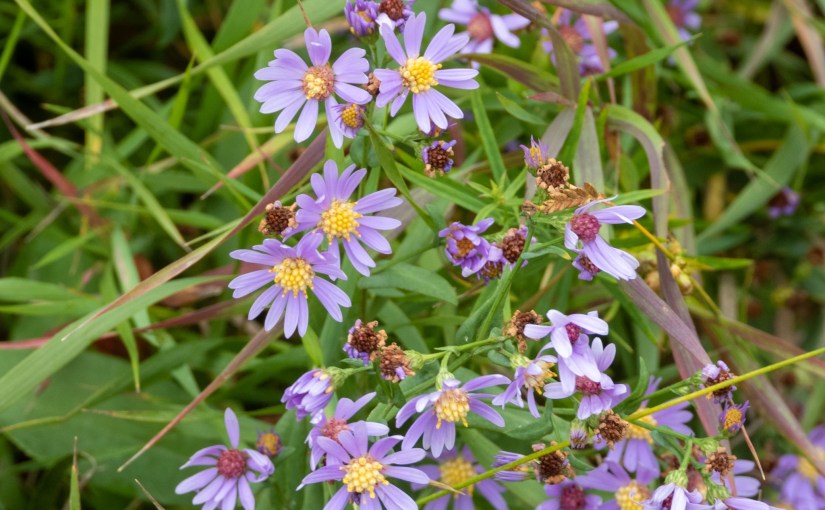
I have seen the pretty violet and yellow flowers in the Whitemud Ravine all summer long, but have somehow not stopped to try to identify them yet. Since they are likely to going to be astound for much longer + because most other flowers are gone by now I figured I better do something about this omission before it is too late. Identifying these flowers was not hard. They are Smooth Blue Asters (Symphyotrichum laeve) and is found throughout North America in fields, open woods and along roadsides. They have composite flower heads where each flower actually is made up of smaller flowers consisting of ray flowers (petals) surrounding disk flowers (the yellow centre). The asters are often one of the latest plants flowering after all other species are past their flowering stage.

Blue Aster (Symphyotrichum leave) at Whitemud Ravine. September 9, 2019. Nikon P1000, 258mm @ 35mm, 1/125, f/4.5, ISO 160

May the curiosity be with you. This is from “The Birds are Calling” blog (www.thebirdsarecalling.com). Copyright Mario Pineda.

Project 366 – Post No. 164 – The color of fall

What is Project 366? Read more here!

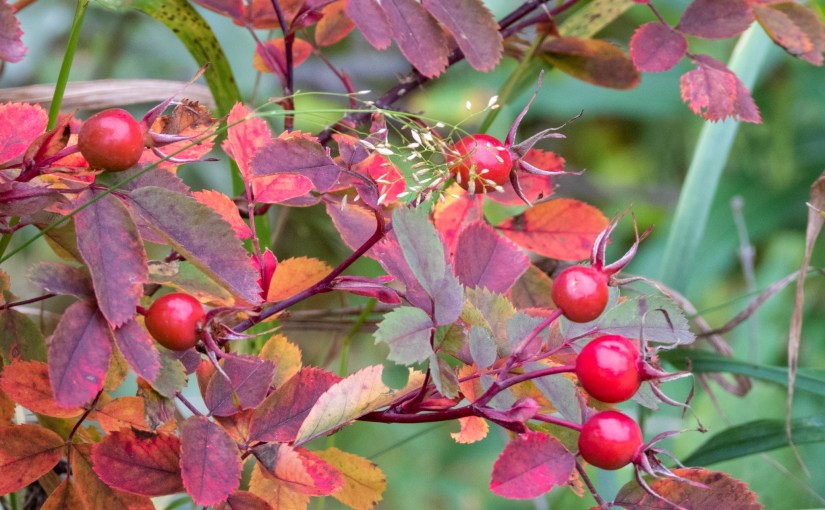
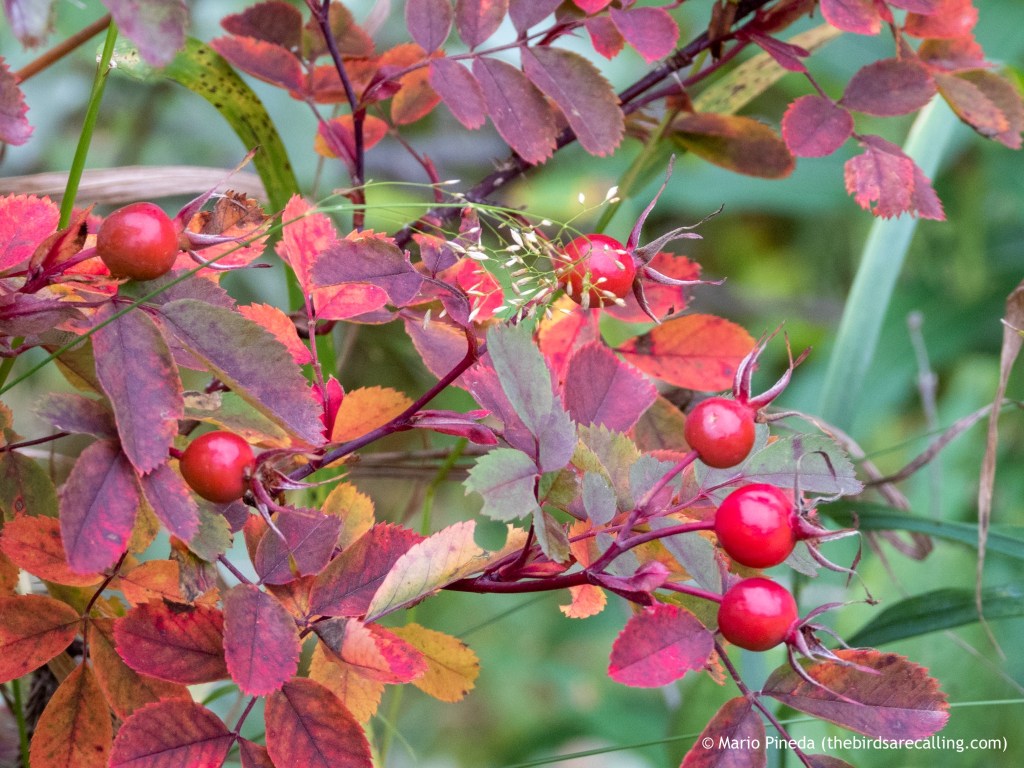
Summer is not even over yet but the fall colours are impatient and the Prickly Wild Roses are already turning red. The process of leaves changing color in the fall is surprisingly complex. Perhaps the most common explanation for color change in leaves is the withdrawal of chlorophyll. This appears, however, to only be true for leaves that turn yellow. The yellow seen in some autumn leaves result from the loss of chlorophyl unmasking the yellow carotenoids that were there all along. Red leaves, on the other hand, come from stopping the production of chlorophyll and starting the production of anthocyanin, which also gives raspberries their red colour. The Prickly Wild Roses along the trails have rapidly turned red over the last week while most other plants still are green.

Prickly Wild Rose (Rosa aciculares) in fall colours at Whitemud Ravine. September 9, 2019. Nikon P1000, 258mm @ 35mm, 1/125, f/4.5, ISO 400

May the curiosity be with you. This is from “The Birds are Calling” blog (www.thebirdsarecalling.com). Copyright Mario Pineda.
Project 366 – Post No. 163 – Blue spruce

What is Project 366? Read more here!

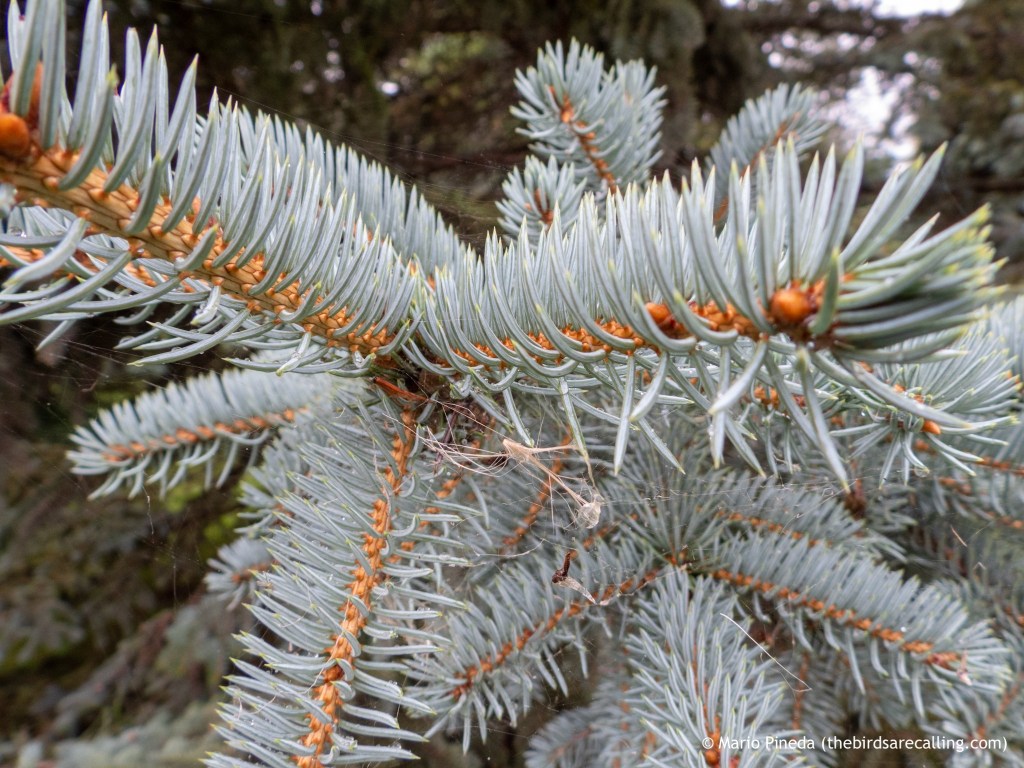
The Blue Spruce (Picea pungens) can be found natively through the Rocky Mountains with Alberta being its northern limit. These evergreen shrub with their blue-green needles and perfect conical shape have a regal looking about them. In traditional First Nations medicine the needles are used for an infusion to treat colds and an upset stomach. These are slow growing trees that with as lifespan of hundreds of years. The squirrels in the river valley have a particular fondness for the cones of the Blue Spruce. It’s not uncommon to see squirrels with in full speed with carrying spruce cones to their middens where they store them for the winter.

Blue Spruce (Picea pungens) in Hawrelak park. August 31, 2019. Nikon P1000, 24mm @ 35mm, 1/60, f/2.8, ISO 100

May the curiosity be with you. This is from “The Birds are Calling” blog (www.thebirdsarecalling.com). Copyright Mario Pineda.

Project 366 – Post No. 162 – Bad hair day

What is Project 366? Read more here!

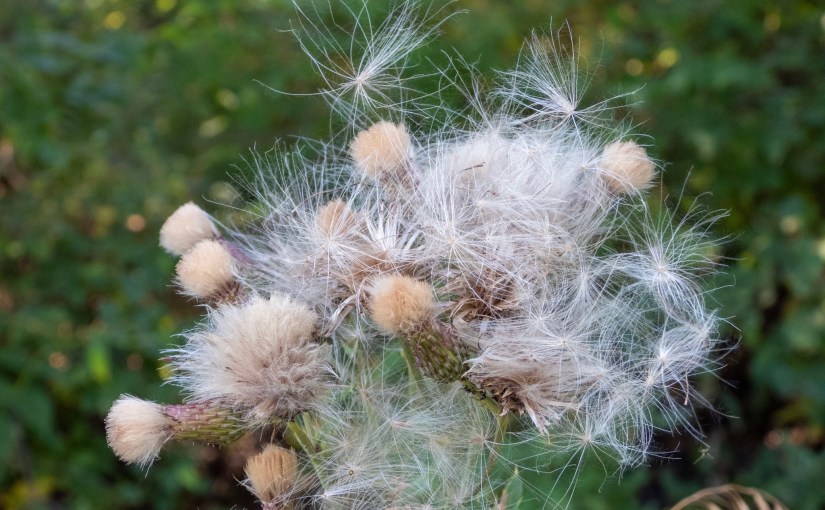
The seeds of the Creeping Thistle are about to get airborne. All it will take now is the slightest of wind puffs and they are on their way. This inflorescence almost looks like it has a bad hair day. But it will not last. Soon the seeds will be gone with the wind. Each Creeping Thistle plant can produce thousands of seeds at the end of the summer. In addition to reproducing using wind-dispersed seeds, the Creeping Thistle also reproduced vegetatively by creeping roots (rhizomes). These two reproductive methods result in the plant being a formidable weed that, once established, is virtually impossible to eliminate. It often invades crop fields and grasslands where it lowers crop yields and forage productivity.

Creeping Thistle (Cirsium arvense) seeds in Whitemud park. September 5, 2019. Nikon P1000, 78mm @ 35mm, 1/60, f/3.5, ISO 200

May the curiosity be with you. This is from “The Birds are Calling” blog (www.thebirdsarecalling.com). Copyright Mario Pineda.
Project 366 – Post No. 161 – Roosting American Crows

What is Project 366? Read more here!

It was a late sunny afternoon down at the Whitemud park and I noticed that a lot of crows were flying around, all seemingly heading in the same direction.It turns out that these were crows on a mission. The were all heading to a grove of dead trees for their night roost. A crow night roost is basically a corvid slumber party. The crows were pretty mellow with only the occasional squawk and scuffle disturbing the peace. I can see that there could be numerous benefits to such a corvid sleeping party. Perhaps one of the more obvious benefit is safety in numbers. There are more eyeballs to keep watch for predators at night of the crows roos together. It would be interesting the come back to this location to see if they use the same roost location every day (I suspect that might) or come back in early in the morning to see if they are still there.

Roosting American Crows (Corvus brachyrhynchos) in Whitemud park. September 5, 2019. Nikon P1000, 370mm @ 35mm, 1/320, f/5, ISO 100

May the curiosity be with you. This is from “The Birds are Calling” blog (www.thebirdsarecalling.com). Copyright Mario Pineda.
Project 366 – Post No. 160 – Chokeberry bumper crop

What is Project 366? Read more here!

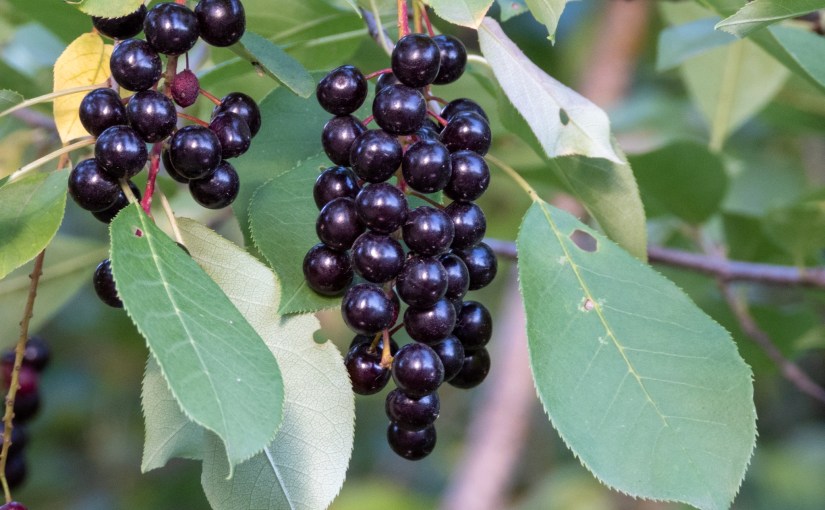
Looks like the warm and sunny weather that did not arrive this summer has arrived in the eleventh hour of the summer. The beautiful weather was simply impossible to resist and we decide to go for a family walk in Whitemud park tonight. It was a sunny afternoon, the hot air balloons were out and the fitness buffs were out burning far too many calories far to fast. We did not see much in terms of birds other than around 50 crows gathering for the night. We came across a gentleman with a large bucket harvesting Chokeberries along the trail. The rainy summer has resulted in a bumper crop of all manners of berries, including the Chokeberries. The Chokeberry bushes were heavy of large, plump and ripe fruit. This is my first encounter with a plant that is native to North America but has been introduced in Europe. Usually the situation seems to be the other way around. Chokeberries can be processed into jam, syrup, tea and wine, but can also be eaten raw off the bush. We tried some fresh berries. The flavour was quite tart and made the mouth feel dry. Apparently the technical term for this sensation is astringency. It also turns out the fleshy part of the berry is pretty much the only part of the plant that is non-toxic. The rest of the plant, including the leaves, twigs, bark and the pit in the fruit are toxic and can cause cyanide poisoning in humans and livestock. As I was sampling the berry I recall being surprised at the size of the pit and I am happy that I decided to spit it our rather than consume it.

Ripe bumper crop of Chokeberry (Aronia melanocarpa) in Whitemud park. September 5, 2019. Nikon P1000, 370mm @ 35mm, 1/60, f/5, ISO 400

May the curiosity be with you. This is from “The Birds are Calling” blog (www.thebirdsarecalling.com). Copyright Mario Pineda.