Encountered the first butterfly of the year down at the Whitemud Ravine yesterday. Actually, I saw quite few of these little guys. These are Compton tortoiseshell butterflies (Nymphalis vaualbum) and is usually one of the earliest butterflies to be seen in the spring. This species is circumpolar around the Northern Hemisphere and, hence, is found across Canada south of the tundra. Nature is slowly waking up after a long winter but this far north everything is happening much later compared to locations further south south. We still have to see any signs of greenery. Any day now I hope. Things are likely to pickup speed during the last two weeks of April.
May the curiosity be with you. This is from “The Birds are Calling” blog (www.thebirdsarecalling.com). Copyright Mario Pineda.
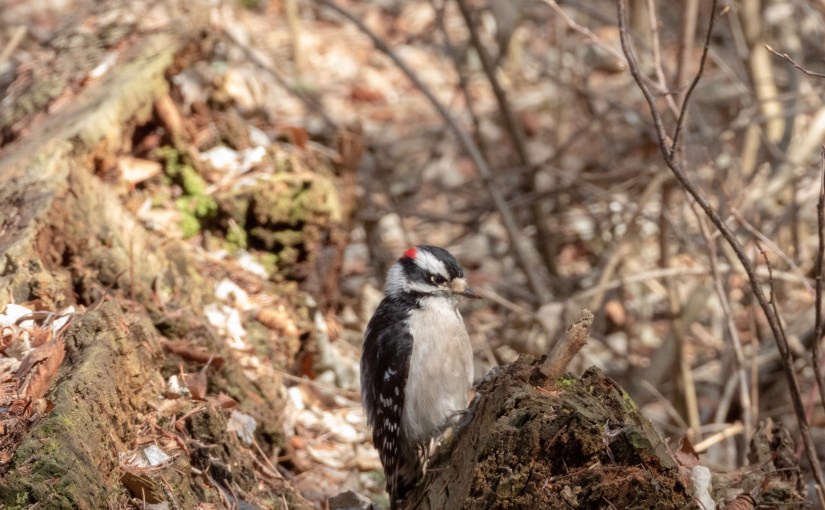
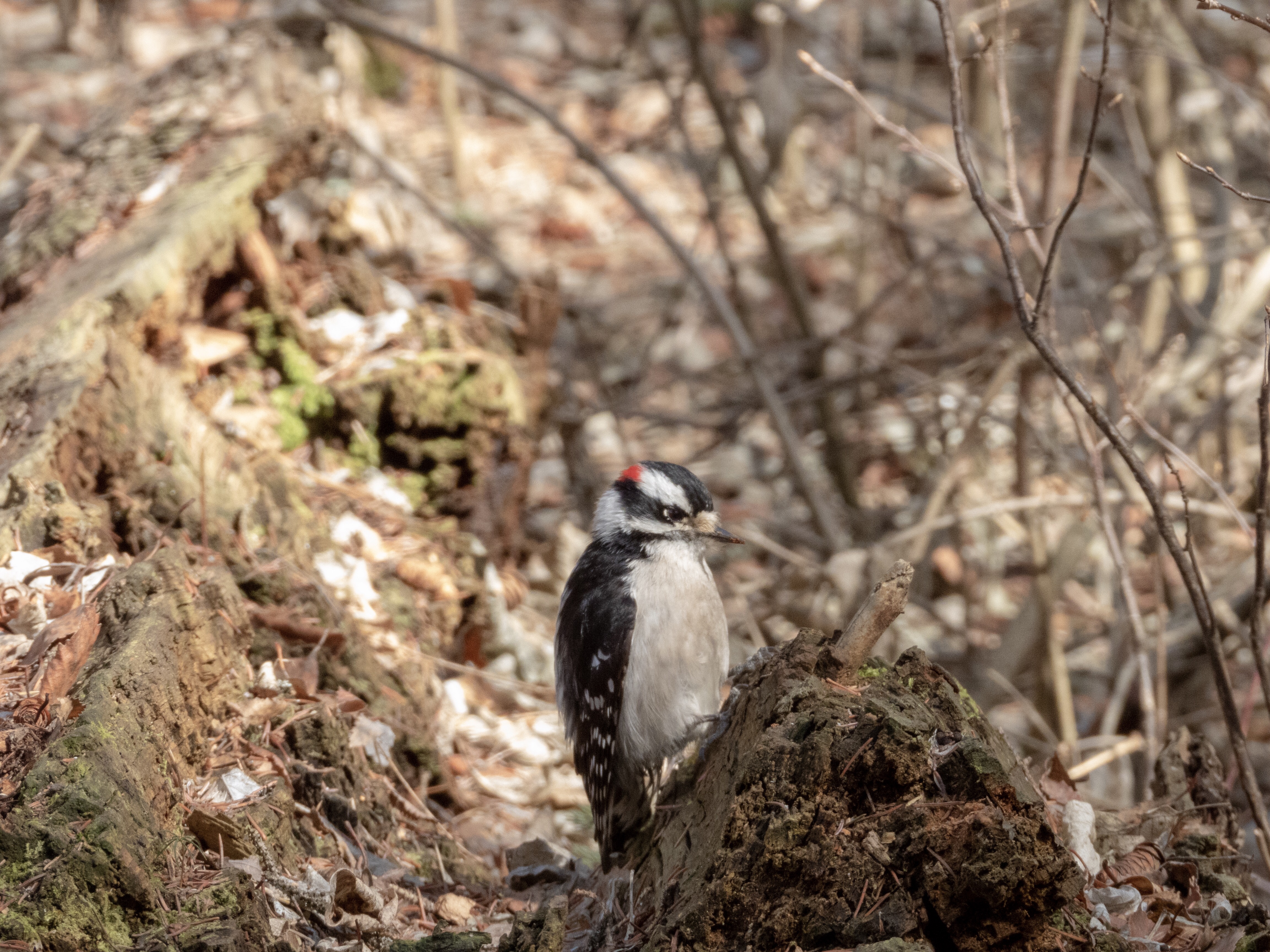
The Downy Woodpecker is the smallest North American Woodpecker and quite likely also the cutest. The Downy Woodpecker holds a special significance to me as it is the first species that I identified for my 2019 Alberta Big Year. Today I found this little guy (the red patch indicates it is a male) down on the forest floor spending a long time going through all the nooks and crannies of an old log looking for anything to eat. Downy Woodpeckers are not shy and often come to suets in the winter. Today I realized, however, that they are tricky to photograph as they tend to be quite energetic and move around a lot. One of the first identification challenges I encountered when In started birding was to tell downies apart from their larger lookalike, the Hairy Woodpecker. Other that a slight size difference, with the Hairy being a tad larger, all other distinguishing characters are very subtle. The breakthrough for me came when I visited Beaverhill Bird Observatory in December and encountered both species at the bird feeder at the same time. Ever since that day I have had no troubles distinguishing between the two. The next few bird species that I would benefit from having next to each other to get that light bulb moment would be a Canadas Goose vs. a Cackling Goose and a Bohemian Waxwing vs. a Cedar Waxwing.
May the curiosity be with you. This is from “The Birds are Calling” blog (www.thebirdsarecalling.com). Copyright Mario Pineda.
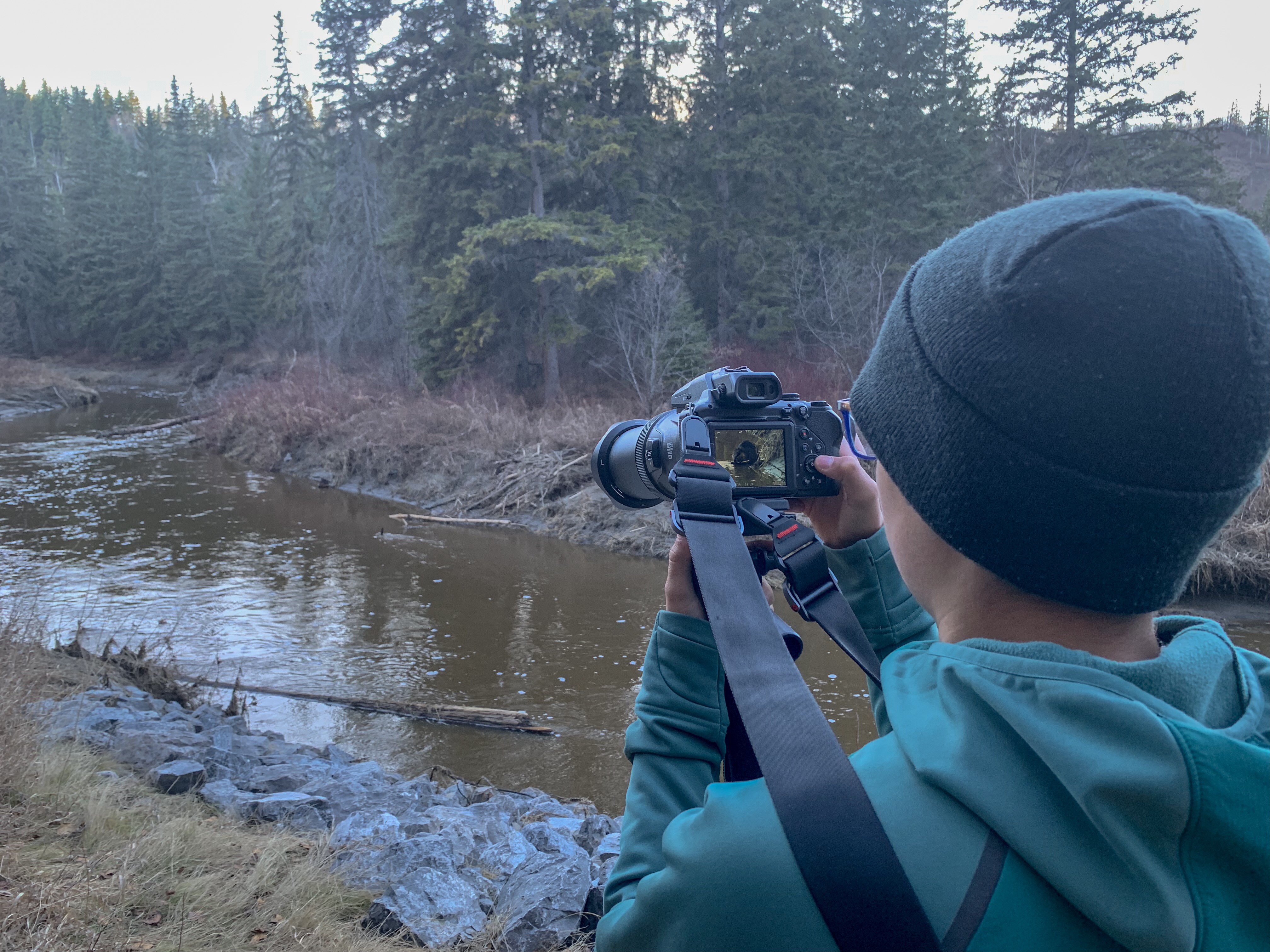
Monday after school we grabbed a quick snack, out gear and headed right down to the Whitemud Ravine. After a weekend of birding out of town we were antsy to check in on our Great-horned Owl couple. The female is in a large tree cavity sitting on eggs while the male is always on guard in a nearby tree. The eggs are predicted to hatch any day now. Well, they were still there. Nothing new and no indications that the eggs have hatched. Other than mom and pops owl, there was not much bird action along the creek. The lack of birds was, however, more than made up by beaver action. There were beavers everywhere. Swimming in the creek, sitting on the banks and waddling along the shore. We stopped counting at ten beavers and instead focused on trying to shoot pictures instead. Unfortunately it was an overcast day and the sun was getting low so our bridge camera had trouble with the low light. The photos turned out blurry no matter how we sliced it. Either the shutter speed was to slow or the ISO was to high. Even without the pictures though it was quite a show. Some of the beavers were “muzzle wrestling”, they swam up towards each other, their muzzles side by side and then they pushed each other around in the water. The interaction was not overly aggressive so I am not sure if these were hostile or friendly encounters. On our way back to the car we managed to track down a rumoured porcupine sitting high in a pine tree. We have heard stories of this fella from other birders but we have never managed to track him/her down…, until today. Clearly the porcupine did not want to be disturbed so we took a few grainy pictures of his spiky derrière and called it a day.
May the curiosity be with you. This is from “The Birds are Calling” blog (www.thebirdsarecalling.com). Copyright Mario Pineda.
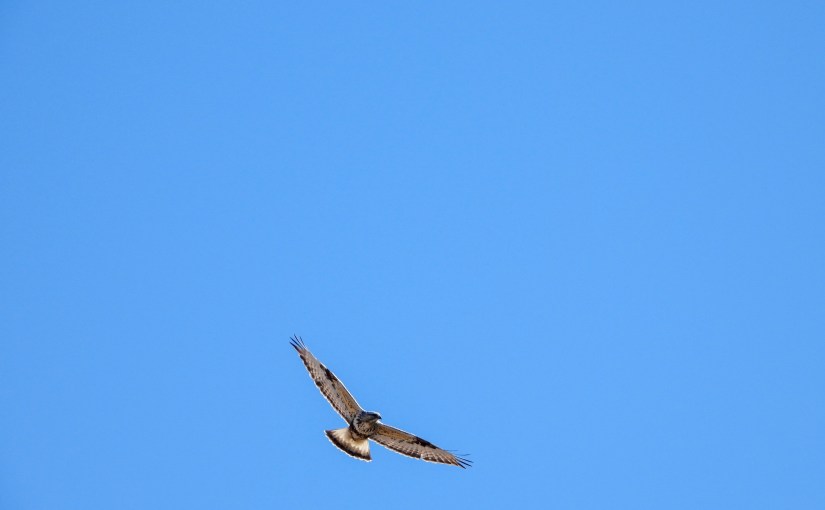
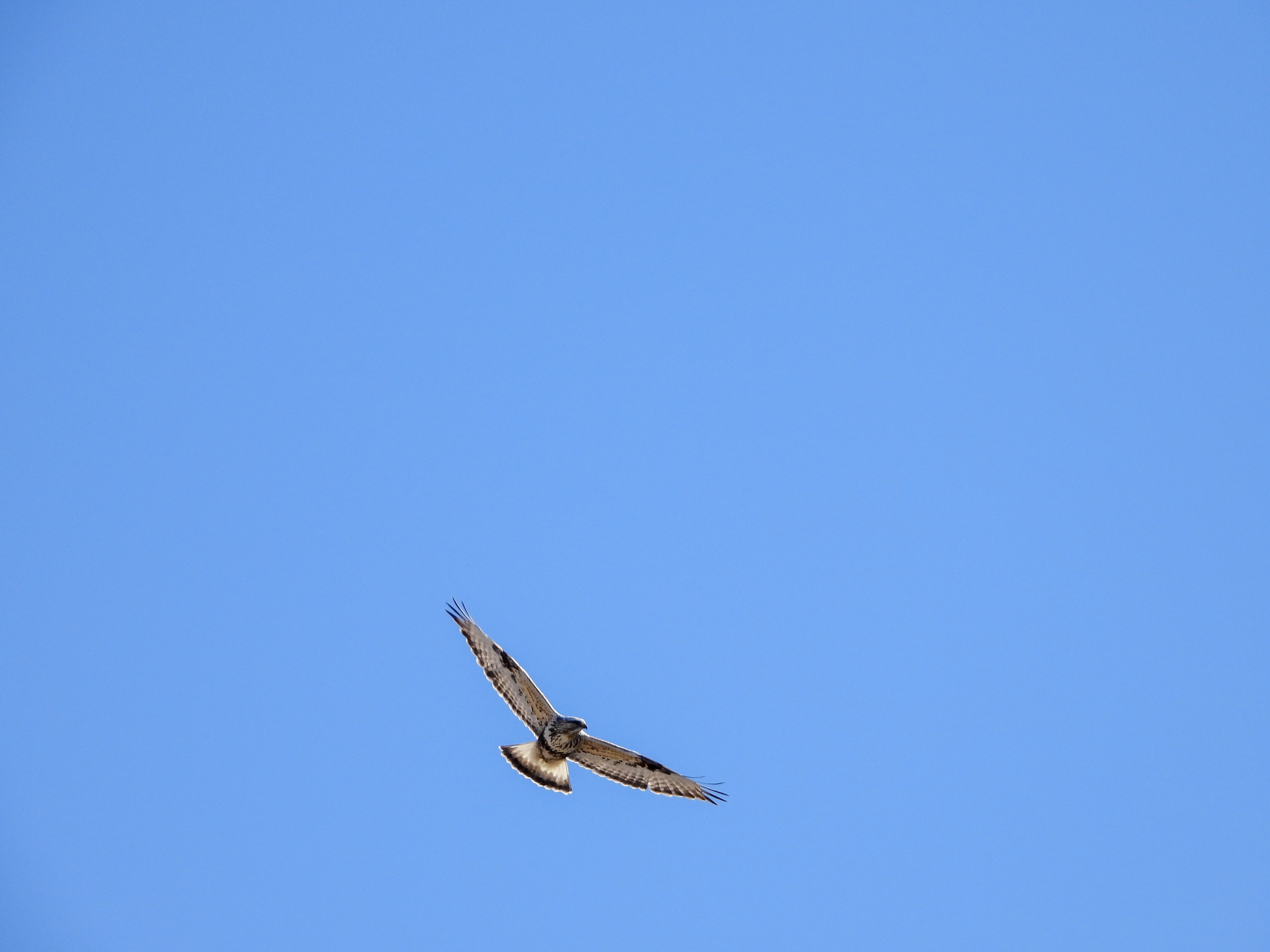
This time of year the area East of Beaverhill Natural Area is buzzing with returning migrants and where there is food, there are predators. I imagine the birds of prey must be busy hunting to recover from (or prepare for) their migration and get ready for breading season. This area has a rich diversity of birds, probably because of its vicinity to the Beaverhill Natural Area and the Beaverhill Lake, which is an important habitat for migrants and shorebirds in particular. We spend most of the last weekend in this area and were treated to an abundance of species, including a Snowy Owl and more Rough-legged Hawks that I can count. It was as if every tree along the road had a hawk in it. Many of them were soaring or hovering in the strong breeze over the vast open stubble fields. Occasionally one would focus in on a specific spot far out in a field, hover above it and then do a kamikaze-like dive towards the ground. Clearly they were in a hunting mode. We never saw one actually catch anything, so I am not sure what success rate is. I imagine, however, that with the snow gone and nothing growing on the fields yet, it must be a good set up for spotting any little rodent scurrying around on the ground. This was also an opportunity to test our new camera set up for some BIF (Birds In Flight) shooting. With a beautiful blue sky, no clouds in sight and the sun beaming down the conditions were perfect for some awesome photography. We did manage to get a few keepers, including the photo below of an adult light morph Rough-legged Hawk looking for his or her next meal. Apparently the “hockey pucks” on the wrists are typical identifies. During the summer Rough-legged Hawks breed in the arctic and during the winters they migrate to southern Canada and the USA.
May the curiosity be with you. This is from “The Birds are Calling” blog (www.thebirdsarecalling.com). Copyright Mario Pineda.
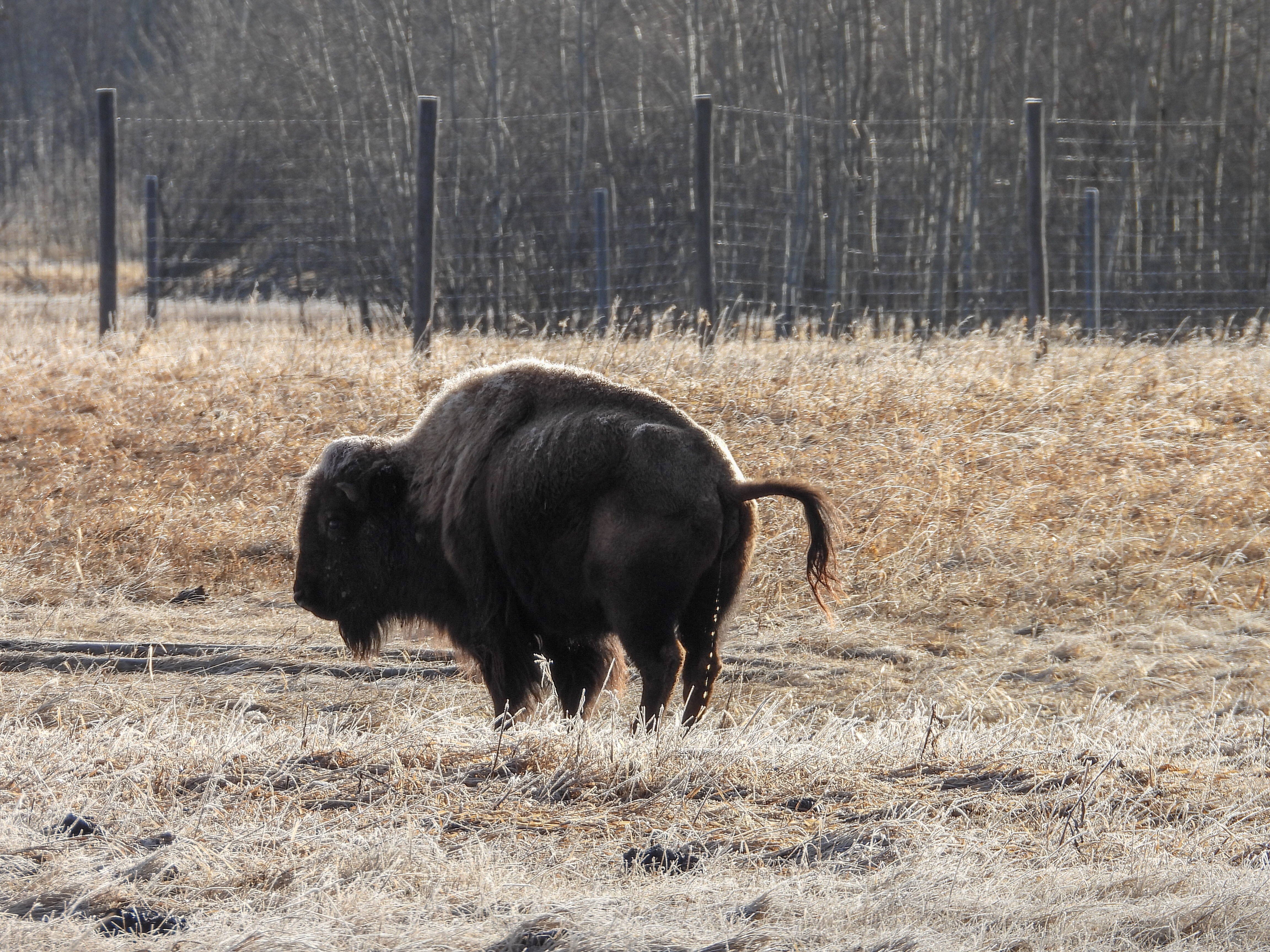
The sun was rising over the highway as I was heading east on my way to an early morning excursion at Elk Island National Park. As far as national parks go, Elk Island National Park is the smallest national park in Canada. It is unique, however, in that it is the home to the highest density of ungulates in Canada. Perhaps the most famous residents are the Plains Bison (in the northern part of the park) and the Wood Bison (in the southern half of the park). While this park never seems to get very busy, getting there early on a Sunday morning guarantees that one will have the whole place to oneself. Other than a very energetic Pileated Woodpecker going to town on a wooden power pole, the ravens, Black-capped Chickadees, Canada Geese and starlings were out. The pothole lakes in the park were still largely frozen over while most lakes outside the park seem to have open water by now. The Canada Geese were, however, patiently biding their time, hanging out on the frozen lakes waiting to get their feet wet. I found a dozen Plains Bison just chilling in the sunrise, including the female on the picture that unabashed relieved herself right in front of me. On this particular morning, the males were more into doing number twos.
May the curiosity be with you. This is from “The Birds are Calling” blog (www.thebirdsarecalling.com). Copyright Mario Pineda.
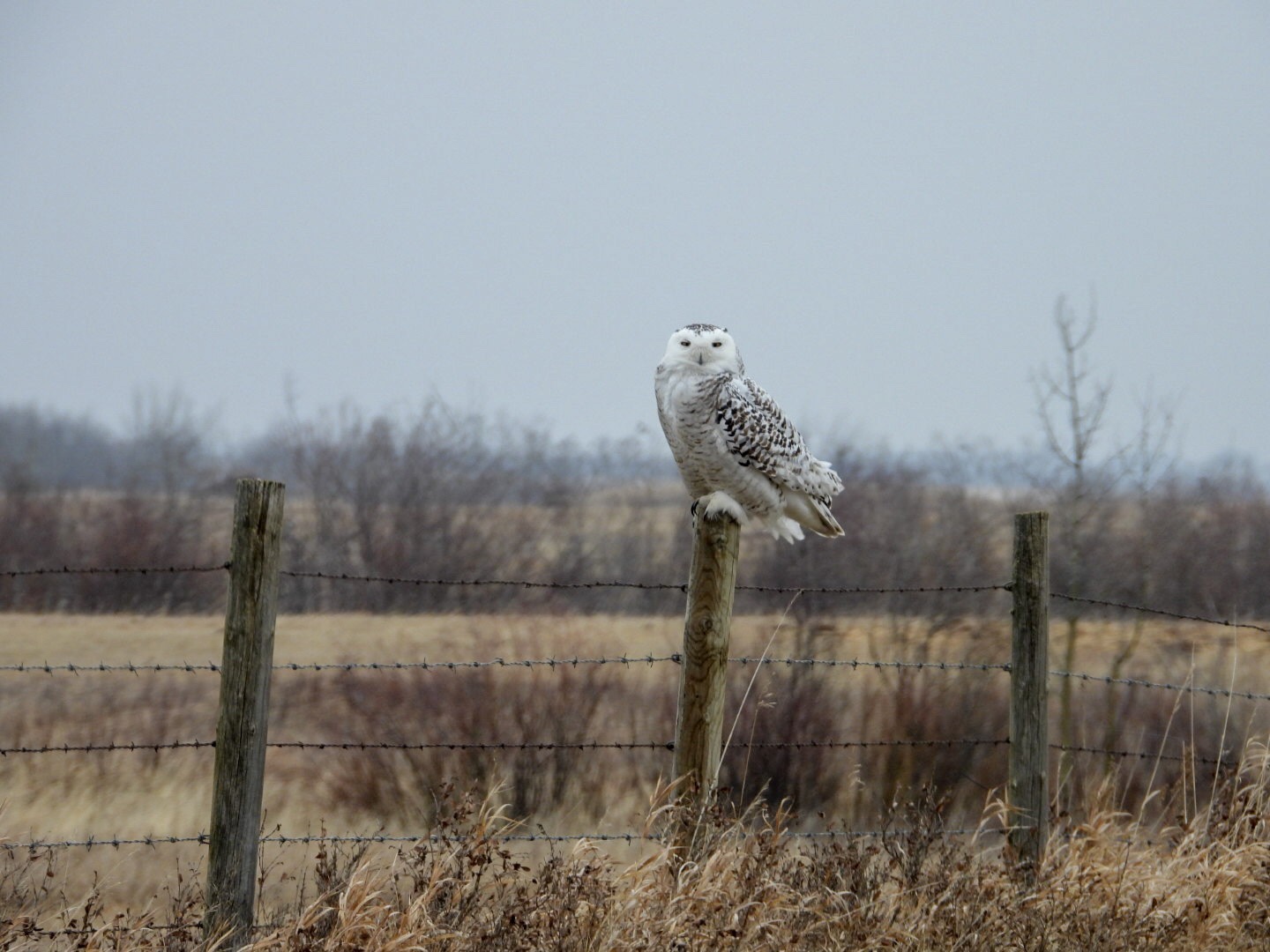
Snowy Owls spend the winters in Alberta only to return to the arctic in March and April. Last weekend (April 6) we were out by Beaverhills Lake Natural Area, crisscrossing the country roads looking for returning migrants. We were hoping for a diverse assortment of water fowl and crossing our fingers for the ephemeral Snow Goose. We had just checked out a waterlogged field where a large group of Snow Geese had been seen the previous day. Alas, they had moved on by the time we made it there. A bit bummed we rumbled on along the dusty gravel roads when, all of a sudden, in the distance I noticed a large “poofy” mass on top of a fence post along the road. Although I am an owl noob, I have seen enough owls this winter that I know to scan for “large poofy masses”. I though to myself, “that looks like an owl”, never actually seriously thinking it would be an owl. As we approached, I could not help myself from slowing down, just in case. Well, would you believe it. It was a lonesome and gorgeous Snowy Owl. The car came to a screeching halt. I yelled to my companions in the back seat: “OWL UP AHEAD”. Everyone dropped what they were doing. I have never seen a pair of teens becoming unglued from their cell phones so fast. We had barely come to a stop, the windows were already down, binoculars up and I threw myself out of the car with the camera ready to shoot. The owl could not care less. It sat there looking at us indifferently and eerily cool. This was an unexpected treat. While we did see a Snowy Owl a few months ago I had simply assumed that they had all left for their arctic summer. Checking eBird later that day, revealed that, indeed the only Snowy Owl sightings for the month of April in Alberta were right in the area were we were. As a matter of fact, the same day another reporting of a Snowy Owl was recorded just a few km away along the same range road. Could it be the same owl? It’s possible, or maybe there are more holding on to our Alberta spring. I assume this will be the last Snowy Owl for this winter. So long Snowy Owls. Bon voyage and see you next winter.
May the curiosity be with you. This is from “The Birds are Calling” blog (www.thebirdsarecalling.com). Copyright Mario Pineda.
It is difficult to have the Monday blues when you got to spend the gorgeous spring weekend in the great outdoors. I did an early morning foray to Elk Island National Park to catch the bison at sunrise (I did not manage to convince anyone else to join me) and we went on two trips out to the area east of Beaverhill Natural Area in search of the elusive Snow Goose. The Snow Goose chase is a story in itself but it suffice to say that we ended up crisscrossing the Range Roads and Township Roads in the area. Virtually all the snow is gone by now and the majority of ponds and lakes are ice free. Many of the fields are inundated with shallow ponds, something the water fowl are taking full advantage of. We did not focus our attention on these birds (the Snow Geese were calling) but during a brief pit stop on a dusty and desolated Range Road I took the following picture of some water fowl enjoying the gorgeous spring day. While the image quality and composition is nothing to write home about it serves as a good example of the genre of documentary wildlife photography I am aiming for. While beautiful composition and top notch image quality always is a bonus my aim is to document an interesting species, behaviour or natural history artefact. Image quality and composition comes secondary. This image was taken at 210 mm focal length with a Nikon P1000 (that is 1512 mm in terms of 35 mm) and with ISO 250. I took the picture to help me id the two Northern Pintails (male is far left and the female is far right) hanging out with the Mallard couple. While we have seen the Northern Pintail previously (in the Keephills Cooling ponds a few months ago) last time they were, well, pinpricks on the distant horizon and we just had to trust pro-birders with high-magnification scopes for the identification. To date this is the clearest and closest view I have ever had of Northern Pintails, which is oddly satisfying. This is precisely the reason why we recently got a super-zoom bridge camera. So far it is serving its intended purpose. In the one week that we have used it, pictures from this camera has helped us to identify three different species, Northern Pintail, Rough-Legged Hawk and American Tree Sparrow (the last two being lifers).
May the curiosity be with you. This is from “The Birds are Calling” blog (www.thebirdsarecalling.com). Copyright Mario Pineda.
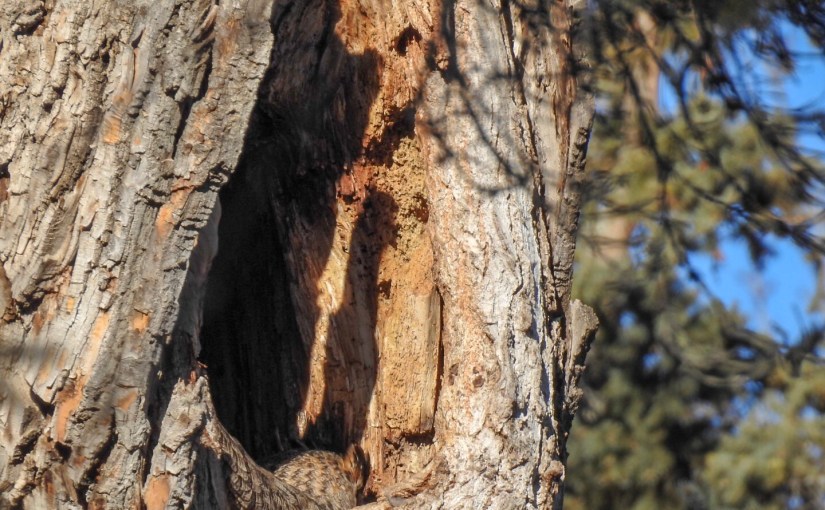
The female Great Horned Owl in Whitemud Ravine is on her 29’th day sitting the eggs. We have been down checking in on her several times a week in the last little while and she is always in her nest. The male is always on guard in a nearby tree. In this picture you can see her feathery rear end and the back of her head with the two characteristic “horns”, which are actually tufts of feathers. The significance of the horns is not fully understood but it is believed they are used in social interactions. The owl couple is always very chilled when we are around (which is during the day) and one can always see Red Squirrels defiantly romping around in the understory right below the owls. I suspect the tables are turned once darkness falls. I have entertained the idea of heading down to the owls at night. The next full moon is on March 20. Let’s see if I can convince anyone else to joint me on a night time nature walk.
May the curiosity be with you. This is from “The Birds are Calling” blog (www.thebirdsarecalling). Copyright Mario Pineda.
As we are trying to figure how to use our new camera for wildlife photography one of the main challenges always seems to be to try to get close enough to your subject. Well, that is not a problem with the local American Red Squirrel population. This picture was taken with our Nikon P900 at a focal length of 116 mm (650 mm at 35 mm equivalent) from only a few meters away. The little guy (or gal) was preoccupied gobbling down as many sunflower seed as possible and could not care less about us inching our way closer and closer while our camera was shooting away. In the Edmonton area we are still fortunate to have a thriving population of Red Squirrels, they are just as easily spotted in the local park or forest as in our neighbourhood backyards. They can be bold and brazen and very opportunistic. I have lost count of the number of squirrels I have had to evict from our house over the years,… that’s evicting from inside the house. While they might be cute one day and a brazen pest the next we are fortunate in Edmonton that the Eastern Gray Squirrel has not been introduced here. It is an introduced species in various locations in eastern North America, including in Vancouver and Calgary. In these cities it has become the predominant squirrel, essentially essentially replacing the native squirrels.
May the curiosity be with you. This is from “The Birds are Calling” blog (www.thebirdsarecalling). Copyright Mario Pineda.
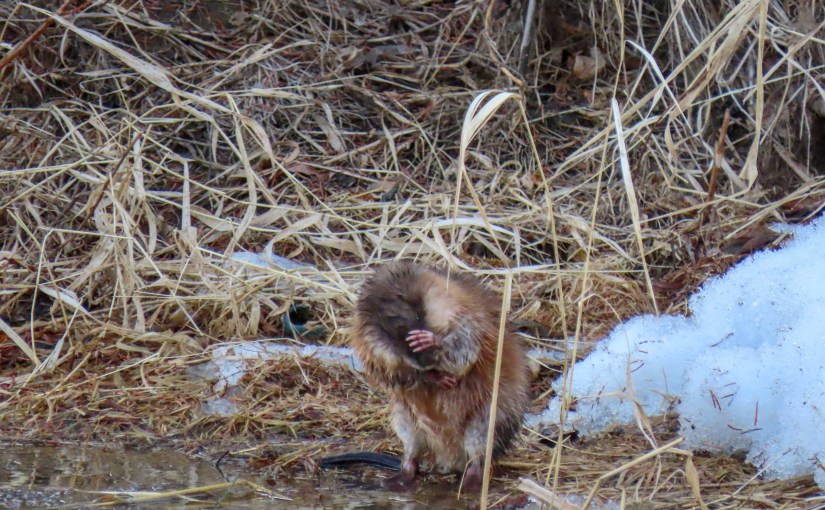
A few weeks ago, as the ice on the creek still was breaking up, we came across this fuzzy Muskrat sitting on a muddy back grooming himself. I imagine it must have just woken up from the long winter hibernation and was doing his “spring cleaning” of the fur. Muskrats are often found in association with beavers, and indeed, further down on the same muddy bank there were two adult beavers Also busy grooming themselves. While both Muskrats and beavers are rodents, they are not particularly closely related. Contrary to what the name suggests, Muskrats are not a species of rat. It’s closest relative are mice, voles and lemmings. It is basically a large field mouse adapted to an aquatic life. I was on the opposite side of the creek when I spotted it. Over the next few minutes I managed to slowly sneak through the vegetation until I was at the water’s edge right across from it, no more than 10 m away. While the both the Muskrat and the beavers must have known I was there, they completely ignored me and just minded their own business. While I have seen Muskrats before, this was the first time I have been able to study one this closely for an extended period.
May the curiosity be with you. This is from “The Birds are Calling” blog (www.thebirdsarecalling). Copyright Mario Pineda.