Project 366 – Post No. 118 – A sea of Cow Vetch

What is Project 366? Read more here!

There’s is a strip of meadow between the parking lot at the Whitemud Creek and the MacTaggard Sanctuary. This time of year it’s all pretty with flowers in bloom, bumblebees zipping between the flowers and thousands upon thousands of grasshoppers jumping around in the hot afternoon sun. Last week the meadow it was covered in a sea of purple flowers. Of course clueless as I am about botany I had no clue what they were. They were, however, not hard to identify once had access to Internet. It’s the Cow Vetch (Vicia cracca), also known as Tufted Vetch, Bird Vetch, Blue Vetch and Boreal Vetch, and although it is beautiful there are skeletons in its closet. It is native to Europe and Asia and an invasive species in North America where it is considered a weed. While the flowers are much appreciated by bees, bumblebees and butterflies, cattle like likes to munch on it and (allegedly) budgerigars have a particular fondness for the seeds it is a fast growing colonizing species and often dominates disturbed habitats before native plants have a chance to become established. Cow Vetch is in the family as peas and has climbing stems with noose-like branched tendrils that wrap themselves around other plants, often strangling smaller plants.

May the curiosity be with you. This is from “The Birds are Calling” blog (www.thebirdsarecalling.com). Copyright Mario Pineda.
Project 366 – Post No. 117 – The hunt for the elusive Pileated Woodpecker

What is Project 366? Read more here!

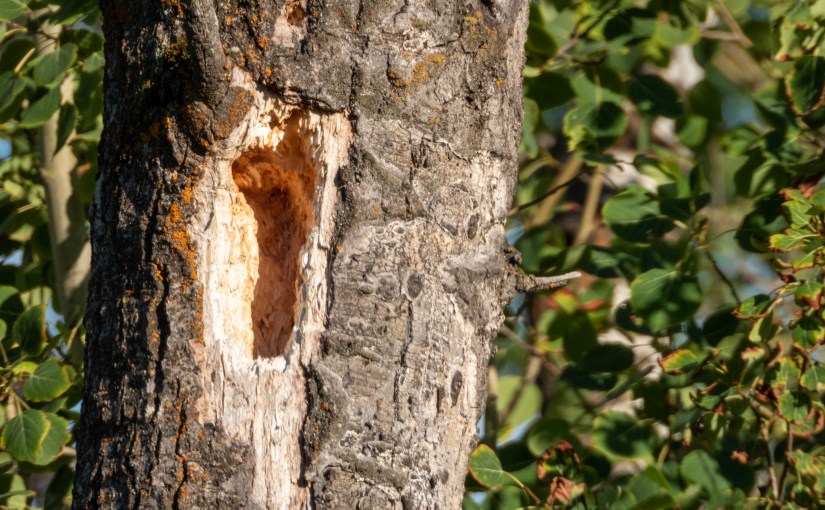
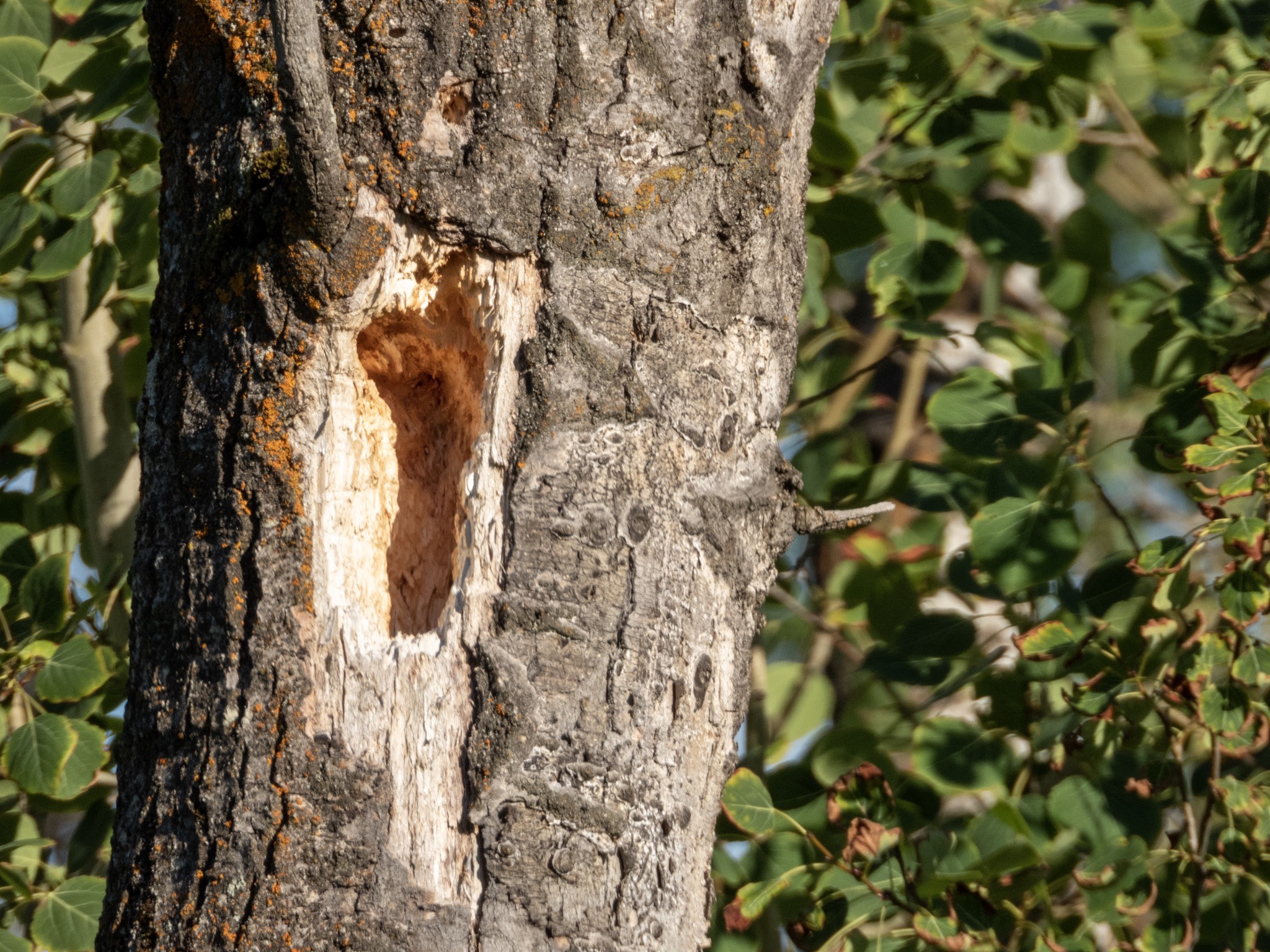
I have seen my fair share of Pileated Woodpeckers in my lifetime, including some spectacularly destructive individuals that went to town on trees with such vigour that the wood chip went flying. It is always a treat to come across one these birds. They not only spectacular and impressive birds, but also quite noisy. The distinct sound when they work on a tree and their vocalizations, reminiscent of a hysterically laughing monkey, can be heard far and wide. The one thing I have not managed to do in the Pileated Woodpecker department, however, is to take a good (or at least half descent) picture of one. I have numerous out of focus and fuzzy photos that would perhaps qualify for the crap bird photography page, but they are definitely nothing to write home about. The best place to see Pileated Woodpeckers in my neck of the woods is down at the Whitemud Ravine. I regularly see them flying around and most dead standing trees have evidence of their busy work, but I have yet to snap a picture of one in action.

May the curiosity be with you. This is from “The Birds are Calling” blog (www.thebirdsarecalling.com). Copyright Mario Pineda.
Project 366 – Post No. 116 – High water and arctic heat

What is Project 366? Read more here!

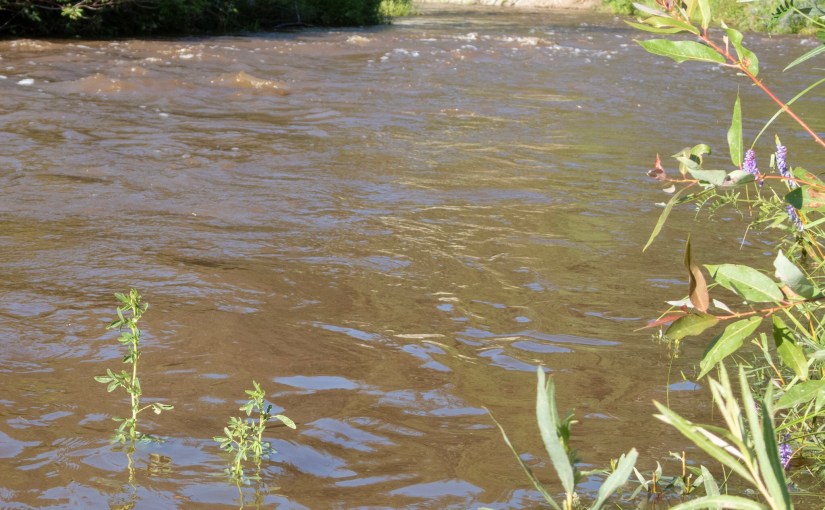
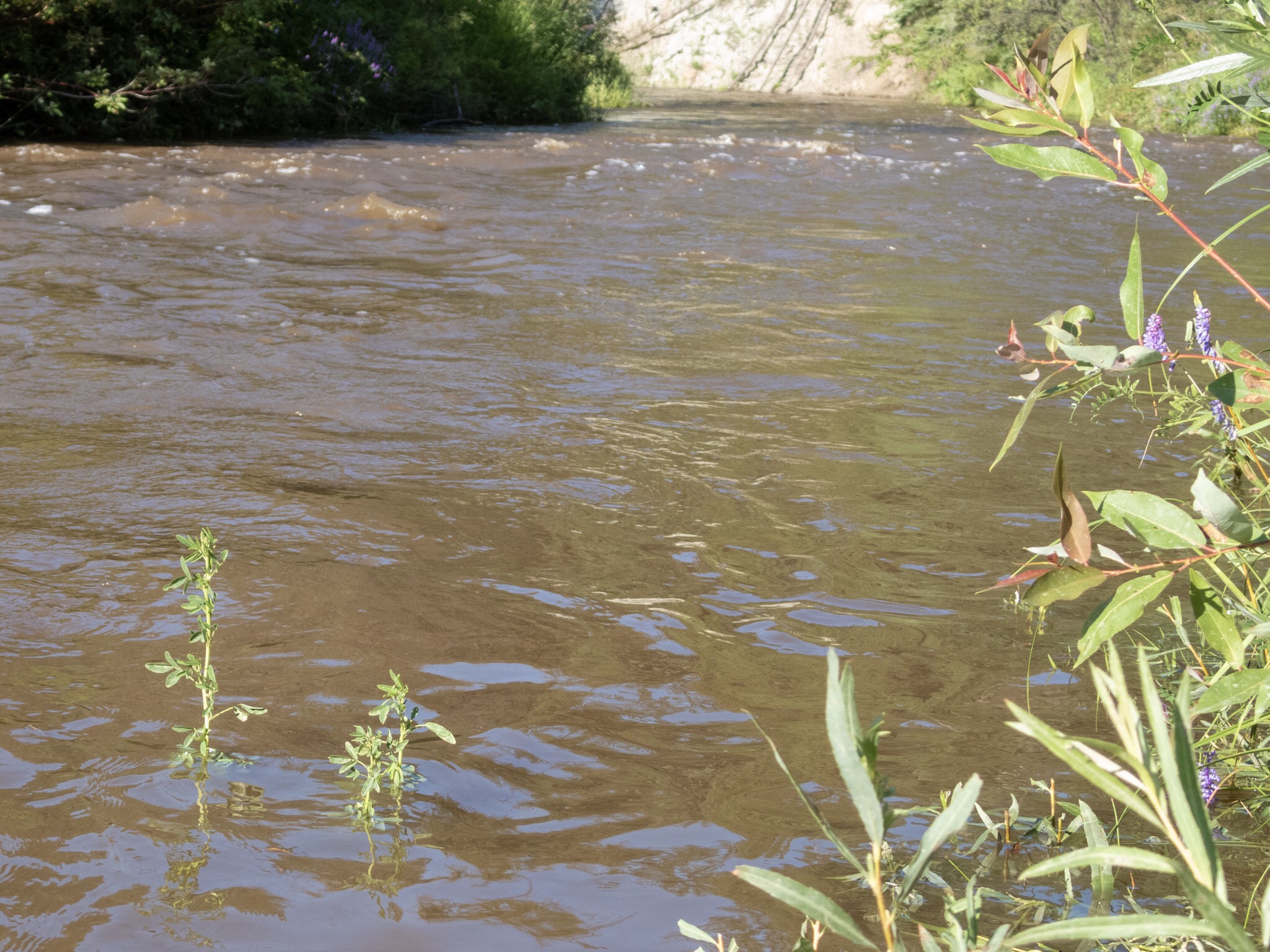
This weekend we had the first two days this summer without rain. It has been a wet summer with daily thunderstorms and serious downpours. As a result the water level in Whitemud Creek is unusually high with part of the creek having fast flowing and frothing whitewater. Parts of the swollen banks have overflowed and inundated vegetation that normally would be on dry land. There seems to be a break in the rain, but now the “arctic heat” has moved in. With temperatures soaring to 30 °C this heat wave is unusual in that it did not come in from the south, but rather from the Northwest Territories, which have been under a heat warning the last few days. The last few days I have been out looking for birds during the hottest part of the days, either mid day or late afternoon. Needless to say, the timing has been completely off and I have not seen much as far as birds go. I think we are looking at some early morning nature walks this weekend to try to remedy the poor timing and get back into the groove of things.

High water with submerged vegetation at at the Whitemud Creek. July 22, 2019. Nikon P1000, 571mm @ 35mm, 1/1600s, f/5, ISO 100

May the curiosity be with you. This is from “The Birds are Calling” blog (www.thebirdsarecalling.com). Copyright Mario Pineda.
Project 366 – Post No. 115 – The most loved bird in the world

What is Project 366? Read more here!

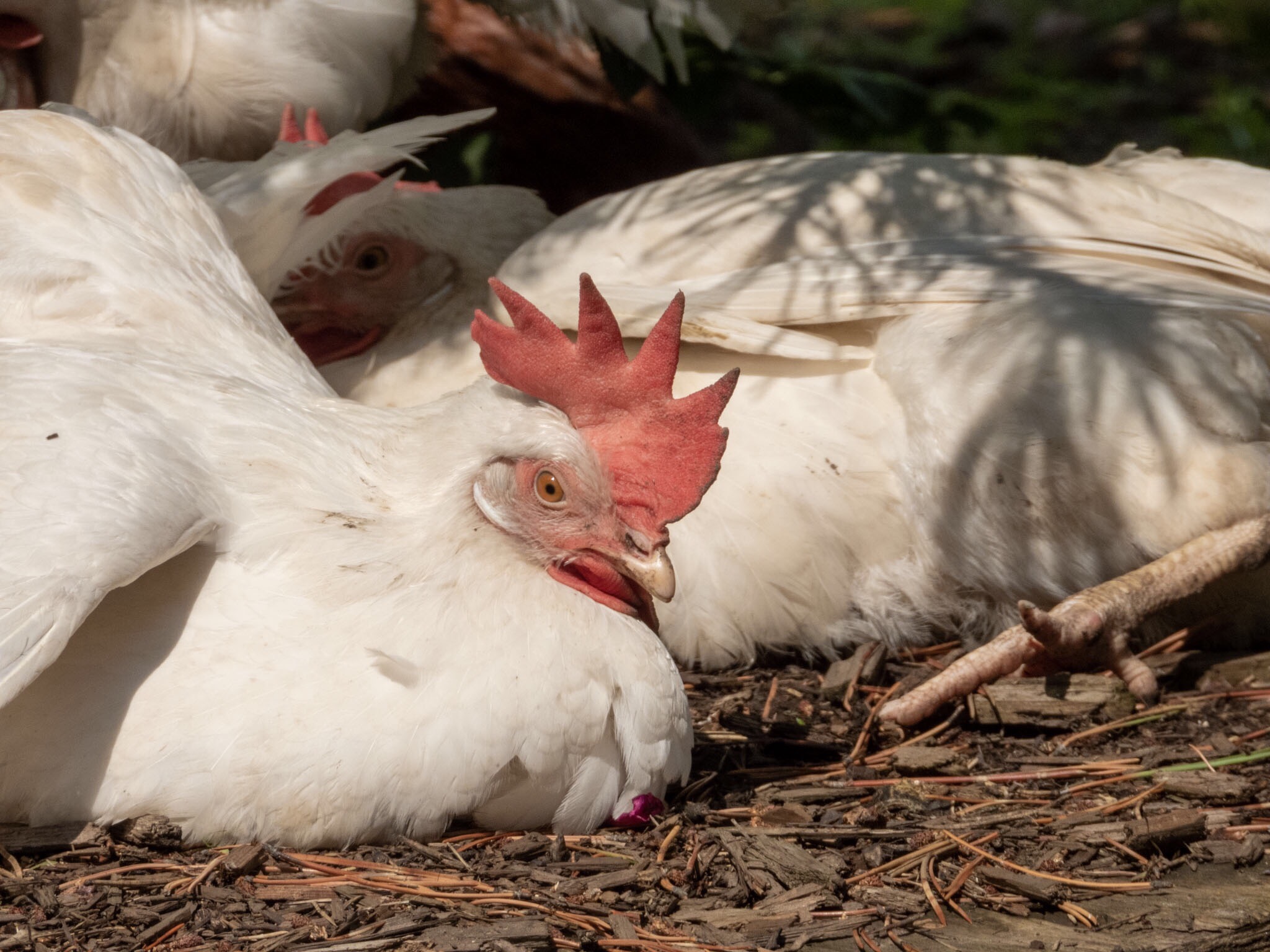
The world loves its chickens. With an estimated total world population of more than 19 billion most of which end up in soups, stews and barbecues there are likely more chickens around than any other wild or domesticated bird. For me chickens are a no fly zone, I don’t eat them (as in, I don’t eat meat) and I don’t count them (as in, I don’t count them as a birder). Yesterday, as we were visiting the Kiwi plant nursery outside of Spruce Grove, I encountered my first chickens not wrapped in ceranwrap. They were running around among the plants looking like they had a jolly good time without a worry in the world. There is a long list of criteria that need to be fulfilled for one to be able to count a bird (as a birder), e.g. one cannot count birds in movies or photographs (but some people are known to practice video game birding), one cannot count captive or caged birds and birds that have been introduced or released and have not established a viable population (there goes the errant budgie). Chickens, being captive, even when they are mischievously free running, are a no go. They were cute and funny though and I could not resist taking pictures of a few of the ladies basking in the afternoon sun. As I was observing them I found myself wondering where they came from (well, obviously from an egg, but before that…). Who is their wild chicken ancestor and are they still around? It turns out that the domesticated chicken (Gallus gallus domesticus) is a subspecies of the Red Junglefowl (Gallus gallus), a bird of the south East Asian tropics in the family Phasianidae. The junglefowl was first domesticated about 5000 years ago and the rest is history. Ebird refers to the Red Junglefowl as the “original chicken” and describes it as smaller than its domesticated descendants. The Red Junglefowl can be spotted running wild in South and Southeast Asia as well as in New Zealand and various Pacific and Caribbean islands where it was introduced. Well, now that I have met the domesticated chicken it seems only fitting that I one day track down and it wild cousins in a far more exotic location.

Domesticated Chicken (Gallus gallus domestricus) at Kiwi Nursery, Spruce Grove. July 20, 2019. Nikon P1000, 571mm @ 35mm, 1/1600s, f/5, ISO 100

May the curiosity be with you. This is from “The Birds are Calling” blog (www.thebirdsarecalling.com). Copyright Mario Pineda.

Project 366 – Post No. 114 – Barn Swallow standing on guard for thee

What is Project 366? Read more here!

As we were visiting the Kiwi plant nursery at the outskirts of Spruce Grove I notice a soft chattering sound among the trees and shrubbery. I was pretty sure it was a bird but I was not familiar with who the suspect would be. I did not have to wait long. In short order the Barn Swallows came swooping in at low elevation, crisscrossing the sky in death defying maneuvers. One of the swallows landed on top of a tall flag post with a large Canadian flag fluttering in the breeze. I just had to take a picture of this diminutive bird perched on top of the post with a gigantic flag. How do you compose a picture like this? One could zoom in to get a closer look at the swallow, but then the flag would not be in the picture. Alternatively you zoom out to fit both the swallow and the flag, but then the bird is just a speck. I choose the second option. You can sort of see the rust coloured breast of the Barn Swallow (if you squint) sitting on top of the pole without a care in the world.

Barn Swallow (Hirundo rustica) at Kiwi Nursery, Spruce Grove. July 20, 2019. Nikon P1000, 118mm @ 35mm, 1/1600s, f/5.6, ISO 100

May the curiosity be with you. This is from “The Birds are Calling” blog (www.thebirdsarecalling.com). Copyright Mario Pineda.
Project 366 – Post No. 113 – Invertebrate feeding frenzy

What is Project 366? Read more here!

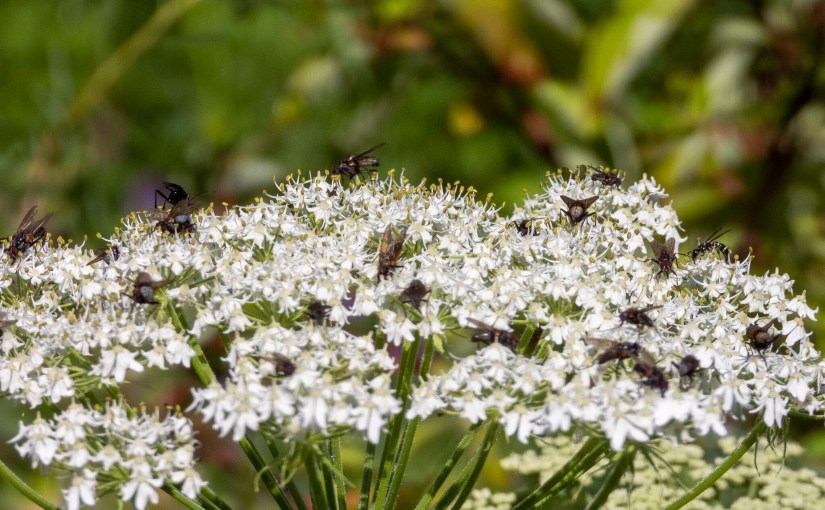
After the false alarm with the Giant Hogweed lookalike Cow Parsnip I have been seeing lots of these sheep in wolve’s clothing all over the place. The other day, as I spotted another specimen down at the Whitemud Ravine, I noticed that the inflorescence was busy with what looked like flies. I suspect the Cow Parsnip has something edible to offer to insects. While most of the insects looked like “regular” houseflies flies this is likely a complete misrepresentation of what they actually were. There seems to be a different looking fella on the far right of the flower that looks like a winged ant, perhaps it could be some sort of wasp, but I am going out on another limb here. Identifying insects is not trivial and I am an Uber noob at it to start with. It does appear the Cow Parsnips inflorescence attracts quite an attention from a wide range of insects such as mosquitoes, flies, hymenopterans, butterflies, thysanopterans and beetles.

Invertebrate feeding frenzy on a Cow Parsnip (Heracleum maximum) at the Whitemud Creek, Edmonton. July 13, 2019. Nikon P1000, 325mm @ 35mm, 1/1600s, f/5, ISO 100

May the curiosity be with you. This is from “The Birds are Calling” blog (www.thebirdsarecalling.com). Copyright Mario Pineda.

Project 366 – Post No. 112 – Common Goldeneye

What is Project 366? Read more here!

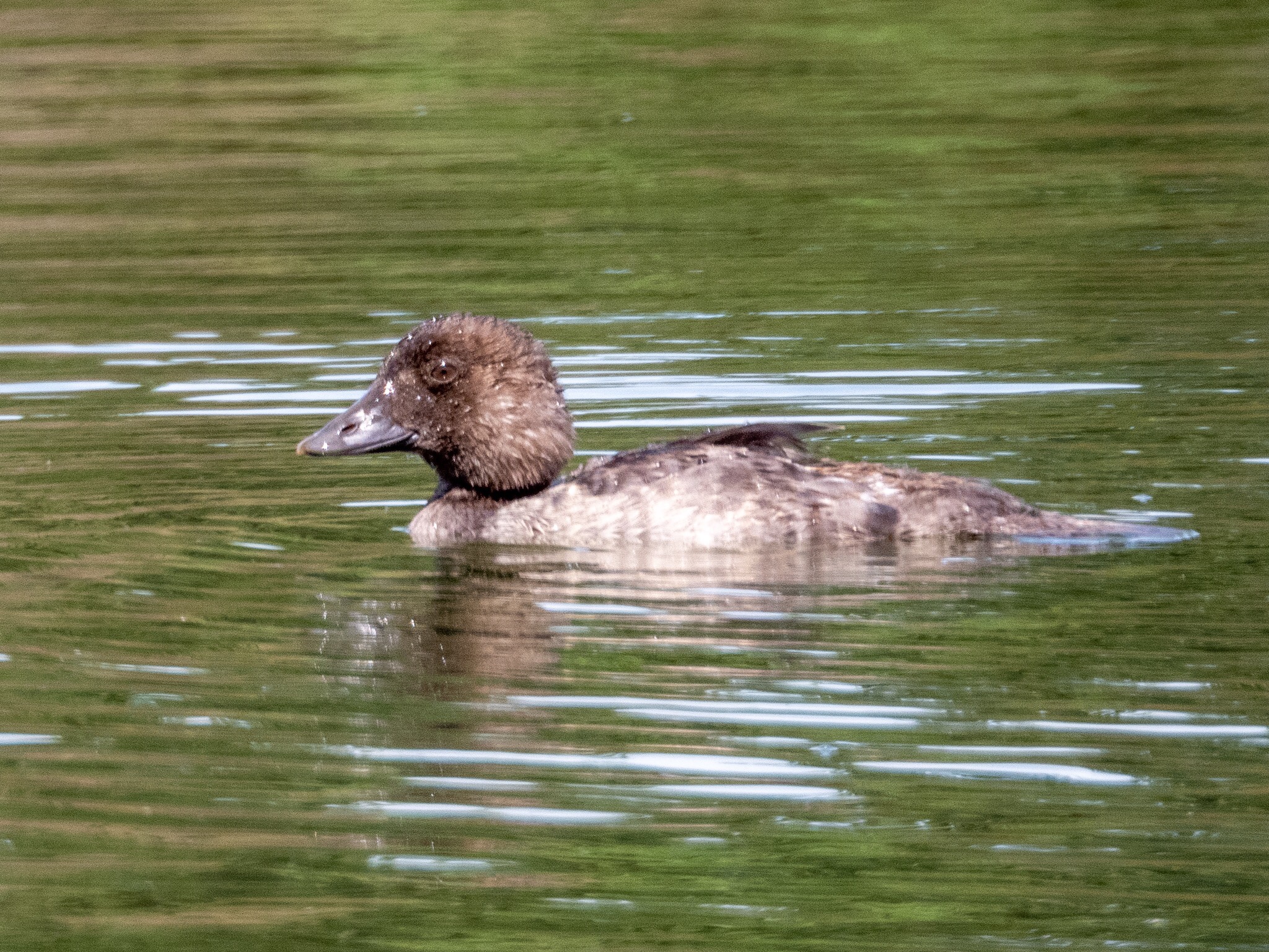
Common Goldeneyes have a distance appearance as adults. Females having a chocolate brown head, yellow eyes and males have a distinct white cheek patch. When I spotted this fella chugging through the pond in Hawrelak park my initial hunch was that its overall shape reminded me of a Common Goldeneye, yet none of the other physical characteristics were there (no yellow eye, no check patch). Upon closer research this is likely an immature Common Goldeneye. Common Goldeneyes are diving ducks and this fella certainly lived up to that reputation as it was energetically diving, popping up for a few seconds and then disappearing under water again. If you look closely you can see his head covered in water droplets and sporting a fuzzy wet do.

Immature Common Goldeneye (Bucephala clangula) at Hawrelak Park, Edmonton. July 14, 2019. Nikon P1000, 1008mm @ 35mm, 1/500s, f/5.6, ISO 180

May the curiosity be with you. This is from “The Birds are Calling” blog (www.thebirdsarecalling.com). Copyright Mario Pineda.

Project 366 – Post No. 111 – Vocal Red Squirrel

What is Project 366? Read more here!

One of the most common sounds in the forest along the Whitemud Ravine is the distinct chattering noise made by the Red Squirrel (Tamiasciurus hudsonicus). Red Squirrels are solitary and territorial rodents that use their vocalization to announce their presence and defend their territory. In the fall they collect spruce and pine cones and hoard them underground in a central storage depot called a mídden. The midden is the main source of food during the winter and allows the squirrel to remain active throughout the winter. Because of the importance of these food caches they readily defend their territory from other squirrels that dare venture into it. Their address in the forest is permanent as individual squirrels stay in their territory for their entire lives. We came across this Red Squirrel that was perched on a branch along the trail making a cacophony of chattering sounds. As we walked past it it just ignored us and continued its noise making. Clearly this was the head of this territory and no squirrel or human should not even dare to think otherwise.

Red Squirrel (Tamiasciurus hudsonicus) at Whitemud Ravine, Edmonton. July 13, 2019. Nikon P1000, 605mm @ 35mm, 1/80s, f/5, ISO 400

May the curiosity be with you. This is from “The Birds are Calling” blog (www.thebirdsarecalling.com). Copyright Mario Pineda.
Project 366 – Post No. 110 – American Wigeon

What is Project 366? Read more here!

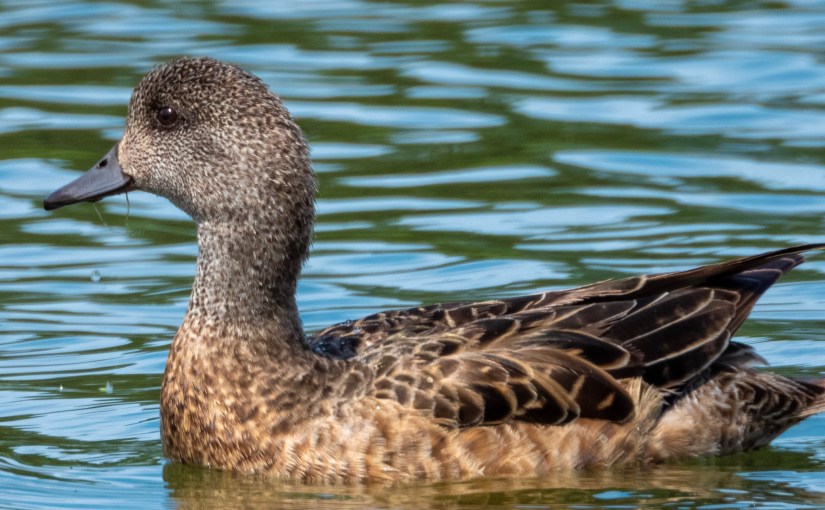
Mixed in with the mallards in the Hawrelak pond were a few ducks that looked different. They were clearly females in their modest drabness, but they did not look like mallard females. These were American Wigeons. Last time we encountered these we were at Coal Lake during our Big Day on May 4 together with the Edmonton Nature Club. The Hawrelak pond (it does not seem to have an official name) is man made and was build in 1964. The pond is popular with water fowl in the summer and human ice skaters in the winter. Although there is not public swimming it has been used for the swimming portion of triathlon competitions. Next week this year’s World Triathlon Championships are taking place which means that the water fowl will share the pond with swimmers racing through the water. I suspect the birds might simply just move somewhere else during the event. In the past the City of Edmonton has chlorinated the pond to make it safe for the swimmers as it had problems with blue-green algae. I assume that chlorinated water is as safe for water fowl as it is to humans, but it will be interesting to see if the water fowl return to the pond after the sporting event. Looks like I might head down to the park during the event, not to look at the athletic performances, but rather to check in on the wigeons and the other birds.

Female American Wigeon (Mareca americana) at Hawrelak Park, Edmonton. July 14, 2019. Nikon P1000, 1008mm @ 35mm, 1/500s, f/5.6, ISO 160

May the curiosity be with you. This is from “The Birds are Calling” blog (www.thebirdsarecalling.com). Copyright Mario Pineda.

Project 366 – Post No. 109 – Duckling

What is Project 366? Read more here!

The benefits of visiting city parks is that the wildlife is accustomed to human presence and is far less likely to be wary of humans. Case in point, as we were circumambulating the pond in Hawrelak Park we came across this female mallard with a single duckling sitting at the waters edge mere meters away from picnicking people. As we approached, they (the mallards, that is) were completely unphased by our presence and just ignored us. I ended up taking a few mugshots of the duckling from about 2 meters away and neither duckling or mom seemed to mind at all. Normally I would keep my distance to an animal with young offspring, but these two seemed completely at ease with all the people around them. They could have easily jumped into the water and swam away. Perhaps they took their chances around human as sometimes, I imagine, it might pay off in the forms of edible treats. Female mallards, which care and raise the young on their own, can lay up do a dozen eggs. It appeared that this female was left with a single offspring still “living at home”.

Mallard (Anas platyrhynchos) duckling at Hawrelak Park, Edmonton. July 14, 2019. Nikon P1000, 1210mm @ 35mm, 1/500s, f/5.6, ISO 140

May the curiosity be with you. This is from “The Birds are Calling” blog (www.thebirdsarecalling.com). Copyright Mario Pineda.