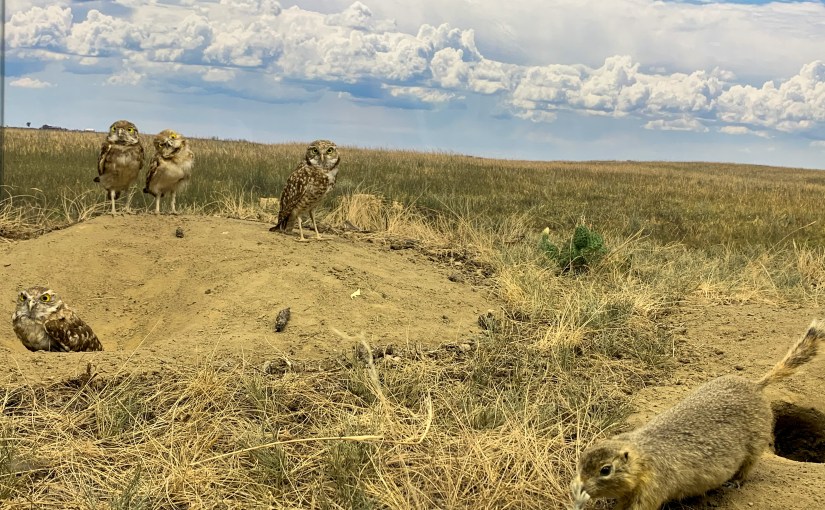
During my recent visit to the Alberta Royal Museum (aka RAM) we were treated to some pretty neat dioramas of Alberta nature scapes. Here is one neat one of prairie dogs and burrowing owls representing the dry grasslands of southern Alberta. Burrowing owls are high on my birding wish list. They are threatened it Alberta, mainly due to habitat loss, so track these down is a bit of a challenge.
May the curiosity be with you. This is from “The Birds are Calling” blog (www.thebirdsarecalling.com). Copyright Mario Pineda.
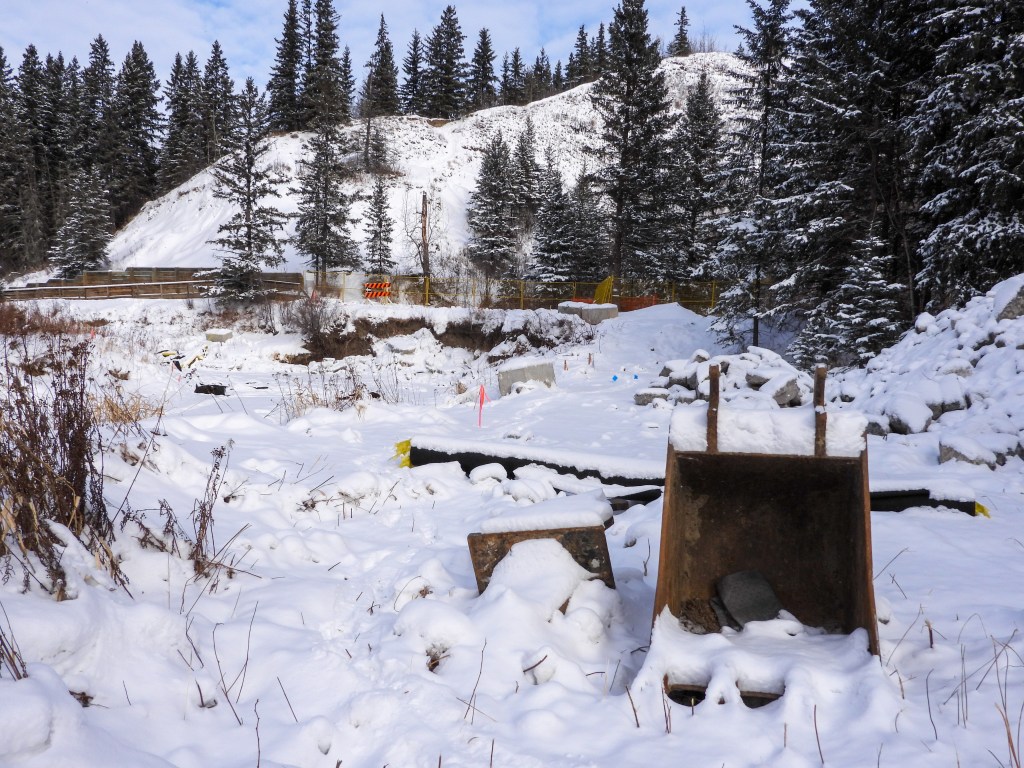
There is a bend in the creek close to the Snow Valley end of the Whitemud Creek where erosion has slowly (or perhaps not so slowly) undermined the trail. Left to its own means it would only be a matter of time before the bank would collapse, taking the trail along with it. Beavers like to hang out in this particular section of the creek and I have my suspicions that the erosion ultimately may have been caused by the industrious engineering of the local beavers. It was time for humans to step in to prevent the inevitable doom of the trail. The other day when I went for a walk the construction, or reconstruction, had started. I am not sure what is in the works but a large swath Of vegetation along the creek has been cleared. Judging from other reconstructed sections along the creek, we are likely looking at some form of erosion control using boulders and/or planting fast growing vegetation.
May the curiosity be with you. This is from “The Birds are Calling” blog (www.thebirdsarecalling.com). Copyright Mario Pineda.
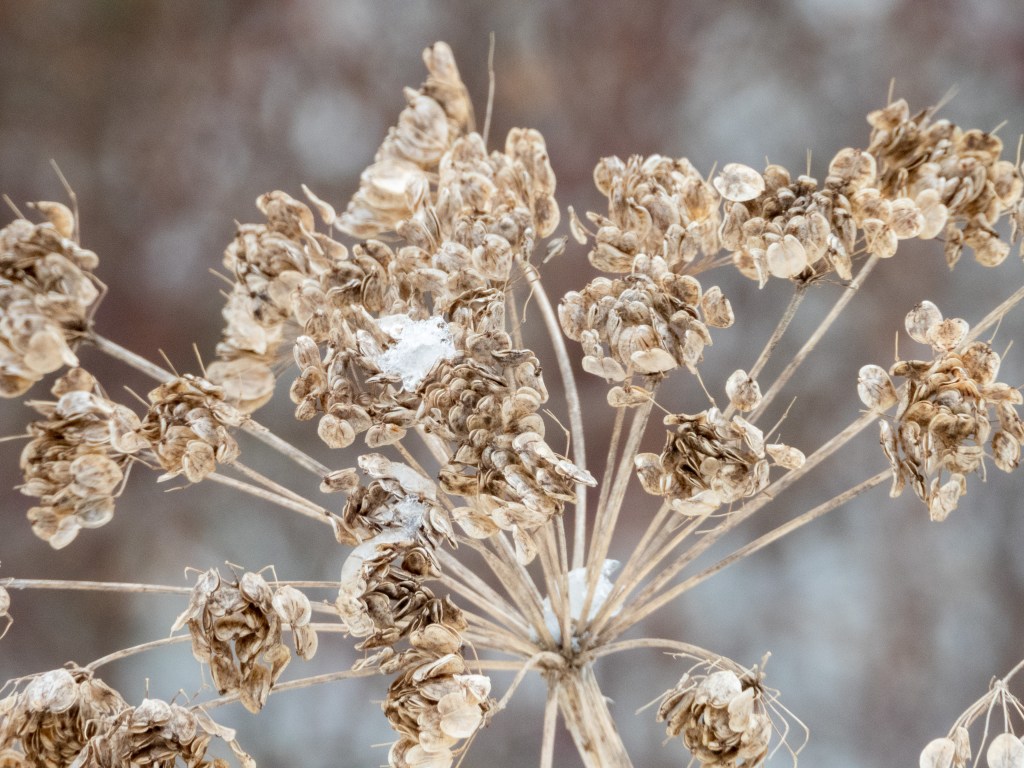
Despite the many months of subzero temperature, bitterly cold wind and snow and ice this freeze dried cow parsnip remains standing with the seed pods firmly attached. Like a fossil of times long past it remains in a frozen state, preserved for the after-world to witness. In contrast to a fossil, however, it also symbolizes new life. When the ground has thawed and the air is warm again those frozen seeds will germinate and create the next generation of cow parsnips.
May the curiosity be with you. This is from “The Birds are Calling” blog (www.thebirdsarecalling.com). Copyright Mario Pineda.
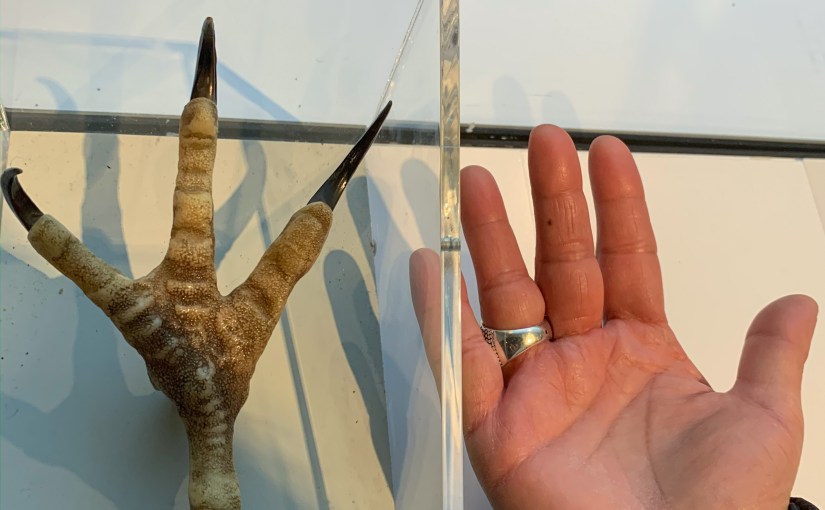
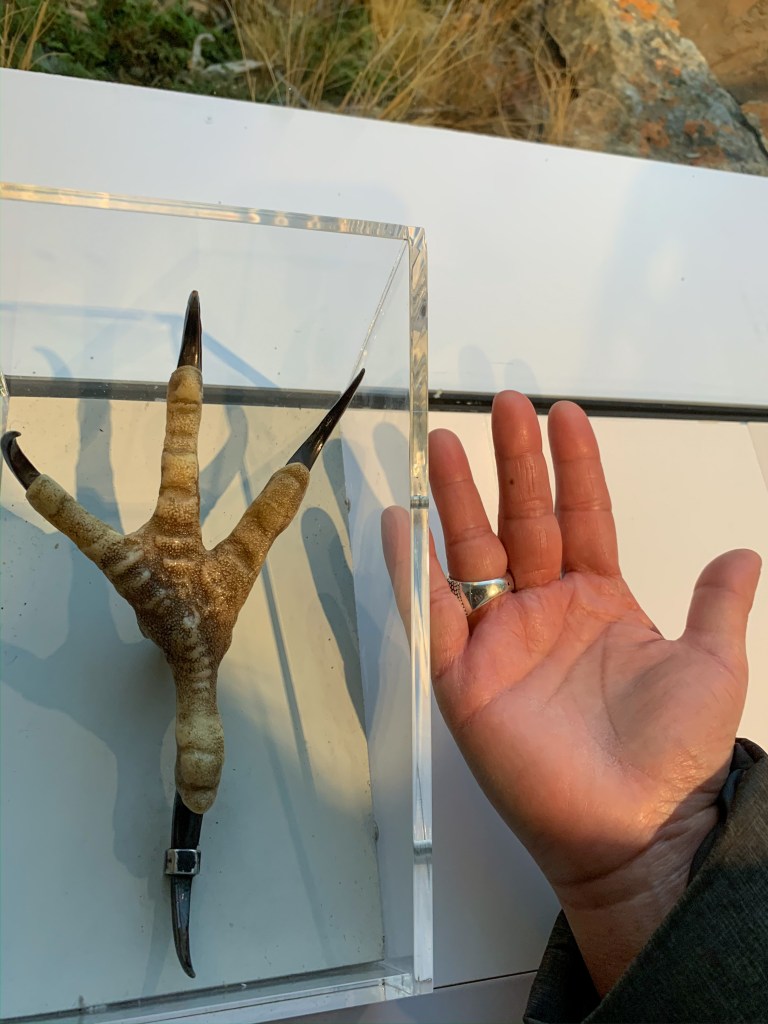
On this Family Day we went to the Royal Alberta Museum. This was my first time going at the new location that opened in the fall of 2018. The natural history wing was a different form of nature walk and a travel through roughly 800 million years of Alberta history. As far as birding goes, the exhibit has a large number of bird-themed dioramas. One of the more impressive one being the Golden Eagle diorama with two specimens that could probably pickup a small child if they were inclined to do so. The talons of these birds are our of this world. Although these eagles are one of the most common birds of prey worldwide it feels like it would not be a trivial task to find them and observe them in the wild.
May the curiosity be with you. This is from “The Birds are Calling” blog (www.thebirdsarecalling.com). Copyright Mario Pineda.
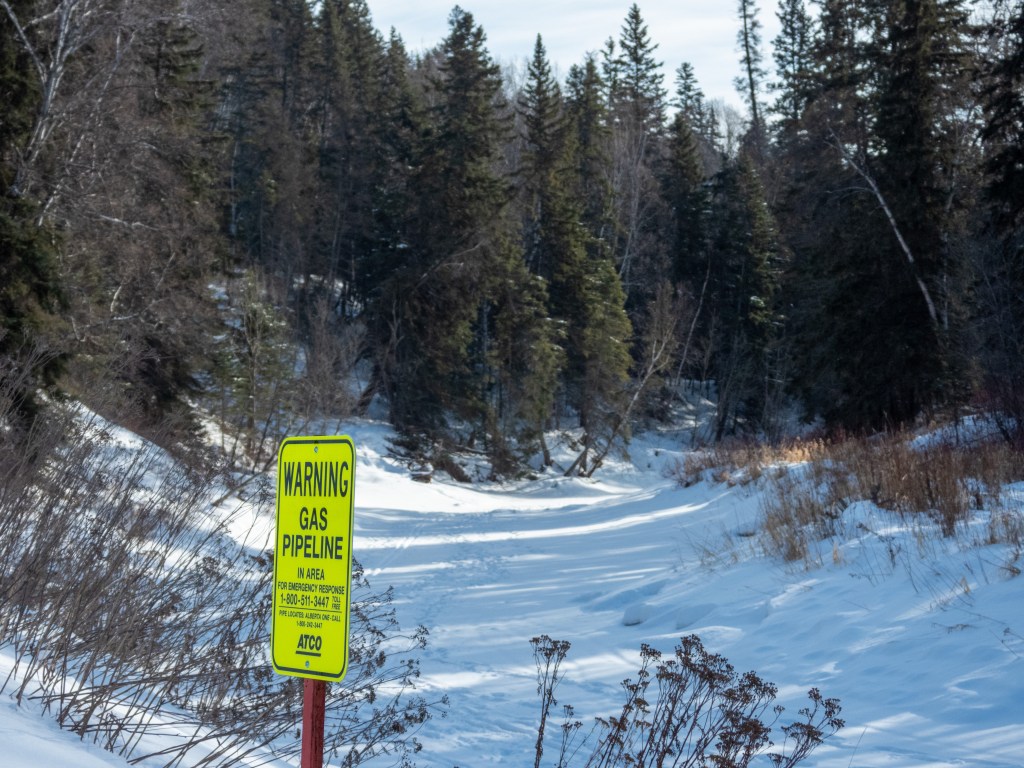
These days there is a lot of hoopla here in Canada, and in Alberta in particular, about pipelines. While some people are all for them, others are vehemently against them. What you usually do not hear, however, is that pipelines are all around us and that usually we are completely unaware of it. It is easy to find pipeline maps online (for example here) and what is immediately striking when one looks closely at such map is the web of interconnected pipelines running all over Edmonton. Which also made me realize that there is an underground oil pipeline two blocks from my house. I have already written about the iconic orange Transmountain Pipeline that is crossing high above the Whitemud ravine. Throughout the ravine there are, however, many signs warning of buried pipelines, many of which do not even appear on any of the pipeline maps I have been able to find.
May the curiosity be with you. This is from “The Birds are Calling” blog (www.thebirdsarecalling.com). Copyright Mario Pineda.
Along to top of the wooden railing running along boardwalk spanning a low-lying wet area adjacent to the Whitemud Creek there were hundreds of tiny tracks in the snow. The tracks ran along the full length of the railing, around 100 meters or so. There could only be one small animal audacious enough to cross such a large exposed area in prime owl habitat – a Red Squirrel. These conspicuous animals typically make a great amount of noise as they defend their territories with loud chattering calls. There are a number of predators present in the ravine that would love to have a Red Squirrel for snack, including Great Horned Howls, Bald Eagles, Merlins, Northern Goshawks, Cooper’s Hawks, Sharp-shinned Hawks, not to mention Coyotes. I always wonder how many clueless squirrels end up in the talons or jaws of a predator while they are strutting around in the open seemingly oblivious to the dangers. My suspicion is that the tables are turned once night falls.
May the curiosity be with you. This is from “The Birds are Calling” blog (www.thebirdsarecalling.com). Copyright Mario Pineda.
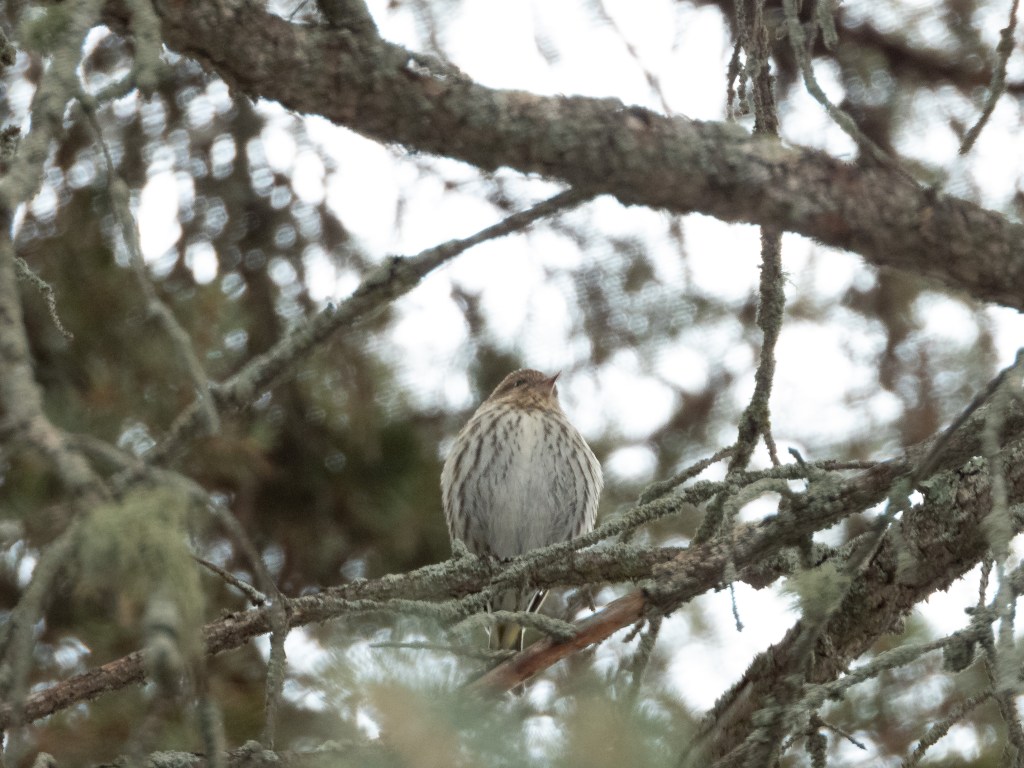
The Pine Siskins were out in full force all along the Whitemud Ravine. They were chirping and making a lot of noise as they were foraging on dried up catkins. Initially I was thrown for a loop. I have not seen Pine Siskins for a while and these looked too chubby. All the Pine Siskins I have seen previously have been slender and lean looking. These individuals were, however, round and appeared quite well fed. When I submitted my eBird checklist I tentatively put them down as Pine Siskins only because there really was not other realistic alternative. While I was thrown off by their shape, the overall size and color was siskin-like. Once I came home I compared my photos to my reference books, which only corroborated their id.
May the curiosity be with you. This is from “The Birds are Calling” blog (www.thebirdsarecalling.com). Copyright Mario Pineda.
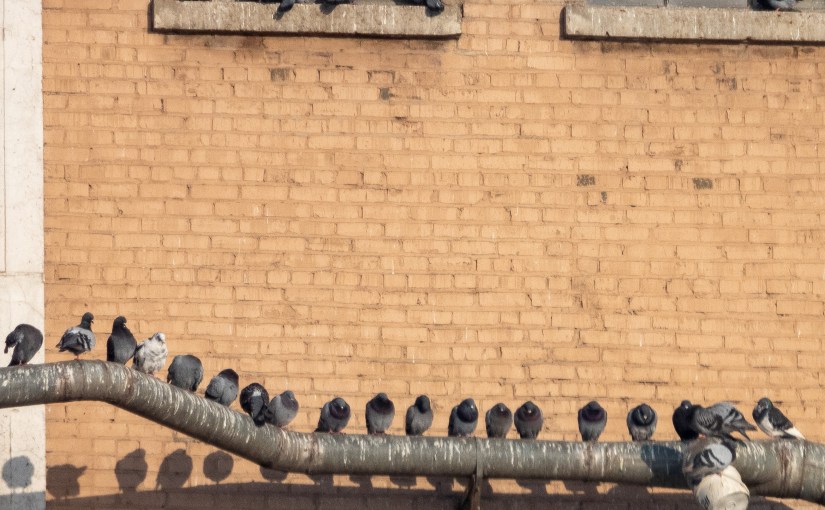
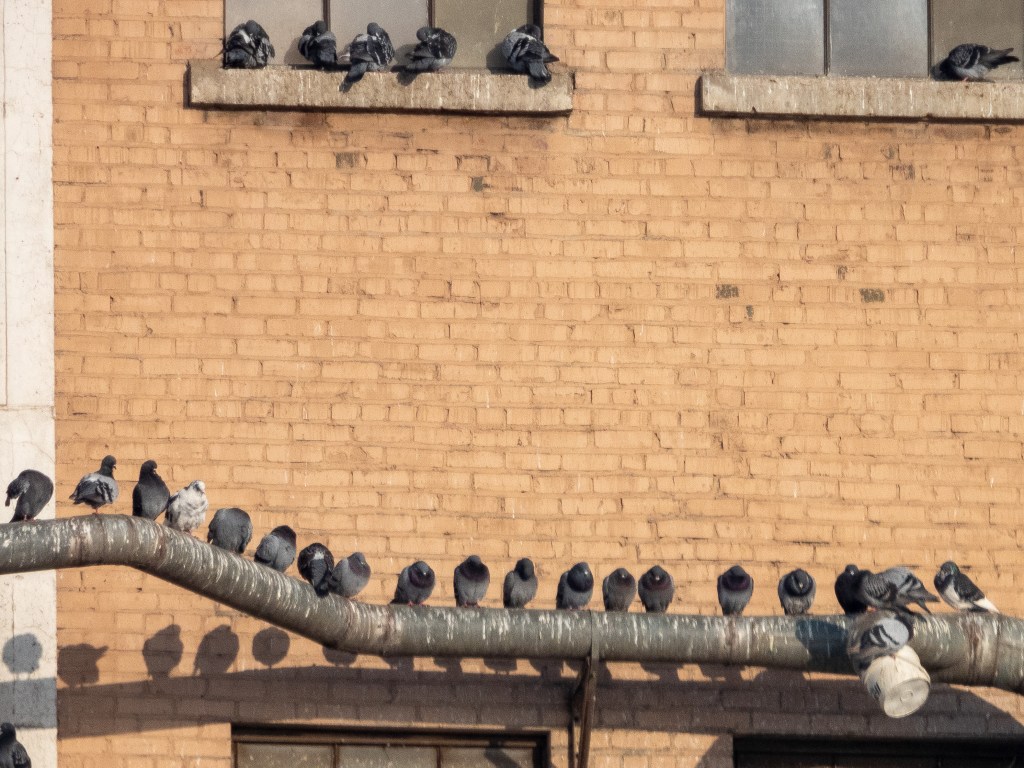
Like silent feathery gargoyles the pigeons were snoozing on the duct work of the grain terminal. As I was scanning the thousands of pigeons covering the facade of the hundred year old brick building I was thinking to myself “why are there so many ducts?”. Is it ventilation or heating? Who knows what it takes to store and transport gain. The pigeons did not seem to ponder such trivial and technical details. The merely seemed to enjoy the duct work as a place of resting and pooping.
May the curiosity be with you. This is from “The Birds are Calling” blog (www.thebirdsarecalling.com). Copyright Mario Pineda.
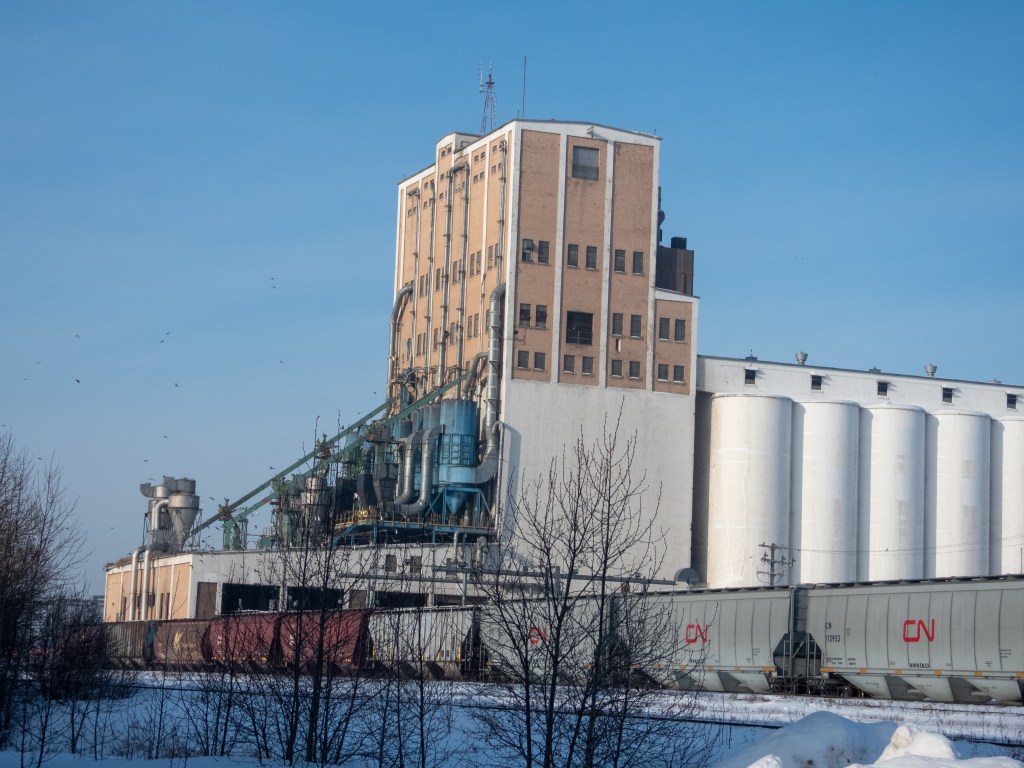
Like a sentinel of a long lost time the urban grain terminal in north Edmonton is still very much in business. The terminal has been in operation since 1924 and last year 400000 tonnes of grain passed through the terminal. Seed crops arrive at the terminal from Alberta farms and are sorted, cleaned and graded before being loaded onto a train bound for Vancouver and the ocean journey to overseas customers in countries like Japan. This bounty of grain has not gone unnoticed to the local pigeons that flock to the south side of the structure in the thousands. I assume that there must be spillage as the grain is loaded and unloaded from train cars. While the location is a birding hotspot, not so much because of the pigeons bur rather due to the birds of prey that are attracted by the pigeons it makes you wonder if rodents also are attracted to the location by the abundant food source. Officially Alberta is rat free (there is an oxymoron for you), but this location seems perfect for an Alberta-grown rat colony (if there is such a thing).
May the curiosity be with you. This is from “The Birds are Calling” blog (www.thebirdsarecalling.com). Copyright Mario Pineda.
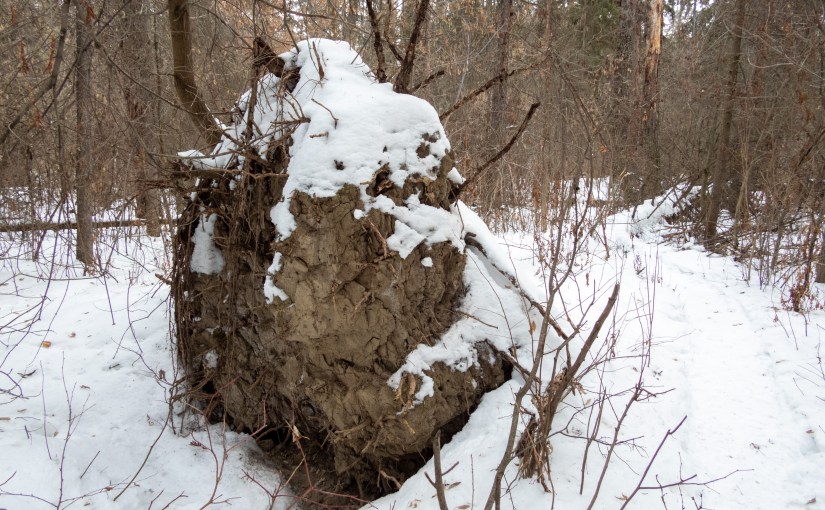
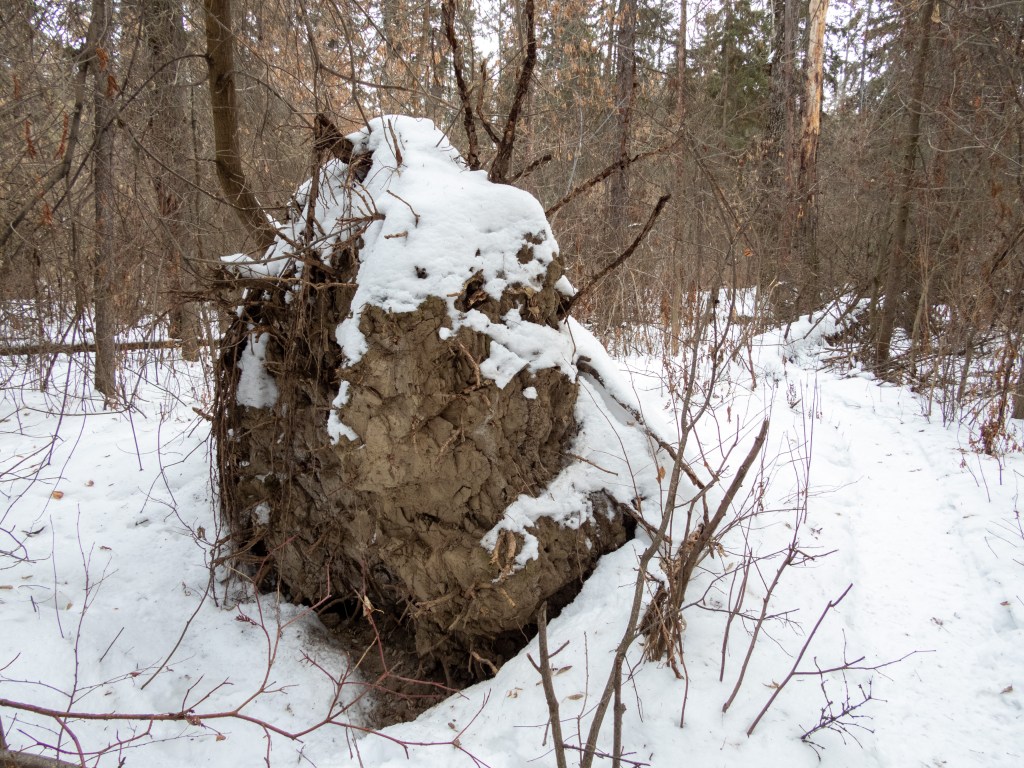
Windthrow refers to trees that have been uprooted by wind. In the Whitemud Ravine there is a large number of windthrown trees with large exposed root plates. When I grew up I was told that windthrown trees with exposed root plates could be dangerous as the tree could spring back up. For a long time I thought that this only was a myth but when I decided to do a bit of research for this post it turns out that it actually does occasionally happen. When severe weather conditions cause trees to fail from their root plates the tree root’s may still be connected on one side. As a result this can cause the tree to be under a spring-like compression tension. All it may take is a minor disturbance, like a wind gust or a person standing on the tree to release the tension and spring the tree back to an upright position.
May the curiosity be with you. This is from “The Birds are Calling” blog (www.thebirdsarecalling.com). Copyright Mario Pineda.