Project 366 – Post No. 028 – Prairie Crocuses In Blom

What is Project 366? Read more here!

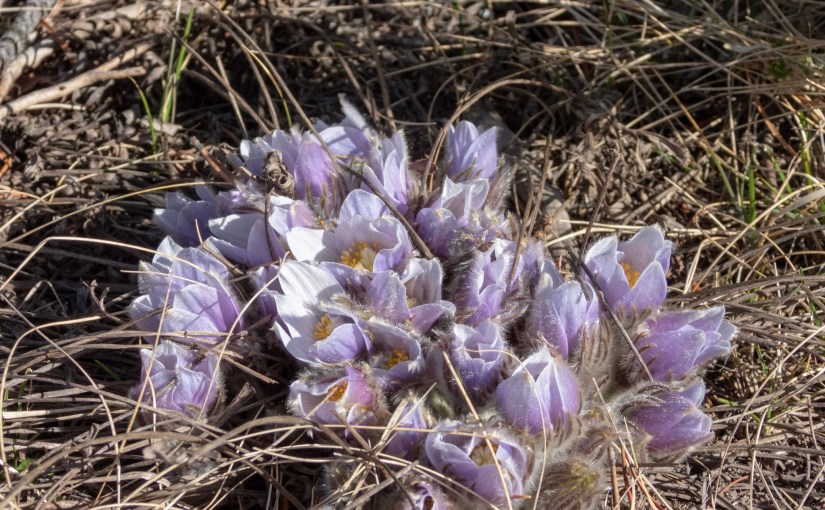
Last weekend we came across our first plant in bloom of the year. Perhaps not surprisingly, it was a Prairie crocus (Anemone patens). Surprisingly (perhaps) we found it in Jasper National Park at a location that is at about 400m higher (1362ft) in elevation than Edmonton (1060m vs. 645m, 3478ft vs. 2116ft). I had assumed that spring would be running later in the valley bottoms of Jasper National Park than in Edmonton, but I was proven wrong. This fury little harbinger of spring is actually not a crocus at all, but rather an anemone in the Buttercup family. The prairie crocus only blooms during roughly a two week period, starting in mid-April. The phenology (the study of seasonal timing of life-cycle events) of the prairie crocus is, however, in a state of flux due to anthropogenic climate change. In a 2011 study researchers found that between 1936-2006 the mean monthly spring temperature increased between 1.5 °C-5.6 °C (depending on the month) in the central parklands of Alberta. As a result, the timing of the Prairie crocus blooming has shifted and is now (or at least in 2006) up to two weeks earlier than in 1936. This was in 2006, 13 years ago. The warming trend has of course continued since then and it would be interesting to know what effects it has had on the phenology of the Prairie crocus (and other plans and animals) since. One more good reason to hit the low elevation trails sooner rather than later. The crocuses are calling!
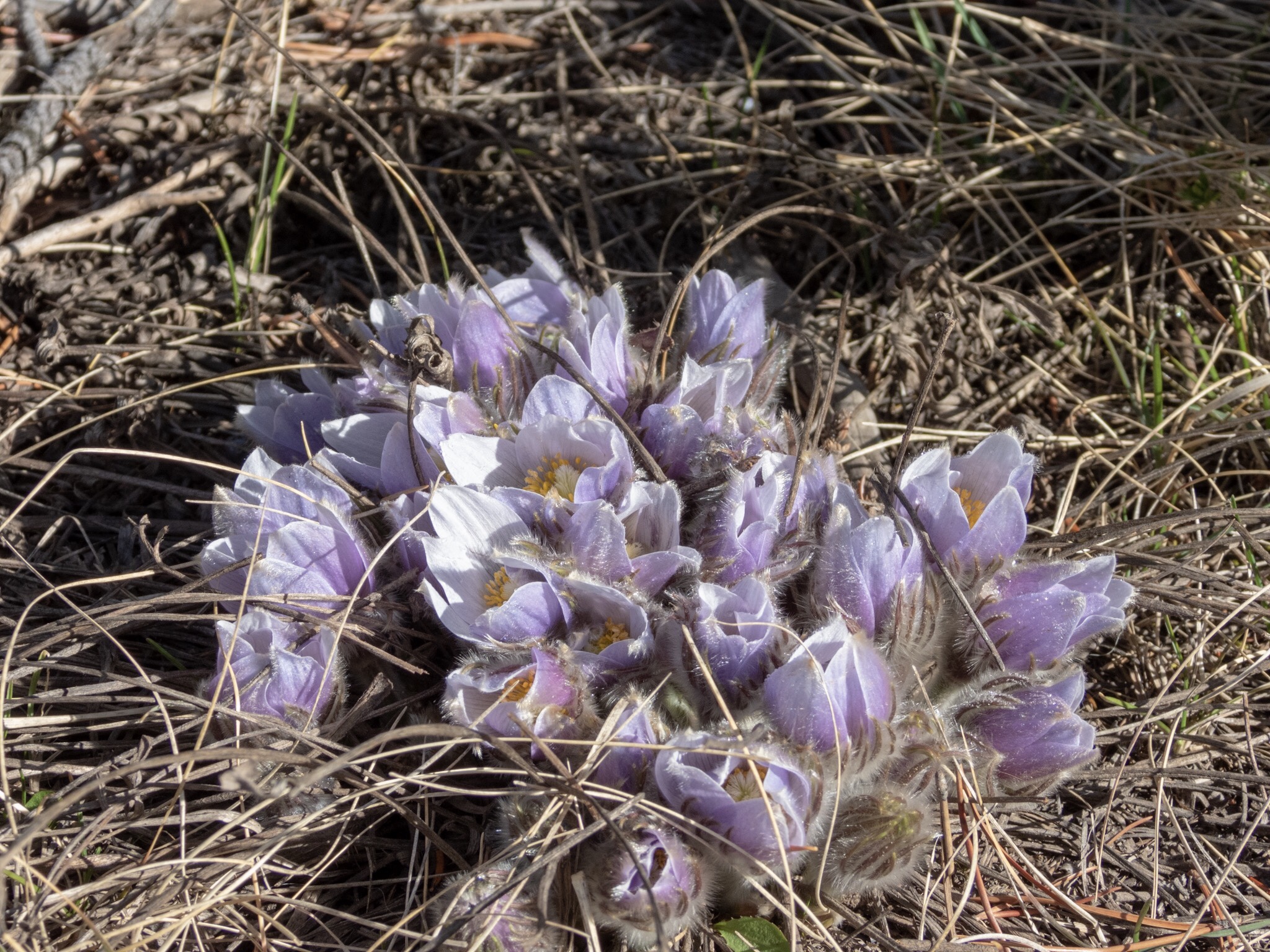
Nikon P1000, 116mm equivalent, 1/640s, f/4, ISO 100

May the curiosity be with you. This is from “The Birds are Calling” blog (www.thebirdsarecalling.com). Copyright Mario Pineda.

Project 366 – Post No. 027 – Shooting Shrubberies

What is Project 366? Read more here!

There is an elevated boardwalk across a small creek along the Valley of the Five Lakes trail in Jasper National Park. The creek cannot be more than 2 m (~7 ft) across and is surrounded by lush riparian vegetation. When we visited, we came across a shrub by the creek, still leaf-less, sporting what looked like willow catkins. I am not a plant person so I am going out on a limb here, but the shrub looked like a form of Pussy Willow, one of the smaller species of the genus Salix. The catkins typically appear much earlier than the leaves and are traditionally considered one of the earliest signs of spring. With the light behind the shrubbery I decided to try to do a backlit shot with my Nikon P1000. With the jumble of branches, not surprisingly, the camera did not have any trouble focusing on the shrubbery. A similar scenario occurred a bit further along the trail. Lots of shrubbery in the foreground, but this time a bear family lounging in the understory behind the jumble of branches. Perhaps not surprising, the camera focused on the shrubbery rather than the bear family. This is a common scenario as most of the subjects I photograph are birds in, you guessed in, trees and shrubs. Often with a jumble of branches between me and them. I have only had the P1000 for a few weeks so far. With my lack of previous experience with digital cameras, taming this beast is quite frustrating at times. There is an active P1000 Facebook group that I peruse when things get out of hand, just to remind me that it is actually a quite capable camera able to to take stunning images once you master it. My experience shooting through shrubbery with the P1000 reminds me of Monty Python’s The Knights Who Say Ni, where the Head King demand a shrubbery as a appeasement in return for letting Arthur and his party pass unharmed. Once Arthur brings the shrubbery it turns out that the Knights Who Say Ni are no longer the Knights Who Say Ni, but rather the Knights Who Say Ecky-ecky-ecky-ecky-pikang-zoom-boing-mumble-mumble who now require another shrubbery and also require Arthur to cut down mightiest tree in the forest… with … a herring! Nonsensical, yes, but sometimes my success (or lack thereof) with the P1000 is reminiscent of this farce.

Nikon P1000, 280mm equivalent, 1/125s, f/4.5, ISO 110

May the curiosity be with you. This is from “The Birds are Calling” blog (www.thebirdsarecalling.com). Copyright Mario Pineda.

Project 366 – Post No. 026 – Loon at the Fifth Lake

What is Project 366? Read more here!

The trail the Valley of Five Lakes in Jasper National Park meanders between and around…, you guessed it, five lakes. The Fifth Lake (that is actually it’s name) is different from the other four lakes in that it is emerald green this time of year. It is surrounded by lush spruce forests and at one end of it (NW side) there is a small wooden boat dock. The dock is the perfect spot for taking a break with a beautiful view of the lake and the surrounding mountains. Last time we were here there was a lonely Common Loon enjoying the spring sun. This iconic species came in as species 52 on the AB Big Year list and 103 on the Life List. As we were studying it through our binoculars I noticed how the loon would lay its head flat on the water surface moments before diving. I am not sure if I just have not noticed this behaviour previously or if this was a behaviour unique to this particular individual. I will definitely look for this next time I see a loon and hopefully get a video recording of it.

May the curiosity be with you. This is from “The Birds are Calling” blog (www.thebirdsarecalling.com). Copyright Mario Pineda.

Project 366 – Post No. 025 – Valley of the Five Lakes

What is Project 366? Read more here!

One of our favourite valley bottom hikes around Jasper is the Valley of the Five Lakes trail. With a name that sounds like it would come right out of the lore of Middle Earth, the hike does not disappoint. With panoramic vistas of the surrounding mountains, emerald green and azure blue lakes the trail meanders through Mountain Pine Beetle ravaged pine forests, lush spruce stands and aspen groves. It is a popular trail and to beat the rush you want to be hitting the trail before 10 am. Last weekend we visited Jasper National Park and were fortunate enough to be able to do the Valley of the Fives Lakes trail twice. On our first day out we were greeted by a vocal Pileated Woodpecker and accompanied along the trail by Dark-eyed Juncos singing from the tree tops and American Robins hopping about through the understory. We found a mother bear with her cubs hiding in the bushes along the trail. As tempting as it was to linger and try to get a nice photograph of the family, we opted for a quick peek and then moved on to avoid undue stress on the new mother. The sound the cubs made was quite interesting. It was reminiscent of the cooing sounds of pigeons. So next time you heart a cooing in the forest it might be something bigger and furier than a pigeon or a dove. Often people are worried about meeting bears along the trails, and admittedly that I shared this concern once upon a time. Many bear encounter later, however, I found myself very lucky if I spot a bear. I don’t go actively looking for bears, but if our paths cross an already special day suddenly becomes unforgettable in the best of possible ways.

Nikon P1000, 655mm equivalent, 1/640s, f/5, ISO 100

May the curiosity be with you. This is from “The Birds are Calling” blog (www.thebirdsarecalling.com). Copyright Mario Pineda.
Project 366 – Post No. 024 – Old Man’s Beard in Jasper National Park

What is Project 366? Read more here!

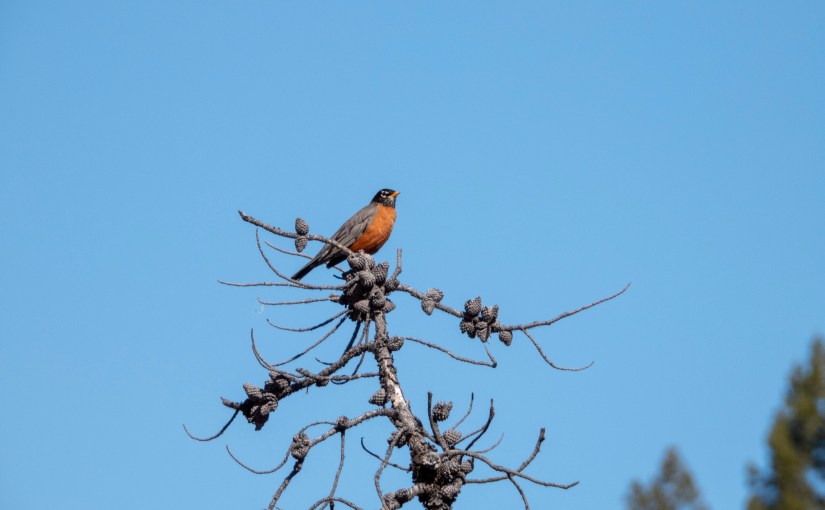
During a hike through the Valley of the Five Lakes in Jasper National Park we encountered a grove of trees covered in Old Man’s Beard, a type of lichen that grows in tassels attached to the branches of trees. These lichens grow extremely slowly and are sensitive to air pollution, especially sulfur dioxide, a byproduct of burning fossil fuels. I found it peculiar that we only found this lichen in a single grove of trees located in a small area. Clearly there must be something unique about that location or those trees, but I cannot put my finger on what that might be. We hiked this trail twice this weekend as many of the higher elevation trails are still snow covered. The Valley of the Five Lakes is at the bottom of a valley just south of the town site and is one of our favourite day hike trails.

May the curiosity be with you. This is from “The Birds are Calling” blog (www.thebirdsarecalling.com). Copyright Mario Pineda.

Project 366 – Post No. 022 – Long Weekend in the Mountains

What is Project 366? Read more here!

The mountains have been calling and with the Easter long-weekend arriving we wasted no time. As soon as school was out we hit the highway heading East. We arrived in Jasper late last night. Other than a close encounter with a band of coyotes on the highway the darkness was enveloping the landscape and did not reveal any other animals or scenery upon our arrival. The next morning we woke up to a grey sky with intermittent light rain. None of that mattered as we were happy and rejuvenated to breathe the cool mountain air. Jasper is at an elevation of about 1000 m (compared to Edmonton’s 645 m) and as a result the lakes still have a thin layer of ice on them and the mountains still have substantial amounts of snow on them. We are hoping to do some hiking over the weekend, but as many trails still are snow and ice covered we have to choose the trail wisely. A month ago I attempted to the Tonquin Valley trail but the trail surface was sheer ice and it was far to perilous to proceed. In the end we renting expedition grade cleats and ended up hiking the Maligne Canyon (which was spectacular). We will probably not see too many birds as these arrive later here. If we are lucky we might see some large mammals though.

May the curiosity be with you. This is from “The Birds are Calling” blog (www.thebirdsarecalling.com). Copyright Mario Pineda.

Project 366 – Post No. 021 – A Chorus of Quacking Frogs

What is Project 366? Read more here!

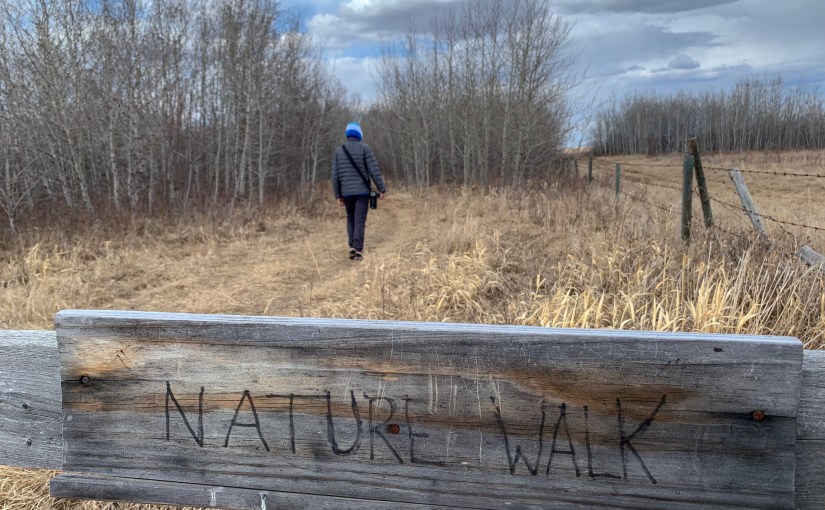
We visited Francis Point last weekend as part of out Snow Geese chase. It was a windy day and the birds were notably absent. What the nature walk lacked in birds, however, the frogs made up for with a chorus of song. Even in the tiniest and most ephemeral of ponds the frogs were croaking loudly in unison as they were getting into an amorous mood. The frogs made a duck-like quacking sound that initially confused us. A recent survey of amphibians at the nearby Beaverhill Bird Observatory only found Wood Frogs (Rana sylvatica or Lithobates sylvaticus) and o with only anecdotal evidence of Boreal Chorus Frogs (Pseudacris maculate) in the area. The Wood Frog is the most widely distributed amphibian in Canada and is associated with moist woodlands and vernal woodland pools. Wood Frogs are the earliest breeders in most of their range. Wood Frogs are known to be exceptionally freeze tolerant with their blood and tissue often freezing during the winter. We made a feeble attempt to visually spot the frogs, but anytime we approached a pond the chorus immediately fell silent. We figured that was their way of saying: “Leave us alone – we are busy”.

May the curiosity be with you. This is from “The Birds are Calling” blog (www.thebirdsarecalling.com). Copyright Mario Pineda.
Project 366 – Post No. 020 – Tracks in the Sand

What is Project 366? Read more here!

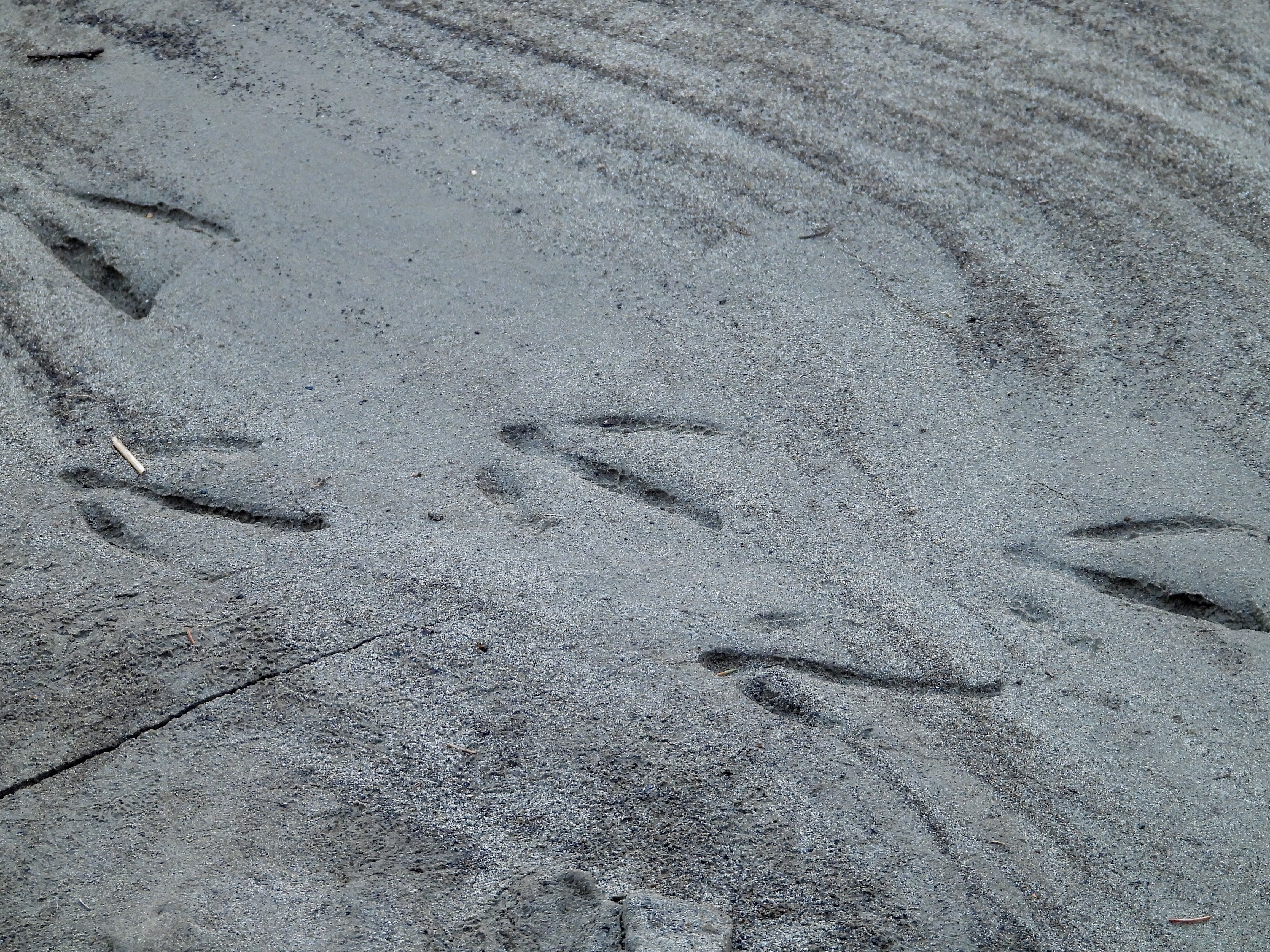
The water level at out local creek in the Whitemud Ravine was high for most of March due to the snow melt. Now that the snow is gone the water has receded substantially leaving areas along the bank, that previously were submerged, exposed. We came across the following tracks on a recently exposed sand bank along the shore. Due to recent erosion when the water level had been high we were unable to actually get down on the sand bank to have a closer look at the tracks. The tracks were large, though, and were leading from the water’s edge. The only two possibilities in terms of who could have made them are either a beaver or a musk rat. The tracks were far too big for a muskrat and they were missing the markings caused by the tell-tale muskrat tail, which leaves a beaver as the only plausible candidate. As we were pondering these questions guess who emerges out of the water? No one other than a beaver him/her self. As the beaver slowly waddled up on the bank it left exactly the same tracks behind it. I almost wish the same thing would happen everything you find animal tracks in the wild. After spotting animal tracks, you take your best shot at identifying them and then comes the “answer key” walking along leaving exactly the same tracks.

May the curiosity be with you. This is from “The Birds are Calling” blog (www.thebirdsarecalling.com). Copyright Mario Pineda.
Project 366 – Post No. 019 – The Elusive Snow Geese

What is Project 366? Read more here!

The last few weeks have been a time of searching, a time of planing, and a time of scheming. Our patience and resolve has been tested repeatedly. We have accumulated hundred kilometres on dusty country roads single-mindedly in pursuit of our goal. We have been searching for the elusive snow geese. Over the last few weeks flocks of thousands of snow geese have been observed in the shallow lakes around Beaverhill Natural Area East of Edmonton, and more geese are reported to arrive on a daily basis. This was obviously too much of a temptation for us, so we decided to track the geese down to experience one of nature’s truly incredible events. Much can be said about this adventure and there will be a separate blog post about this (scheduled for tomorrow night) but suffice to say after several excursion and following leads from expert birders the geese evaded us. Finally we gave up and deflated started heading home while pondering how tens-of-thousands of large birds can hide so effectively. We had just got on the highway outside of Tofield when suddenly, from the passenger seat, “Dad – stop, stop, stop!”. As I was on the highway there was obviously no stopping, but a turn of my head to check what my son was pointing at revealed a myriad a fluffy white birds sitting on a pond along the side of the highway. What happened then, all occurred every fast. As I desperately was scanning the road side for any possibility of getting of the highway I found a tiny dirt road. After a quick check in the rear mirrors, I stepped on the break and careened of the highway and onto the dirt road. As it turns out, the dirt road took us directly to the lake with the geese…, and there they were! Thousands up one thousand of white snow geese on the water as well as a cloud of geese spanning a large chunk of the horizon flying overhead. We knew we did not have much time. We quickly and stealthily snuck out of the car with our binoculars and camera ready. It only lasted seconds, but all of a sudden the geese on the lake all took off simultaneously. There were geese everywhere, all the geese became airborne in the span of a few seconds. As they gained altitude they joined the large flock flying overhead. We were floored. Later on, in the car on the way home, we were discussing how many geese we had seen. It was definitely in the tens-of-thousands, but was it 10000, 20000, or more? In the end we decided to record the “conservative” figure of 15000 individuals, but quite likely the actual number was higher. We did manage to snap a few pictures but none of them make justice to overwhelming scene of a mega-gaggle of snow geese.

May the curiosity be with you. This is from “The Birds are Calling” blog (www.thebirdsarecalling.com). Copyright Mario Pineda.
Project 366 – Post No. 018 – Barn Swallow Real Estate

What is Project 366? Read more here!

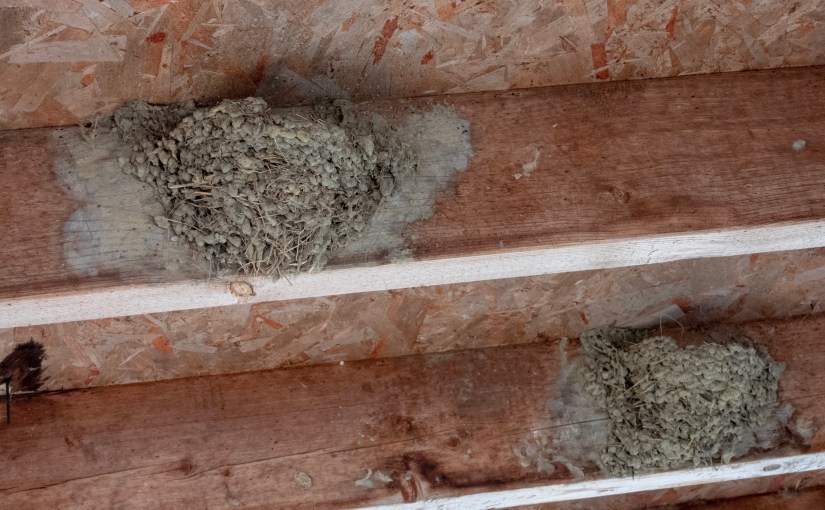
As you approach the trail head that takes you to the Beaverhill Bird Observatory a small side road takes you to Francis Point. We tried to find Francis Point in February when the snow still was deep, but were unable to find this inconspicuous side road. It was likely covered up with snow. It is about a 500 m walk through a forested patch to get to the Francis Point bird blind, an old wooden shed that looks like it is about to collapse any minute. From the blind you have an expansive and unobstructed view of a vast grassy field. I suspect that once upon a time, when the Beaverhill Lake was larger this field may have been under water. Over the last few decades, however, the lake has been shrinking and these days it is no longer visible from the blind. Along the rafters in the blind there are cup-shaped bird nest made out of mud. There are not many options in terms of who could have made them. It could be either swifts or swallows. As there are no swifts reported at this location that leaves us with the swallows. Three species of swallows have been reported here; the Tree Swallow (Tachycineta bicolor), Cliff Swallow (Petrochelidon pyrrhonota) and the Barn Swallow (Hirundo rustica). The tree swallow is out as it nests in natural cavities of standing dead trees, old woodpecker cavities or in nest boxes. Cliff Swallows build a nest out of mud that looks very similar to the nests in the blind. Cliff Swallow nests are different in that they are more covered and have small circular entrances. That leaves us with the barn swallow. A simple web search reveals that indeed the match is perfect. Barn Swallows typically nests inside accessible buildings such as barns and stables, or under bridges and wharves. They collect mud pellets and build neat cup-shaped nest attached to beam or other vertical projections. The inside of the nests is lined with grasses, feathers or other soft materials. It never crossed my mind to peek inside the nests, but next time we visit I will have a look. Judging from the eBird reports, the Barn Swallows do not return to Francis Point until May so we still have a few weeks to go before being able to acquaint with the inhabitants of the nests.

May the curiosity be with you. This is from “The Birds are Calling” blog (www.thebirdsarecalling.com). Copyright Mario Pineda.