I came across a stand of shrubs along the Whitemud Ravine trail that looked like Beaked Hazelnut (Corylus cornuta). It had the typical serrated leaves and the small catkins (the male flowers), but I did not find any female flowers or any nuts so I was a bit on the fence for a positive identification. That was until I found one shrub that had the characteristic bristly husks that look like long beaks (hence the name Beaked Hazelnut). The nuts grow inside these husks. The Beaked Hazelnut is our only nut-bearing native shrub and is an important source of food for, you guessed it, squirrels and chipmunks. Birds, such as woodpeckers and jays, also enjoy a nut as a snack. While the nuts are edible, store-bought hazel nuts typically come from the Common Hazel (Corylus avellana) which grows in Europe, around the Mediterranean Sea and throughout Western Asia. For a minute I was tempted to try the nut but decided to stick to the adage of only taking pictures and only leaving footprints and decided to leave the nut for the denizens of the forest.
Beaked Hazelnut (Corylus cornuta) at Whitemud Creek. July 28, 2019. Nikon P1000, 106mm @ 35mm, 1/60s, f/4, ISO 100
May the curiosity be with you. This is from “The Birds are Calling” blog (www.thebirdsarecalling.com). Copyright Mario Pineda.
Another milestone! Post 122 out of 366 makes it one third of the way through my Project 366. Four months in and I think I can safely say that have the ropes figure out by now and that I am on the proverbial roll.
I went for a nature walk this morning to the Whitemud Creek. To mix things up a bit I accessed the trail system from a secluded and well-hidden trail head in the Ogilvie Ridge neighbourhood. This trail head takes you right into a portion of the Whitemud Ravine south of Snow Valley. According to the map it is about a 4 km walk to Snow Valley but I did not go that far today. It started out cloudy and breezy but the sun snuck out behind the clouds about one hour into the walk. The highlight of the walk was the “discovery” of a a pair of ponds off the trail that were busy with all manners of bird life such as Bohemian Waxwings, Eastern Pheoebes, House Finches, and a Downy Woodpecker (no waterfowl though). There was also evidence of recent beaver activity. These ponds do not appear on any map or even in Google Earth. I am sure the ponds are know to the locals, but they are not visible from the main trail and one has to meander through a brushy meadow to find them. As I was finding my way across the meadow I encountered stands of Fireweed (Epilobium angustifolium) a tall perennial herbaceous plant related to willows. The Fireweed is native throughout the temperate Northern Hemisphere, including throughout the boreal forests of Canada. It is a pioneer species and is often one of the first colonizer after forest fires, hence the name Fireweed. It was known as bombweed during the Second World War as it was rapid to colonize bomb craters. Fireweed is one of the best known medicinal plants and has been used worldwide in traditional medicine. Experimental and clinical studies have confirmed that all parts of the plant have a broad range of pharmacological and therapeutic properties, including antioxidant, anti-proliferative, anti-inflammatory, antibacterial, and anti-aging properties. A recent review of the therapeutic potential of Fireweed provides an impressive list of benefits:
Traditional use of fireweed includes an infusion or tea, which has been reported as a treatment for migraine headaches, insomnia, anemia, delirium tremens, infections, and colds. E. angustifolium extracts have been reported to be effective treatments for gastric ulcer; duodenal ulcer; gastritis; colitis; various gastrointestinal disorders, such as dysentery and diarrhea; and prostate or urinary problems, such as urethral inflammation, micturition disorders, prostatic adenoma, and benign prostatic hyperplasia (BPH). E. angustifolium has also been used topically as a cleansing, soothing, antiseptic, and healing agent to treat minor burns, skin rashes, ulcers, and infections, and for treatment of inflammation of the ear, nose, and throat…
Although I am not suffering from any of the listed ailments at the present time, it am tempted to head back and collect some of the leaves while they are available to keep a stash of this miracle plant at home for future uses.
Fireweed (Epilobium angustifolium) at Whitemud Creek. July 28, 2019. Nikon P1000, 605mm @ 35mm, 1/250s, f/5, ISO 160
May the curiosity be with you. This is from “The Birds are Calling” blog (www.thebirdsarecalling.com). Copyright Mario Pineda.
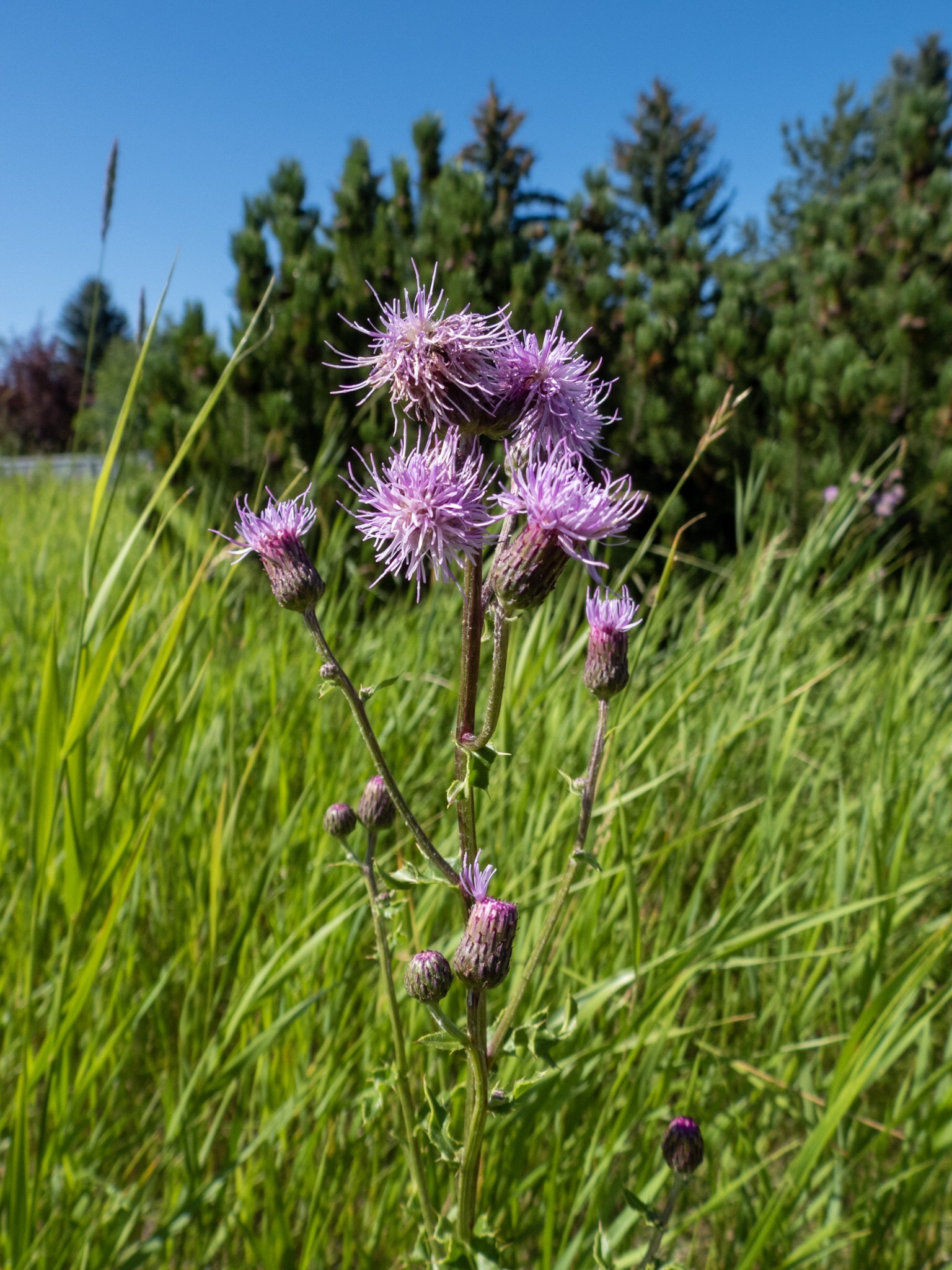
Another pretty flower with an insidious secret. We came across the Creeping Thistle the other day just off the Whitemud Creek as we were on a nature bike ride. Just like other recent pretty flowers we have come across (for example, Cow Vetch, Red Clover and Meadow Buttercup) the Creeping Thistle is an invasive weed that was introduced from Europe and Asia. To add insult to the injury it is often referred to as Canada Thistle, which is of course misleading since it is not of Canadian origin. As far as I can tell, it was introduced in North America accidentally, most likely as a contaminant in crop seeds. There used to be a Thistle Patrol here in Edmonton that went around to natural areas pulling out creeping thistles. Although there are effective herbicides that kill the plant they also kill the native plant, so the incentive behind the Thistle Patrol was to remove this invasive weed manually to avoid the need for spraying herbicides. I have not been able to find any information about the Thistle Patrols activities these days (most recently they seemed to be active in 2013), perhaps the patrol has retired. Did they “win” the battle against the Creeping Thistle or was it too big of a job to keep up with? Who knows?
Creeping Thistle (Cirsium arvense) at Whitemud Creek. July 26, 2019. Nikon P1000, 26mm @ 35mm, 1/1600s, f/2.8, ISO 100
May the curiosity be with you. This is from “The Birds are Calling” blog (www.thebirdsarecalling.com). Copyright Mario Pineda.
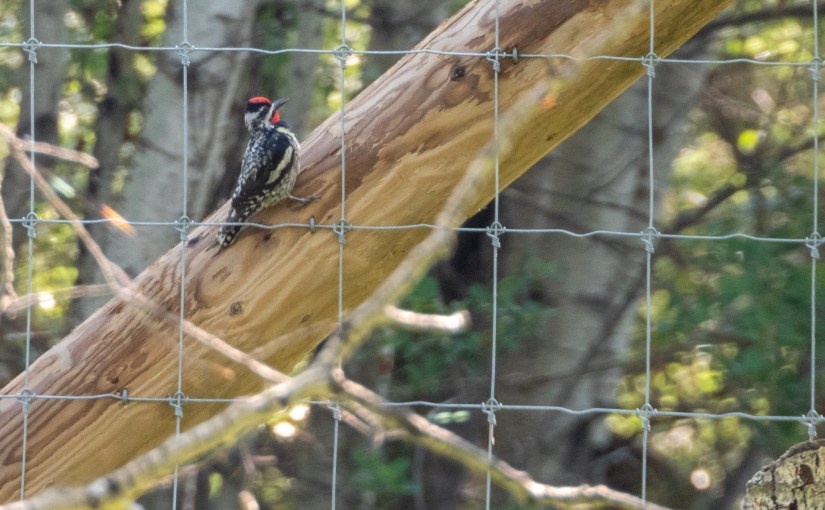
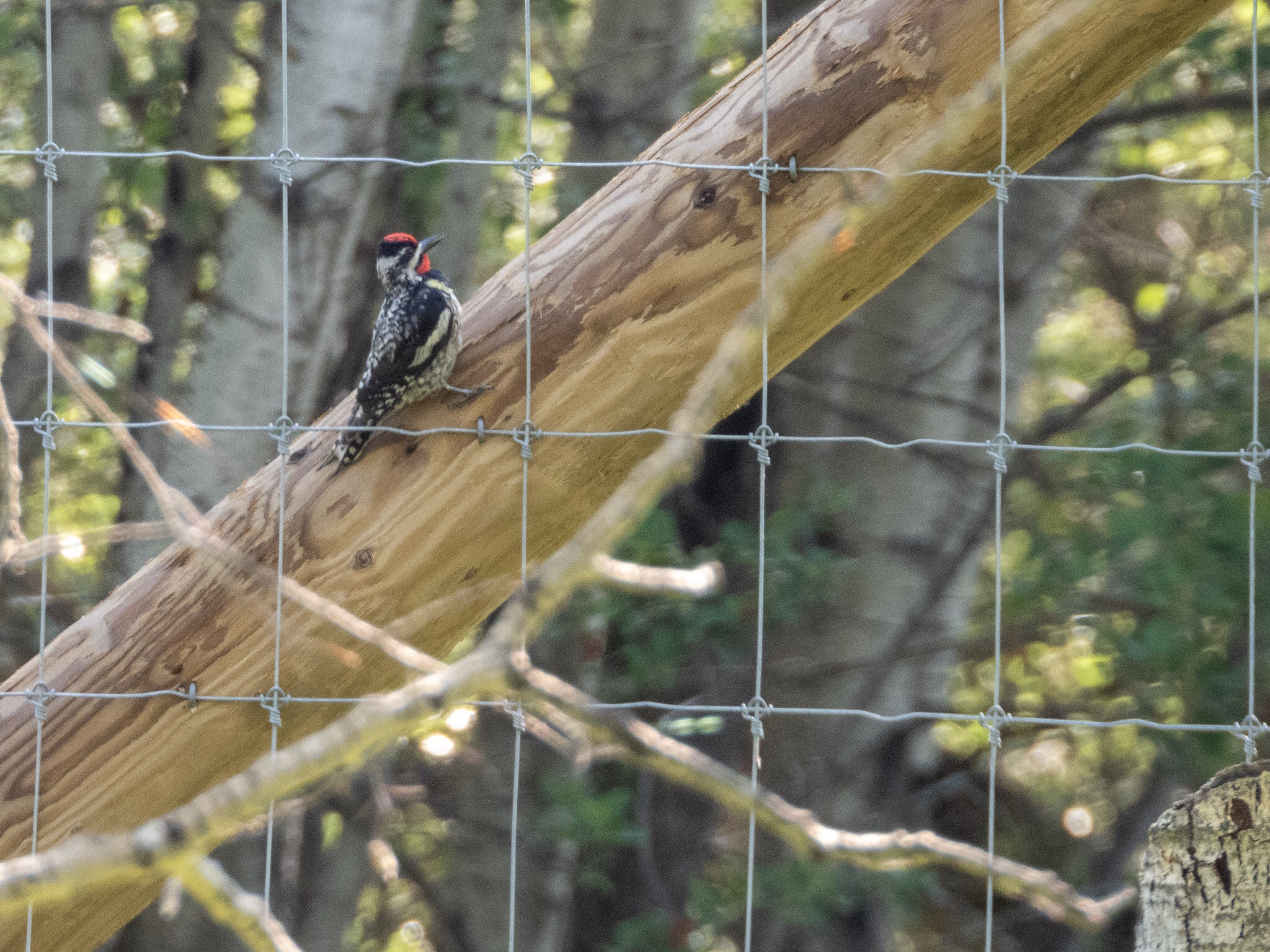
Right by the parking lot at the south side of Elk Island National Park there was an energetic Yellow-bellied Sapsucker hard at work trying to drill holes in the posts of a widening fence. Sapsuckers are known for creating symmetrical rows with large number of shallow holes on trees in order to harvest tree sap. I wonder if it was working on the wooden fence by mistake (which clearly will not have many sap) or if it was looking for insects (which the fence posts may have). Sapsuckers can make a large number of holes in a single tree and there are known instances where trees are girdled by overly enterprising sapsuckers. The Yellow-bellied Sapsuckers is our only woodpeckers that migrate south in the winter.
Yellow-bellied Sapsucker (Sphyrapicus varios) at Elk Island National Park. June 30, 2019. Nikon P1000, 756mm @ 35mm, 1/125s, f/5.6, ISO 400
May the curiosity be with you. This is from “The Birds are Calling” blog (www.thebirdsarecalling.com). Copyright Mario Pineda.
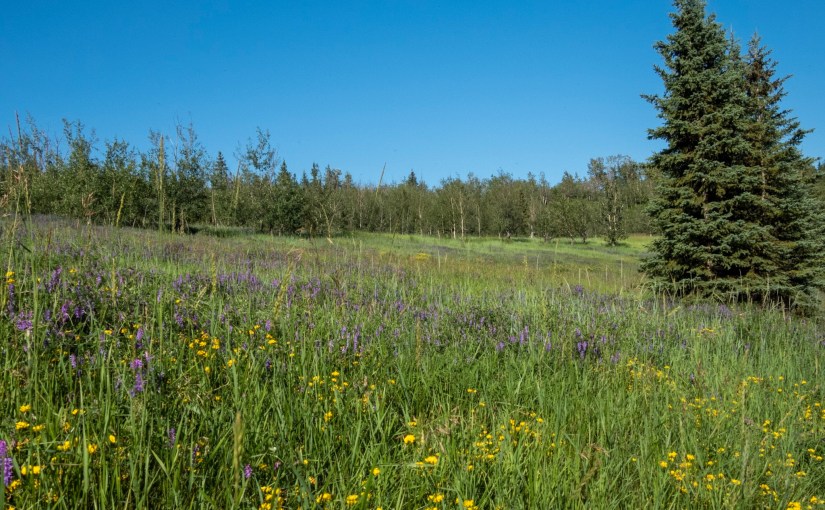
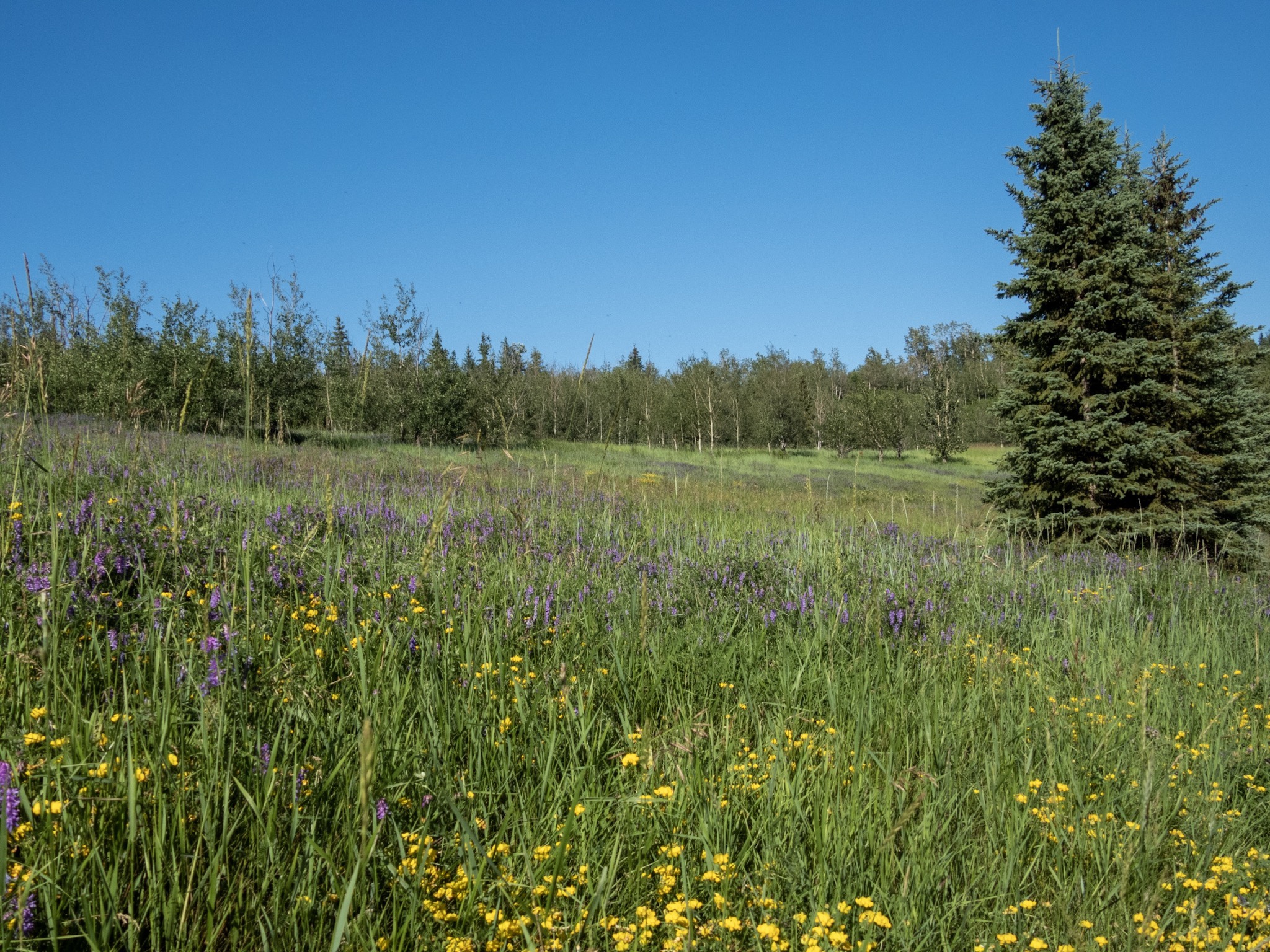
South of the 23 Avenue, as it crosses the Whitemud Ravine, the Whitemud Creek splits into two, the Whitemud and the Blackmud Creeks. Right along the confluence of the two creeks there is a large meadow covered in tall grass and purple Cow Vetch. Last time I was there it was a hot sunny afternoon and the meadow was buzzing with grasshoppers. With every step, hundreds of grasshoppers were flushed out of the tall grass around my legs, jumping in all directions simultaneously. As I was making my way through the tall grass the possibility of ticks making a meal out of me did cross my mind. I have yet to find a tick in Alberta and I certainly hope it stays that way. The last time I had an intimate encounter with this bloodsucking parasite was about 30 years ago in central Sweden, when, after a day of portaging a canoe, to my horror I discovered a tick in the warm moist nether regions. By the dim light of a flashlight we ended up having to carve out the beast at night in our tent. Ever since that incident I have a healthy aversion to these critters. To play it safer, I decided to stay on the trails that meander through the meadow, rather than walking in the tall grass. I could hear lots of song birds, but this late in the afternoon most of the were skulking among the leaves and were difficult to spot.
May the curiosity be with you. This is from “The Birds are Calling” blog (www.thebirdsarecalling.com). Copyright Mario Pineda.
There’s is a strip of meadow between the parking lot at the Whitemud Creek and the MacTaggard Sanctuary. This time of year it’s all pretty with flowers in bloom, bumblebees zipping between the flowers and thousands upon thousands of grasshoppers jumping around in the hot afternoon sun. Last week the meadow it was covered in a sea of purple flowers. Of course clueless as I am about botany I had no clue what they were. They were, however, not hard to identify once had access to Internet. It’s the Cow Vetch (Vicia cracca), also known as Tufted Vetch, Bird Vetch, Blue Vetch and Boreal Vetch, and although it is beautiful there are skeletons in its closet. It is native to Europe and Asia and an invasive species in North America where it is considered a weed. While the flowers are much appreciated by bees, bumblebees and butterflies, cattle like likes to munch on it and (allegedly) budgerigars have a particular fondness for the seeds it is a fast growing colonizing species and often dominates disturbed habitats before native plants have a chance to become established. Cow Vetch is in the family as peas and has climbing stems with noose-like branched tendrils that wrap themselves around other plants, often strangling smaller plants.
May the curiosity be with you. This is from “The Birds are Calling” blog (www.thebirdsarecalling.com). Copyright Mario Pineda.
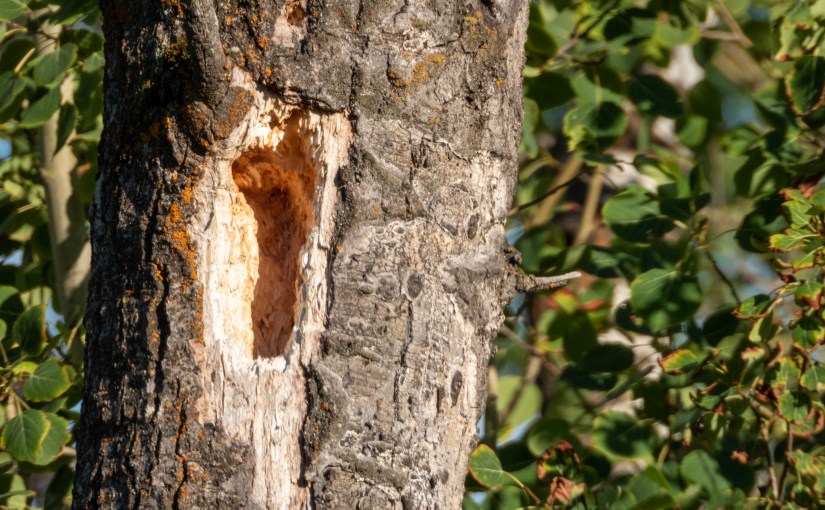
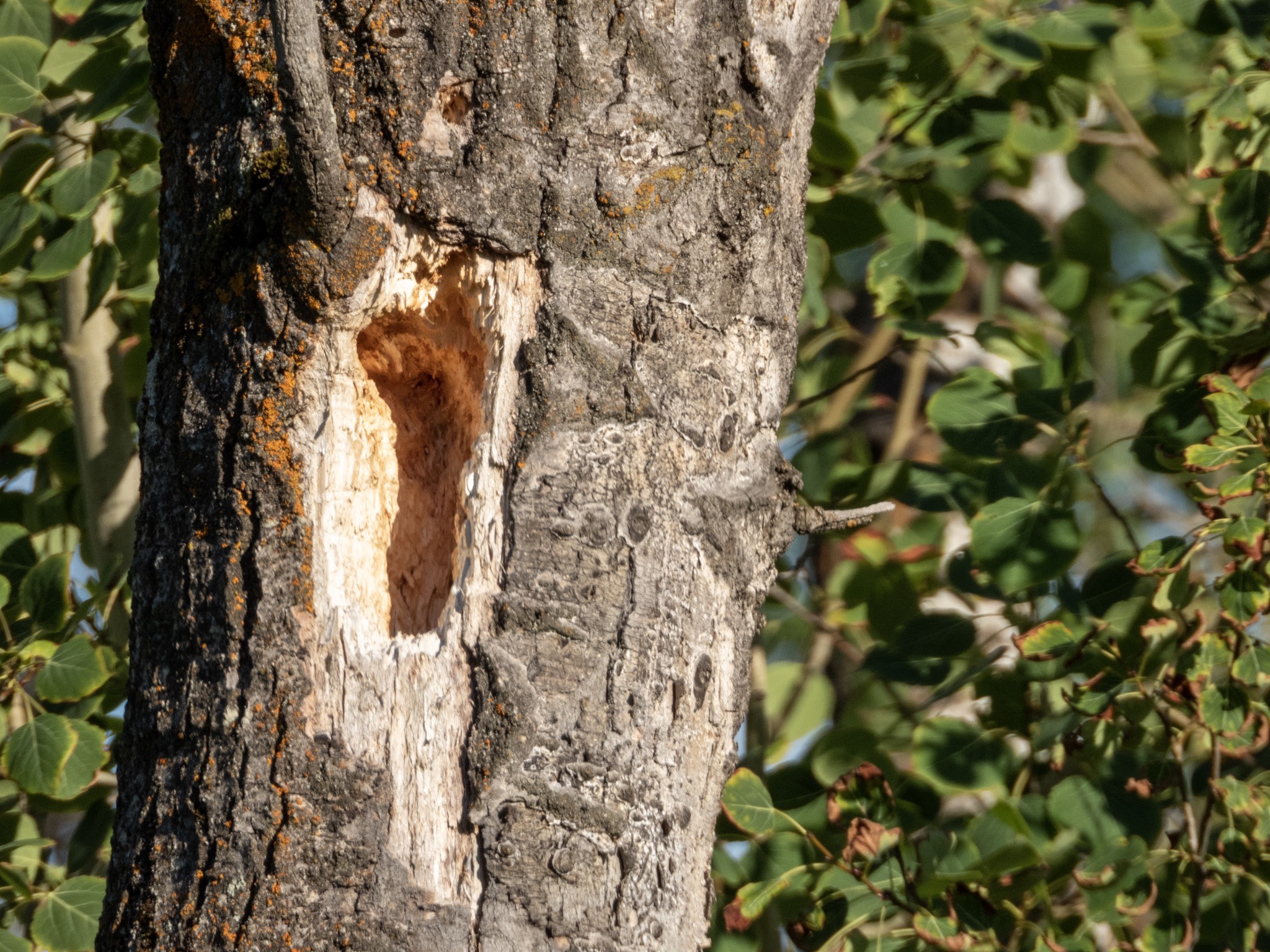
I have seen my fair share of Pileated Woodpeckers in my lifetime, including some spectacularly destructive individuals that went to town on trees with such vigour that the wood chip went flying. It is always a treat to come across one these birds. They not only spectacular and impressive birds, but also quite noisy. The distinct sound when they work on a tree and their vocalizations, reminiscent of a hysterically laughing monkey, can be heard far and wide. The one thing I have not managed to do in the Pileated Woodpecker department, however, is to take a good (or at least half descent) picture of one. I have numerous out of focus and fuzzy photos that would perhaps qualify for the crap bird photography page, but they are definitely nothing to write home about. The best place to see Pileated Woodpeckers in my neck of the woods is down at the Whitemud Ravine. I regularly see them flying around and most dead standing trees have evidence of their busy work, but I have yet to snap a picture of one in action.
May the curiosity be with you. This is from “The Birds are Calling” blog (www.thebirdsarecalling.com). Copyright Mario Pineda.
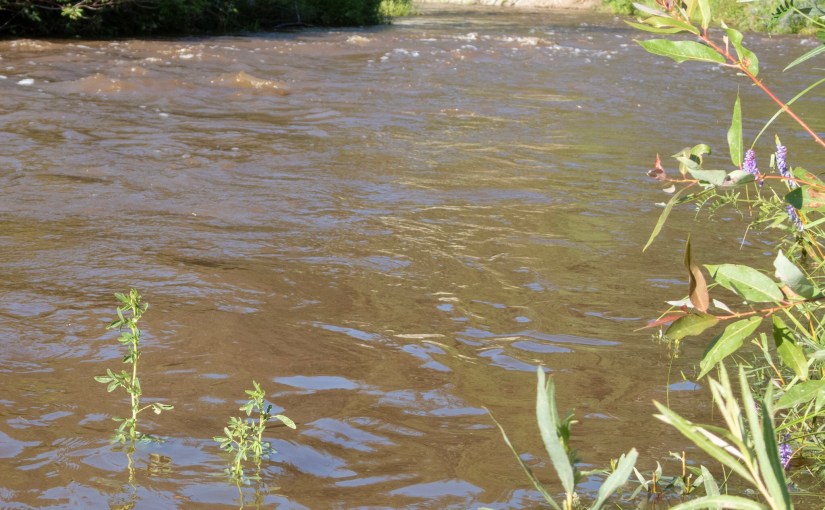
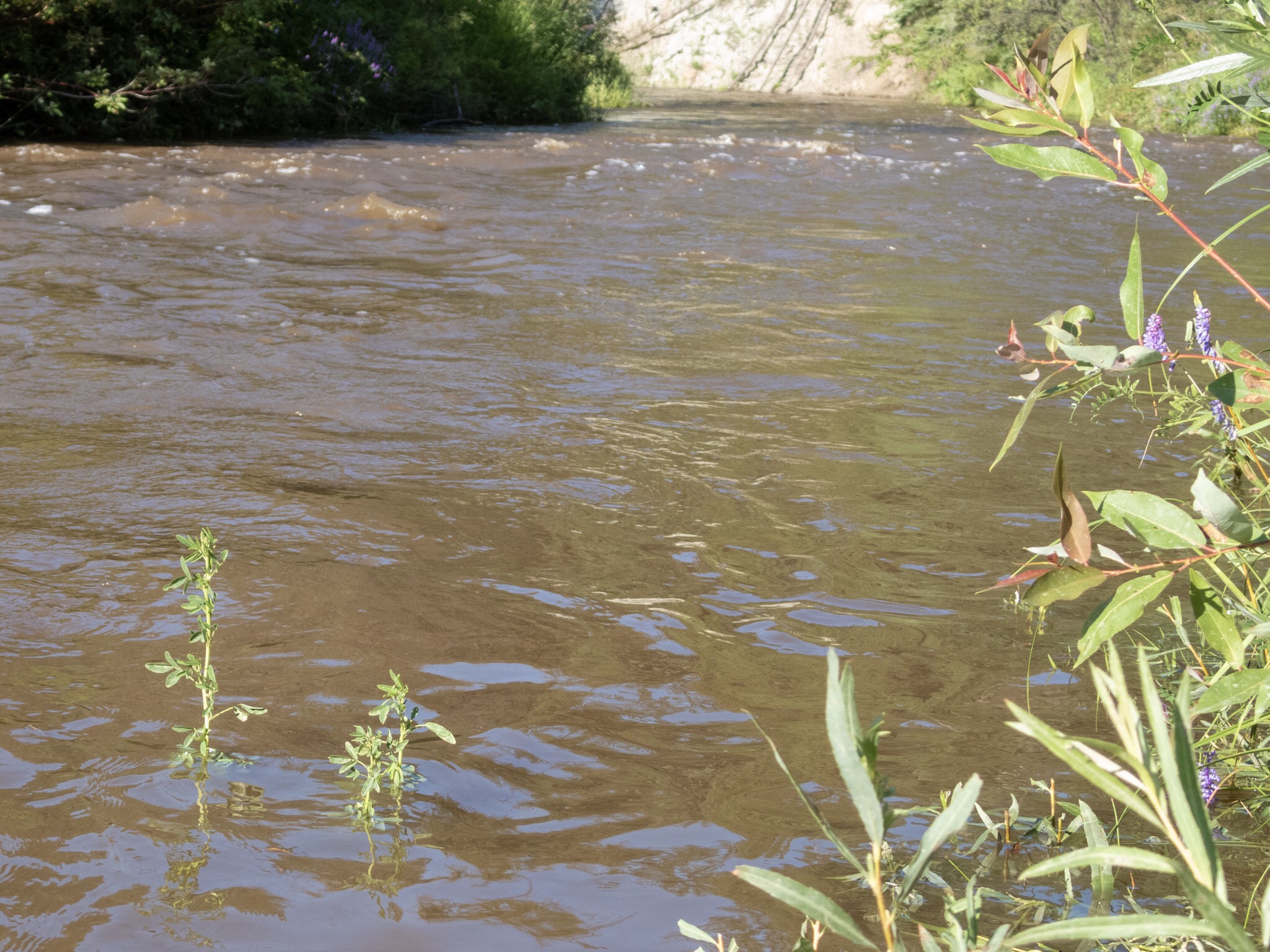
This weekend we had the first two days this summer without rain. It has been a wet summer with daily thunderstorms and serious downpours. As a result the water level in Whitemud Creek is unusually high with part of the creek having fast flowing and frothing whitewater. Parts of the swollen banks have overflowed and inundated vegetation that normally would be on dry land. There seems to be a break in the rain, but now the “arctic heat” has moved in. With temperatures soaring to 30 °C this heat wave is unusual in that it did not come in from the south, but rather from the Northwest Territories, which have been under a heat warning the last few days. The last few days I have been out looking for birds during the hottest part of the days, either mid day or late afternoon. Needless to say, the timing has been completely off and I have not seen much as far as birds go. I think we are looking at some early morning nature walks this weekend to try to remedy the poor timing and get back into the groove of things.
High water with submerged vegetation at at the Whitemud Creek. July 22, 2019. Nikon P1000, 571mm @ 35mm, 1/1600s, f/5, ISO 100
May the curiosity be with you. This is from “The Birds are Calling” blog (www.thebirdsarecalling.com). Copyright Mario Pineda.
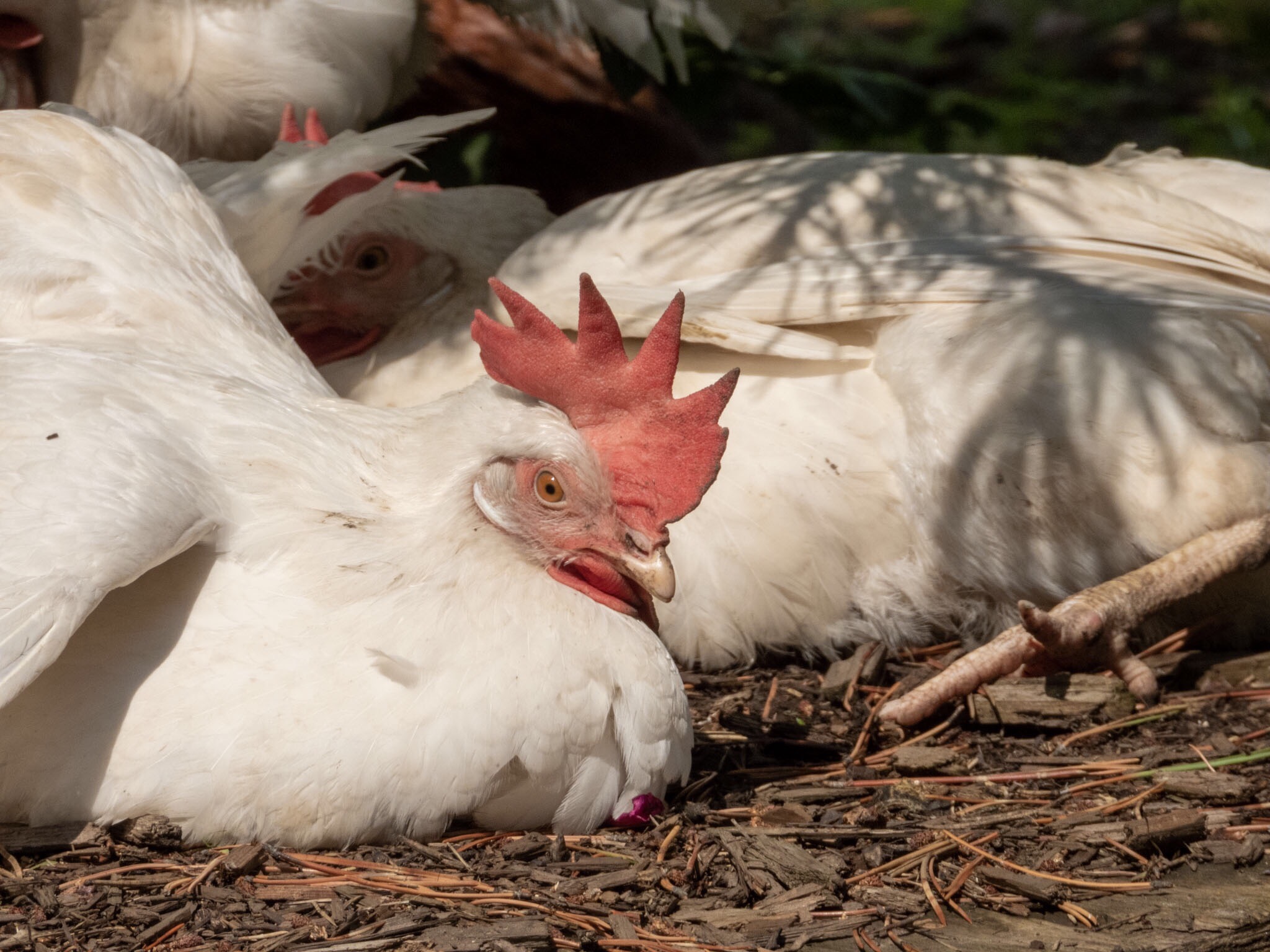
The world loves its chickens. With an estimated total world population of more than 19 billion most of which end up in soups, stews and barbecues there are likely more chickens around than any other wild or domesticated bird. For me chickens are a no fly zone, I don’t eat them (as in, I don’t eat meat) and I don’t count them (as in, I don’t count them as a birder). Yesterday, as we were visiting the Kiwi plant nursery outside of Spruce Grove, I encountered my first chickens not wrapped in ceranwrap. They were running around among the plants looking like they had a jolly good time without a worry in the world. There is a long list of criteria that need to be fulfilled for one to be able to count a bird (as a birder), e.g. one cannot count birds in movies or photographs (but some people are known to practice video game birding), one cannot count captive or caged birds and birds that have been introduced or released and have not established a viable population (there goes the errant budgie). Chickens, being captive, even when they are mischievously free running, are a no go. They were cute and funny though and I could not resist taking pictures of a few of the ladies basking in the afternoon sun. As I was observing them I found myself wondering where they came from (well, obviously from an egg, but before that…). Who is their wild chicken ancestor and are they still around? It turns out that the domesticated chicken (Gallus gallus domesticus) is a subspecies of the Red Junglefowl (Gallus gallus), a bird of the south East Asian tropics in the family Phasianidae. The junglefowl was first domesticated about 5000 years ago and the rest is history. Ebird refers to the Red Junglefowl as the “original chicken” and describes it as smaller than its domesticated descendants. The Red Junglefowl can be spotted running wild in South and Southeast Asia as well as in New Zealand and various Pacific and Caribbean islands where it was introduced. Well, now that I have met the domesticated chicken it seems only fitting that I one day track down and it wild cousins in a far more exotic location.
Domesticated Chicken (Gallus gallus domestricus) at Kiwi Nursery, Spruce Grove. July 20, 2019. Nikon P1000, 571mm @ 35mm, 1/1600s, f/5, ISO 100
May the curiosity be with you. This is from “The Birds are Calling” blog (www.thebirdsarecalling.com). Copyright Mario Pineda.
As we were visiting the Kiwi plant nursery at the outskirts of Spruce Grove I notice a soft chattering sound among the trees and shrubbery. I was pretty sure it was a bird but I was not familiar with who the suspect would be. I did not have to wait long. In short order the Barn Swallows came swooping in at low elevation, crisscrossing the sky in death defying maneuvers. One of the swallows landed on top of a tall flag post with a large Canadian flag fluttering in the breeze. I just had to take a picture of this diminutive bird perched on top of the post with a gigantic flag. How do you compose a picture like this? One could zoom in to get a closer look at the swallow, but then the flag would not be in the picture. Alternatively you zoom out to fit both the swallow and the flag, but then the bird is just a speck. I choose the second option. You can sort of see the rust coloured breast of the Barn Swallow (if you squint) sitting on top of the pole without a care in the world.
Barn Swallow (Hirundo rustica) at Kiwi Nursery, Spruce Grove. July 20, 2019. Nikon P1000, 118mm @ 35mm, 1/1600s, f/5.6, ISO 100
May the curiosity be with you. This is from “The Birds are Calling” blog (www.thebirdsarecalling.com). Copyright Mario Pineda.