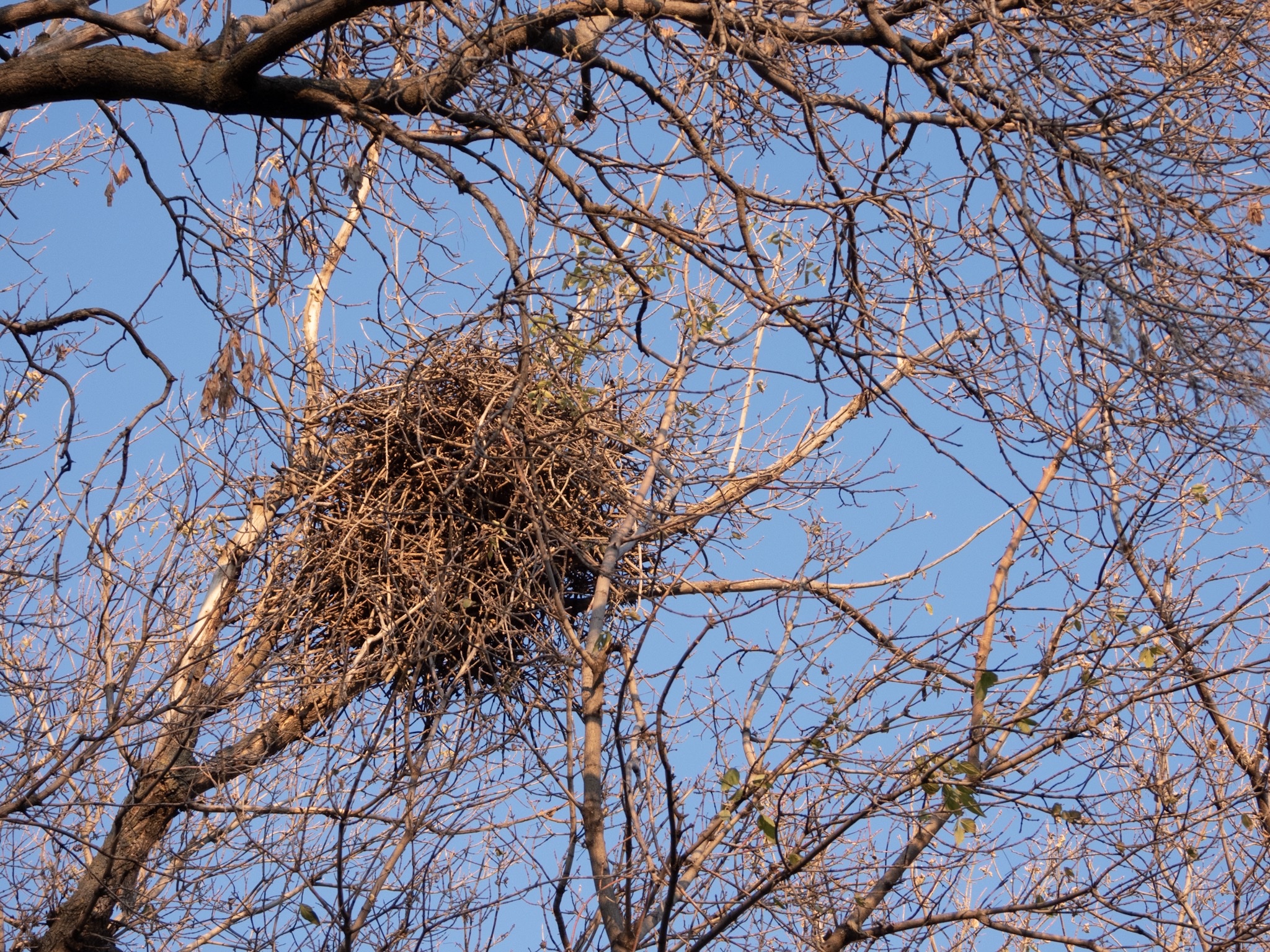
Now that the leaves are gone one can see them. Large conspicuous stick nests high up in the tree crowns all along the trails down by the North Saskatchewan river. When the trees had leaves the nests were, despite their size, almost impossible to spot. Now, with the leaves gone, one would be hard pressed to miss the nests. The nests are empty as their tenants have moved on on their southward migrations. Who build and occupied these nests? Judging from the size it was likely a larger species, perhaps a corvid such as crows, ravens or jays. Now that I know where the nests are located, I can keep an eye on them next spring to see who moves in (which does not necessarily have to be the same inhabitants as this year).
May the curiosity be with you. This is from “The Birds are Calling” blog (www.thebirdsarecalling.com). Copyright Mario Pineda.
The North Saskatchewan river is know for its brown and murky water. The color is due naturally occurring sediments that are washed into the river, particularly during he spring melt and during periods of rain. People sometimes assume that the water is dirty, which is not entirely true. Run off from the storm outfalls contributes a large number of pollutants to the rive. In addition to this, people are generally discouraged from consuming fish from the river due to high levels of naturally occurring mercury. On sunny days and if the light is right the river can, however, become a chameleon and change colour. On a late afternoon, as the sun was getting low, I managed to take this picture of the pale blue surface of the river with the reflections of the Walterdale bridge. No brown color on this afternoon.
May the curiosity be with you. This is from “The Birds are Calling” blog (www.thebirdsarecalling.com). Copyright Mario Pineda.
Throughout the river valley and along the creeks in the city many trees have been wrapped in metal wire to protect them from being chewed on and felled by beavers. Obviously not every tree can be protected like this so the city is focusing its effort on large and high-valued trees. One does not have to go far to see the effect energetic beavers can have on trees. The forest understory all over the city is littered with tree trunks having chewed on, stumps and felled tree trunks. Beavers require a large number of trees for food and for building dams. I have not seen any beaver dams in Edmonton so I assume that within city limits the beavers use the trees primarily as a food source. As soon as one goes outside the city, however, most lakes, ponds and creeks have lots of beaver dams in them. If the city beavers do not build dams, where do they live? This is a question I have not yet been able to find a satisfactory answer to.
May the curiosity be with you. This is from “The Birds are Calling” blog (www.thebirdsarecalling.com). Copyright Mario Pineda.
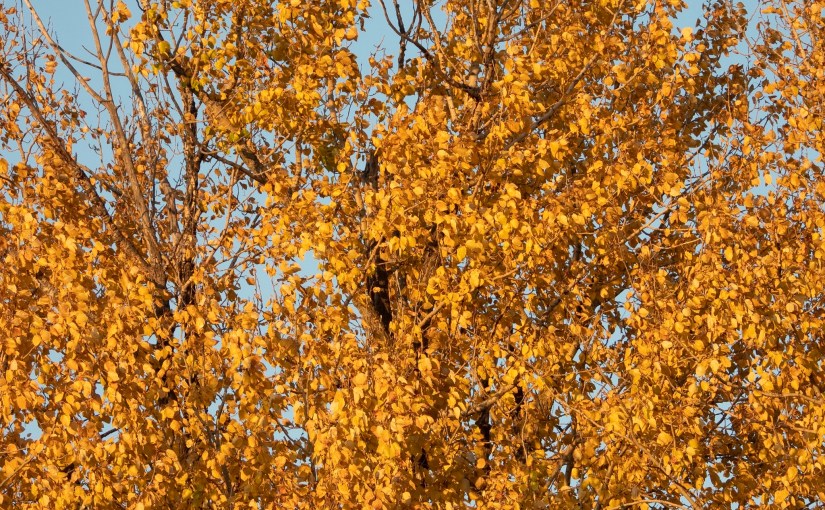
It was a sunny late afternoon without a cloud in the sky. A gentle cold breeze made it feel colder than what it really was. It was silent down at the North Saskatchewan River except the rustle from the Quaking Aspen leafs. It was easy to spot the Aspen stand as these were the only trees with leaves left on them. As a matter of fact, while all the leaves were golden yellow on color it looked like none of them had been shed yet. Various species of Aspen are the most widely and commonly occurring three species in the northern part of North America.
May the curiosity be with you. This is from “The Birds are Calling” blog (www.thebirdsarecalling.com). Copyright Mario Pineda.
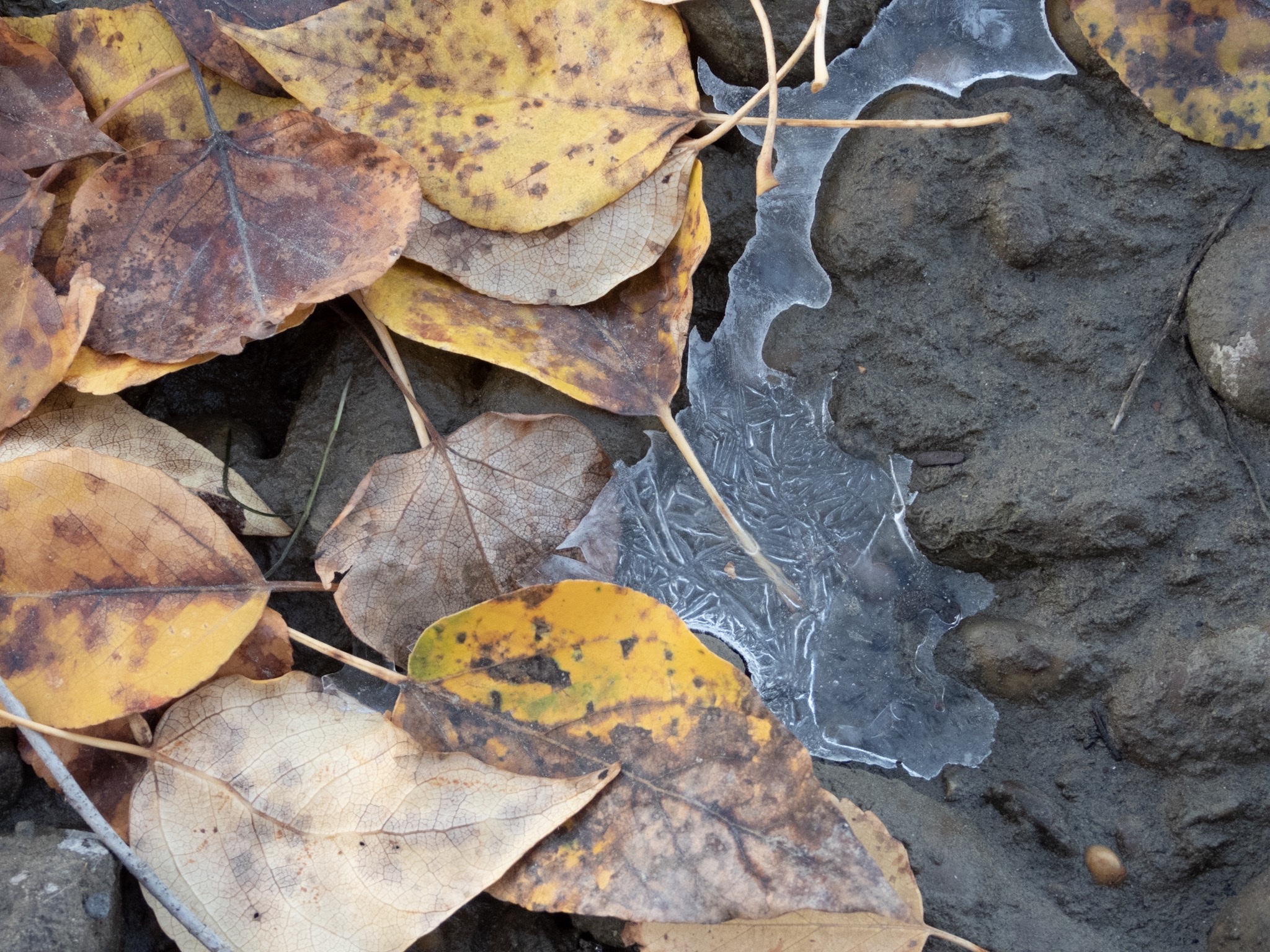
From a distance The North Saskatchewan river looks like a quaint meandering water serpent. Once you get next to it, however, you quickly realize that the flow is fast and unrelenting. As a result, the river only freezes over completely when the temperature drops extremely low for long periods of time. As I went for walk along the river edge today I came across patches of thin ice along the shore. This first ice of the year is a sure sign of things to come.
I ook this picture along the Whitemud Ravine trail a few weeks back but it did not post it as identifying this organisms was a real head scratched. I erroneously assumed that it was a form of fungi as it had quite fleshly lobe-like leafs, not unlike some oyster mushrooms. This assumption is what made me hit a dead end when it came to identification. I stumbled across the picture by chance tonight and decided to take another stab at it. By now I had run out of “mushroom options” so I decided to broaden the set of possibilities. The only possibility, other than a fungus, would be a lichen. Loo and behold, it turned out to be a dog lichen. There are about 91 species of dog lichens world wide, all belonging to the genus Peltigera. These lichen are able to fix nitrogen directly from the atmosphere due to their coexistence with cyanobacteria. The fleshly leaf-like appendages are called foliose thalli. I have not been able to find out why they are referred to as dog lichens.
May the curiosity be with you. This is from “The Birds are Calling” blog (www.thebirdsarecalling.com). Copyright Mario Pineda.
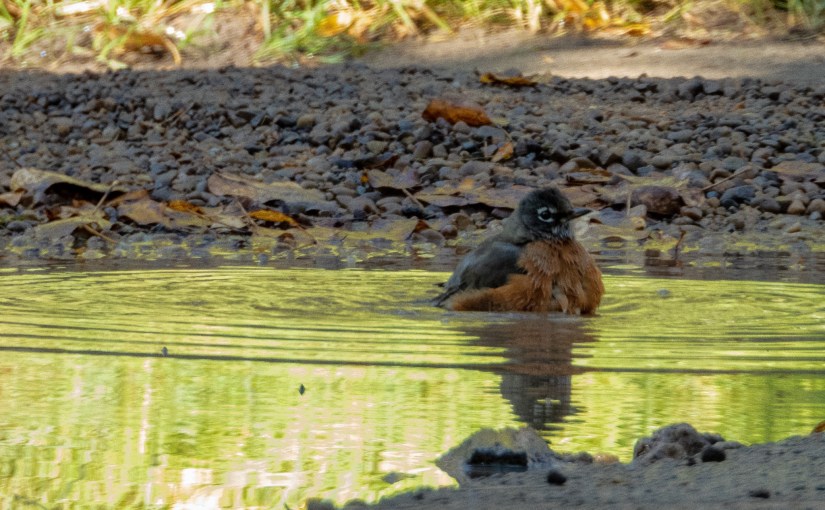
As I was walking down the trail with eyes fixed on the trees there was a splashing sound. At first I though it came from the river, which was just a short distance away on the other side of some shrubbery. The sound seemed closer than the river and more subtle. Not a large splashing sound, but more of a small splashy sound. It did not take long to identify the culprit. In a large puddle along the trail a robin was having its morning bath. It was a very energetic and vigorous bath as it was ruffling up the feathers and shaking around in the brown puddle. My presence did not seem to bother the robin as it continued its bathing routine. It was not until a runner came steaming down the trail that the robin all of a sudden took off and vanished into the shrubbery.
May the curiosity be with you. This is from “The Birds are Calling” blog (www.thebirdsarecalling.com). Copyright Mario Pineda.
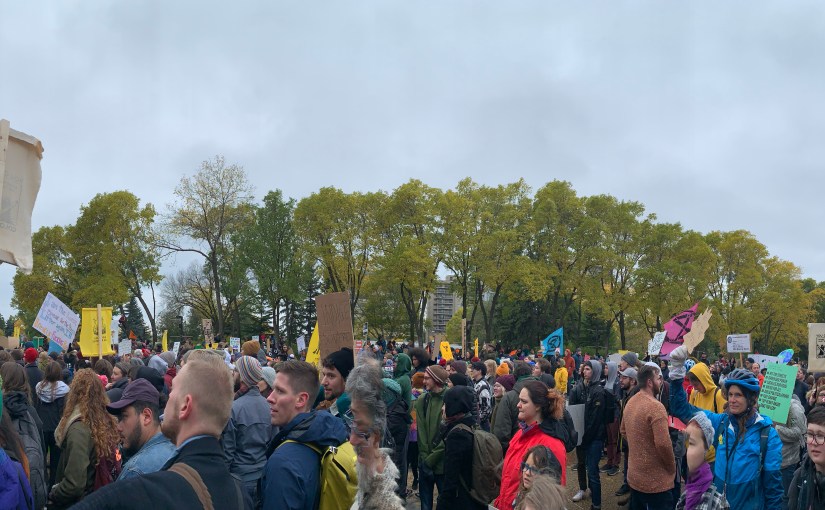
Today was the last day of the Global Week for Future, a series of international strikes and protests demanding that action be taken to address climate change. As today was the last day, the week was wrapped up with a global Earth Strike across the world. An estimated 2 million 7 million (updated) people worldwide participated in today’s strike. Here in Edmonton the strike was scheduled at noon, starting at Churchill square and making its way to the legislature. I was not sure what to expect in terms of number of people – after all this is Alberta, where oil is king and climate change denialism is widespread. The media estimated that there were 4000 participants. The crowd consisted mainly of young adults and teenagers, exactly the demographics that has been the driving force behind this movement. It was a loud and cold event and afterwards we went for some hot chocolate to warm up. I think today’s events show that despite the lackluster efforts from governments and corporations in dealing with climate change there is hope. As the tide is rising (metaphorically and figuratively) it will be increasingly difficult for leaders and decision makers to ignore the growing chorus demanding action. Alberta? Well, we might have a bit more work cut out for us than other places, but I think change is inevitable and the day will come when being tone deaf will no longer be socially acceptable. History tends to repeats itself. One only has to go back a few decades to see many social issues that were debate and resisted and that today have transformed our societies and where opposing views have become socially unacceptable, e.g. women’s suffrage, residential schools, LGBTQ etc.
Edmonton Global Climate Strike for Climate Action
May the curiosity be with you. This is from “The Birds are Calling” blog (www.thebirdsarecalling.com). Copyright Mario Pineda.
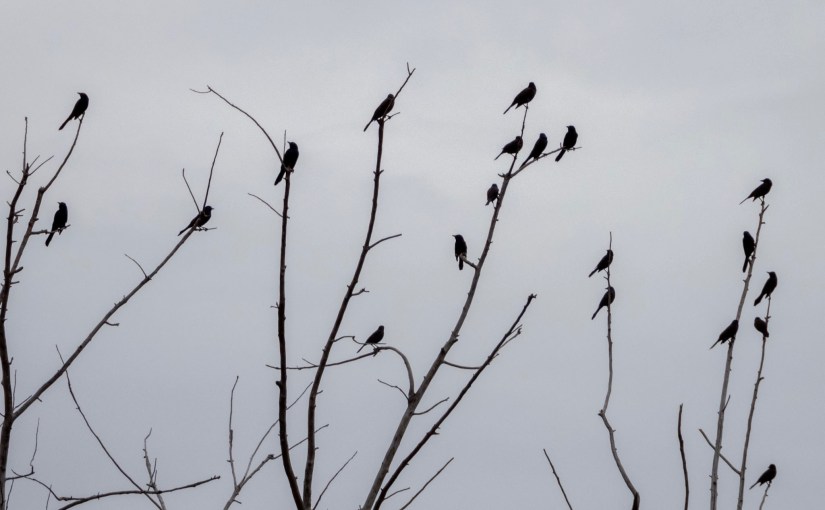
Perched high up in the leafless trees there was a band of American Crows. They seemed wary and worried, looking around like in all directions, carefully watching every movement around them. It did not take long to figure out what had them on the edge. A Merlin was perched in a nearby tree. Suddenly the Merlin took off on what looked like a patrol – sort of just checking things out. But the crows did not take any chances. The whole flock took off simultaneously and started flying back and forth over the tree grove making a lot of noise. Once the Merlin landed in a tree again, the crows settled down and landed as well. One would think that the cows would find safety in their numbers or that they would figure out that they far too large for a Merlin to catch, after all they are about equal in size. But, nope. These fellas were real chickens.
May the curiosity be with you. This is from “The Birds are Calling” blog (www.thebirdsarecalling.com). Copyright Mario Pineda.
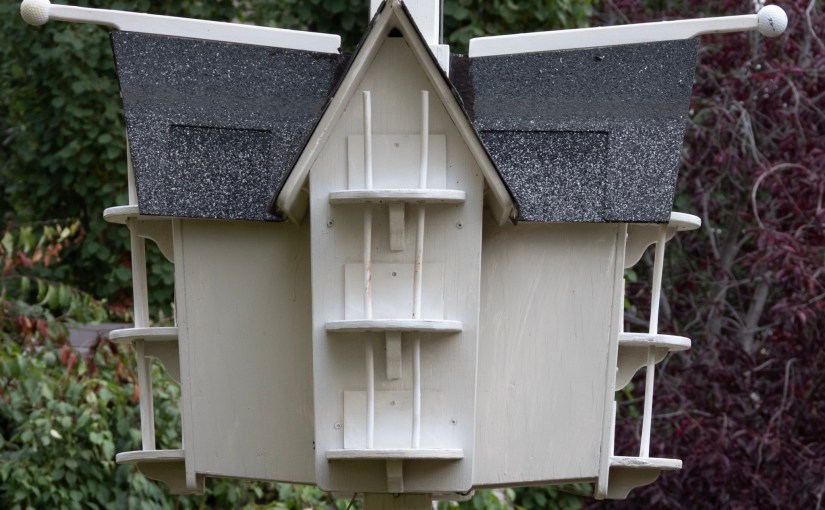
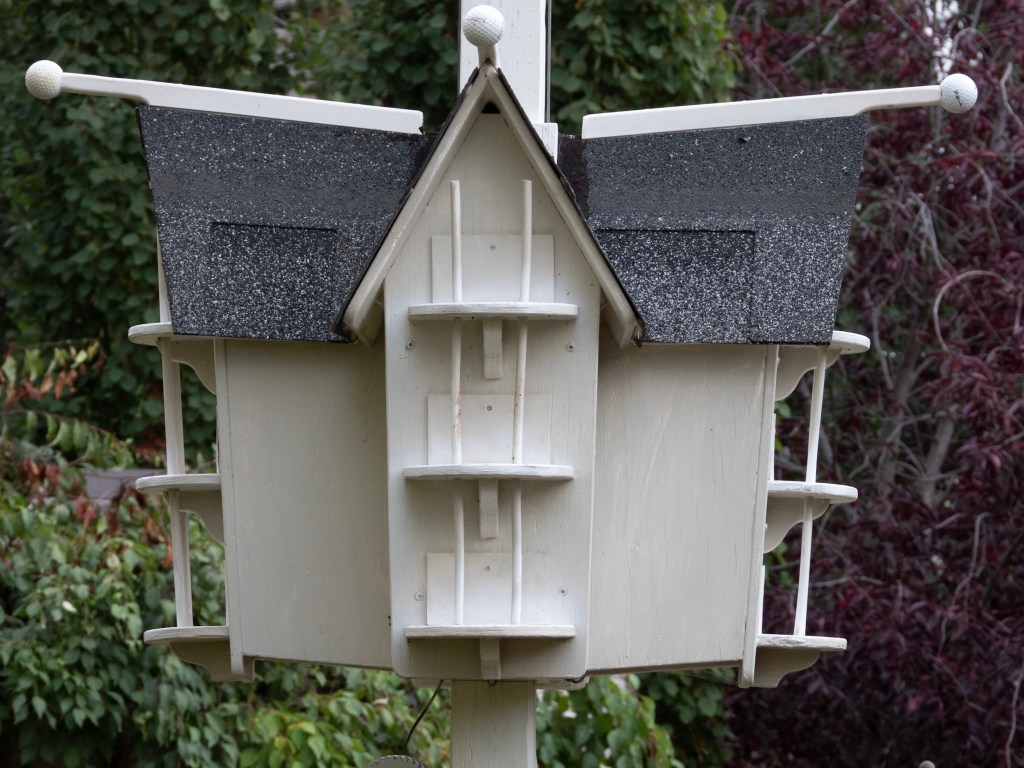
The Purple Martins are long gone and their summer accommodation has been closed for the season. It is reminiscent of a resort that is shut down after a busy summer season with guests flying in from far flung destinations to party it up, find a date, have fun in the hay, have young, raised them, and see them move out – all in the span of about four months. Talk about living life in the fast lane. By now they are on their way or already back at their overwintering rounds around the Gulf of Mexico, in the Caribbean and throughout Central America.
May the curiosity be with you. This is from “The Birds are Calling” blog (www.thebirdsarecalling.com). Copyright Mario Pineda.