Project 366 – Post No. 318 – Pigeons at the grain terminal

What is Project 366? Read more here.

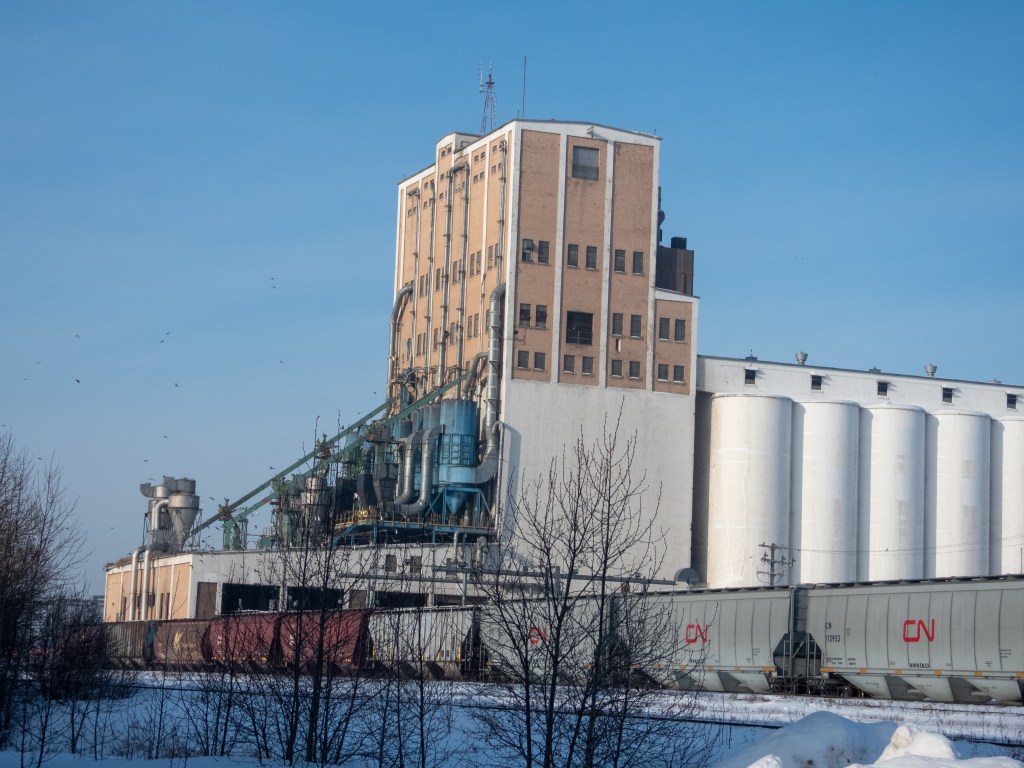
Like a sentinel of a long lost time the urban grain terminal in north Edmonton is still very much in business. The terminal has been in operation since 1924 and last year 400000 tonnes of grain passed through the terminal. Seed crops arrive at the terminal from Alberta farms and are sorted, cleaned and graded before being loaded onto a train bound for Vancouver and the ocean journey to overseas customers in countries like Japan. This bounty of grain has not gone unnoticed to the local pigeons that flock to the south side of the structure in the thousands. I assume that there must be spillage as the grain is loaded and unloaded from train cars. While the location is a birding hotspot, not so much because of the pigeons bur rather due to the birds of prey that are attracted by the pigeons it makes you wonder if rodents also are attracted to the location by the abundant food source. Officially Alberta is rat free (there is an oxymoron for you), but this location seems perfect for an Alberta-grown rat colony (if there is such a thing).
May the curiosity be with you. This is from “The Birds are Calling” blog (www.thebirdsarecalling.com). Copyright Mario Pineda.
Project 366 – Post No. 317 – Windthrow

What is Project 366? Read more here.

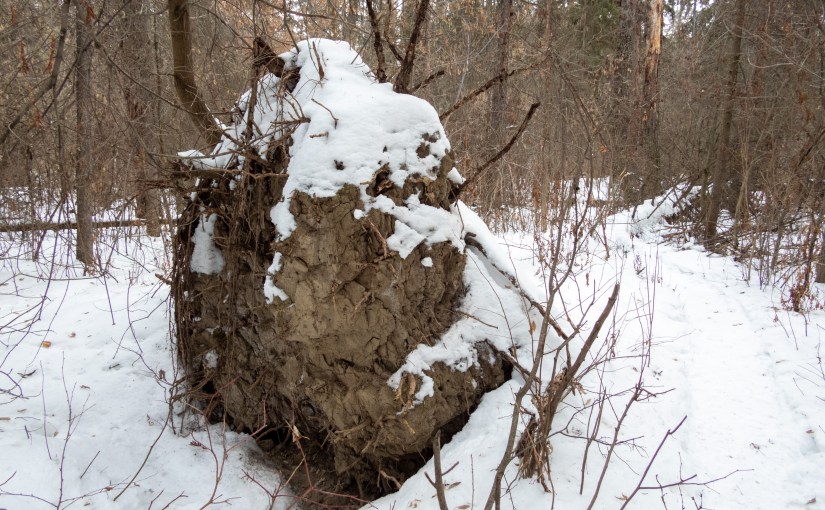
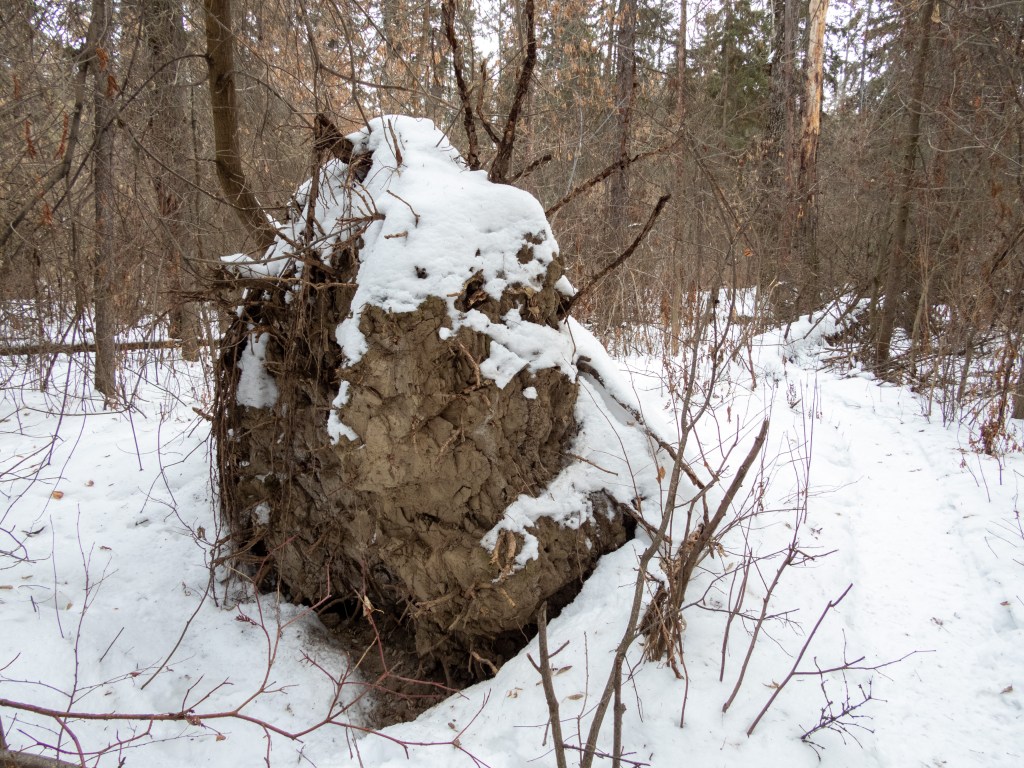
Windthrow refers to trees that have been uprooted by wind. In the Whitemud Ravine there is a large number of windthrown trees with large exposed root plates. When I grew up I was told that windthrown trees with exposed root plates could be dangerous as the tree could spring back up. For a long time I thought that this only was a myth but when I decided to do a bit of research for this post it turns out that it actually does occasionally happen. When severe weather conditions cause trees to fail from their root plates the tree root’s may still be connected on one side. As a result this can cause the tree to be under a spring-like compression tension. All it may take is a minor disturbance, like a wind gust or a person standing on the tree to release the tension and spring the tree back to an upright position.

May the curiosity be with you. This is from “The Birds are Calling” blog (www.thebirdsarecalling.com). Copyright Mario Pineda.
Project 366 – Post No. 316 – Feathery derrière

What is Project 366? Read more here.

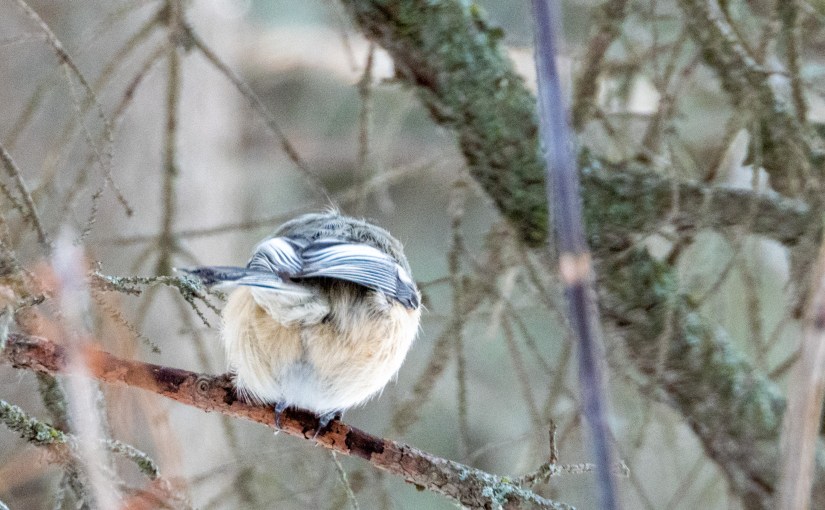
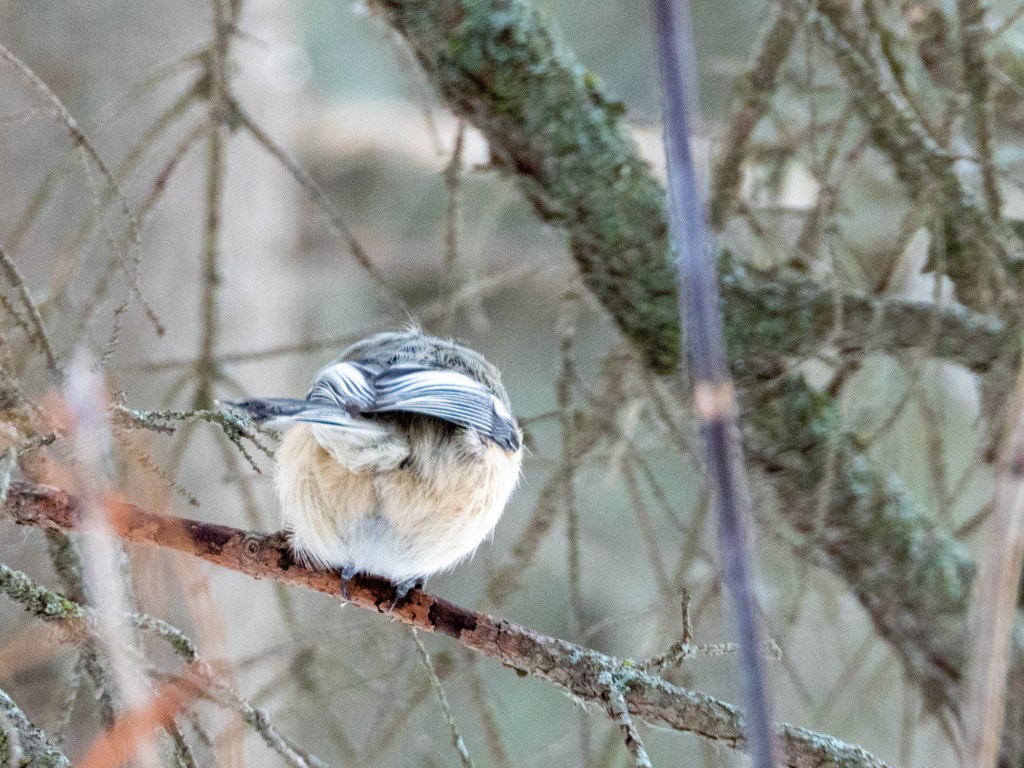
Black-capped Chickadees are small and charismatic and it is difficult to sneak up on one without it noticing. This little fella was busy trying to open a sunflower seed and was completely oblivious to the large creature sneaking up on it from behind. I managed to get a picture of the lesser-seen side of chickadees and, guess what, it is just as feathery as the front side.

May the curiosity be with you. This is from “The Birds are Calling” blog (www.thebirdsarecalling.com). Copyright Mario Pineda.
Project 366 – Post No. 315 – Posing White-breasted Nuthatch

What is Project 366? Read more here.

The White-breasted Nuthatch was too busy looking for something to eat to notice me. Although these birds are common in the Whitemud Ravine they can be tricky to photograph as they always seem to be on the move and rarely sit still for any amount of time. As I quickly and quietly drew my camera and focused in on the nuthatch it suddenly stopped and looked up at me. I thought that it all was lost and that it would just take off. Well, it did, but it took several seconds during which he was staring at me and this was just enough to allow me to get a picture of it. I managed to capture it in the iconic upside down nuthatch pose. Nuthatches ability of climbing down a tree upside down is a very unique ability among birds and I cannot think of any other species of bird that makes its living by finding food on tree trunks, e.g. woodpeckers, that does it upside down.

May the curiosity be with you. This is from “The Birds are Calling” blog (www.thebirdsarecalling.com). Copyright Mario Pineda.

Project 366 – Post No. 314 – Fluffy chickadee

What is Project 366? Read more here.

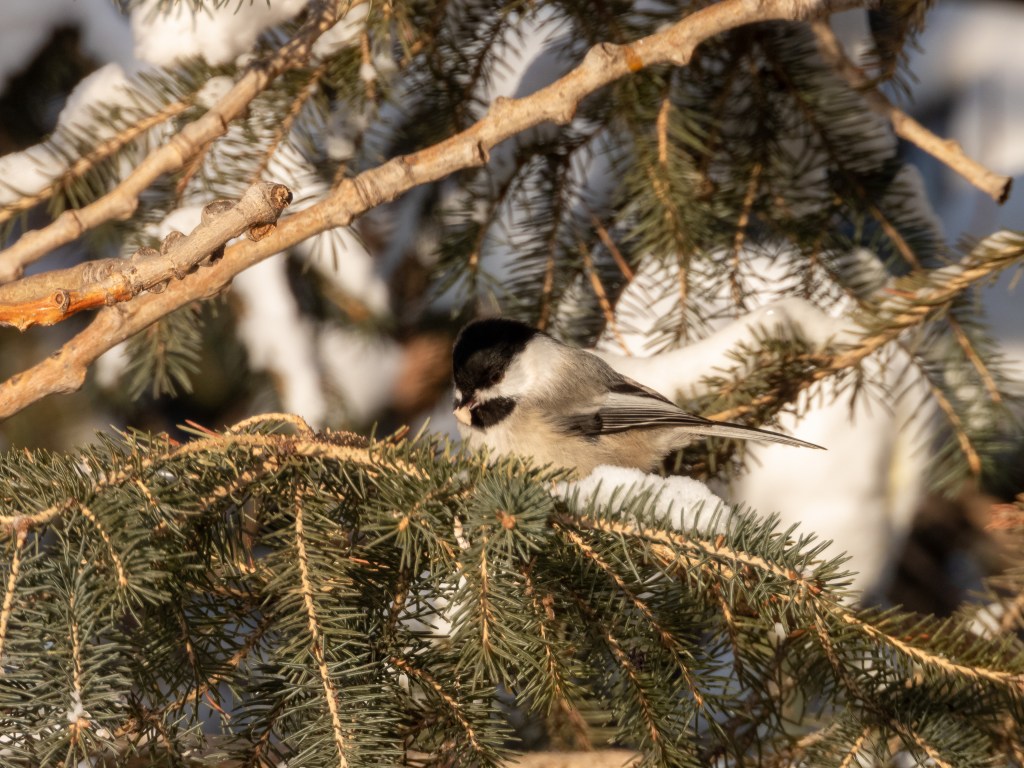
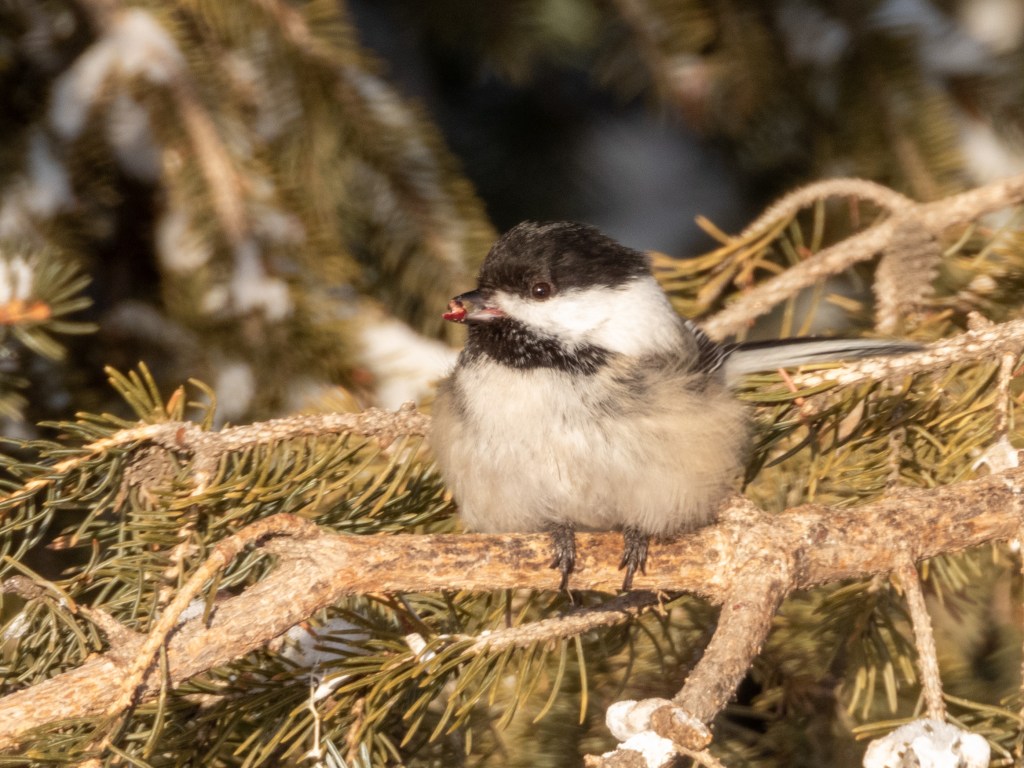
I came across this Black-capped Chickadee enjoying a snack on an afternoon. It was all fluffed up and seemed quite content as it was sitting on a branch basking in the sunshine with a small seed in its beak. In one respect chickadees are like human teenagers – always hungry and looking for food. In other respects they are unlike unman teenagers. For one, they are much more energetic early in the morning than the average human teenager.

May the curiosity be with you. This is from “The Birds are Calling” blog (www.thebirdsarecalling.com). Copyright Mario Pineda.

Project 366 – Post No. 313 – Scruffy downy girl

What is Project 366? Read more here.

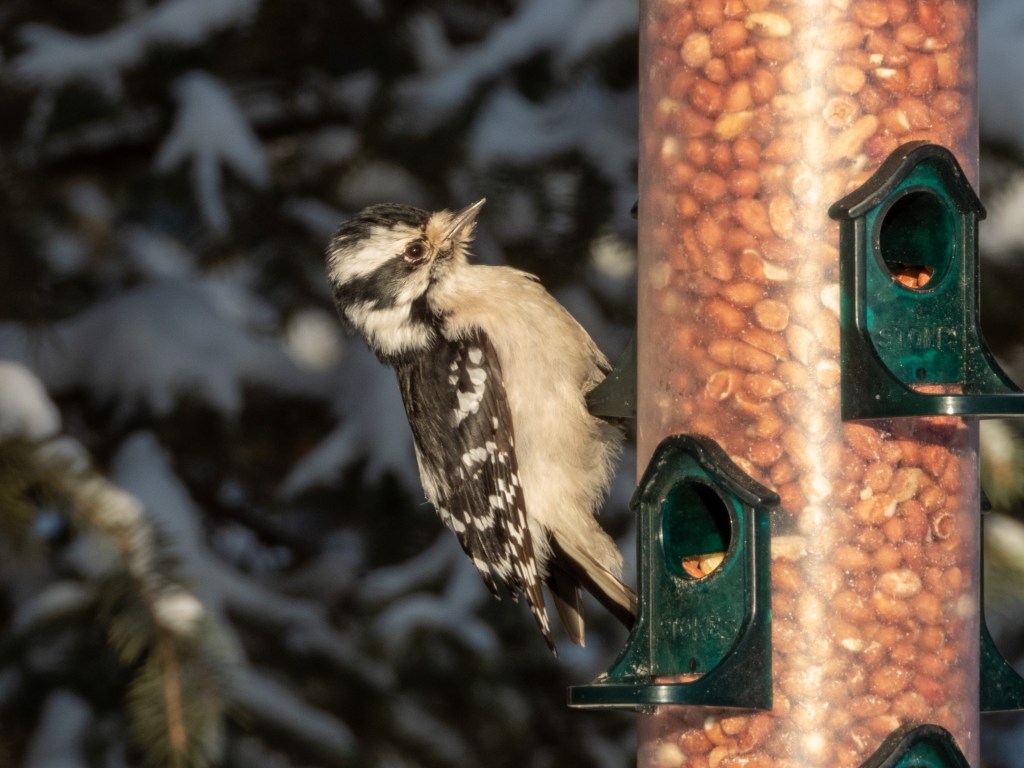
This scruffy-looking female Downy Woodpecker was particularly fond of the contents of this bird feeder. She spend a long time at the feeder munching on, what looked like, some kind of nut. It was a very cold morning and this food source would have given her access to a high energy food source. The perfect fuel to keep her metabolism going and keep her warm on a winter day like this.

May the curiosity be with you. This is from “The Birds are Calling” blog (www.thebirdsarecalling.com). Copyright Mario Pineda.

Project 366 – Post No. 312 – Spruce cones

What is Project 366? Read more here.

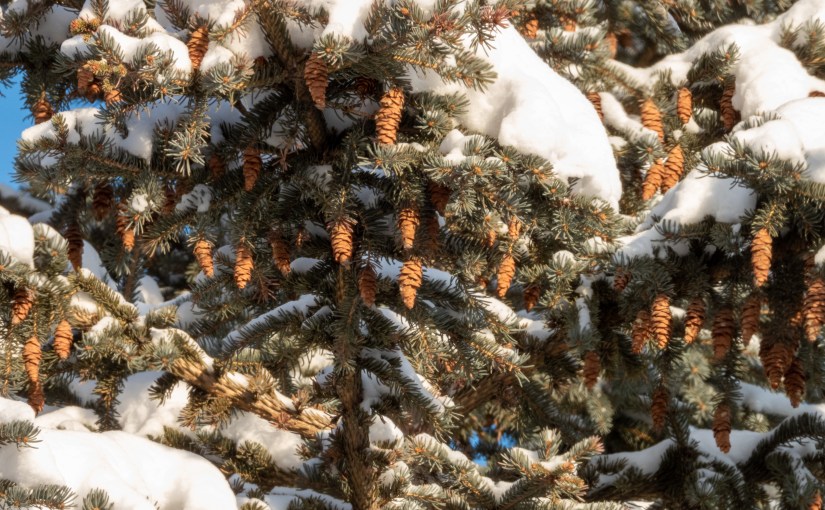
If you look at a spruce tree closely you may notice that all of the cones seem to be at the very top of the tree. The reason for this is an interesting life-history adaptation. A single spruce tree carries both female and male cones. Spruce trees, and conifers in general, depend on the wind to reproduce. In the spring, short-lived male cones produce pollen, which is carried to female cones by the wind. Usually, male cones grow toward the bottom of the tree and female cones toward the top, which reduces the chance that polled from the male cones “falls down” on female cones. Self-pollination is a bad thing since it could lead to reduced genetic variability and inbreeding. So if the male cones are at the bottom of the tree, how come the only visible cones are at the top of the tree. As it turns out, while the female cones are large and conspicuous while the male cones are small and inconspicuous.

May the curiosity be with you. This is from “The Birds are Calling” blog (www.thebirdsarecalling.com). Copyright Mario Pineda.
Project 366 – Post No. 311 – Heavy snow

What is Project 366? Read more here.

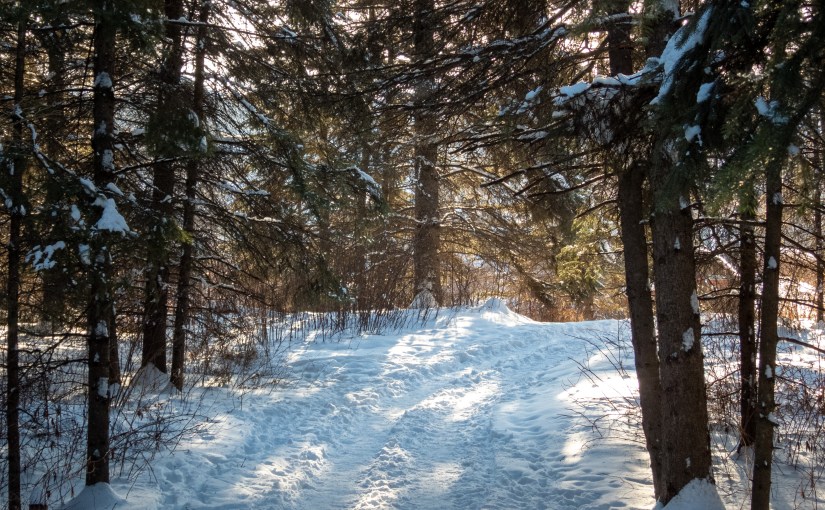
We are in a bit of a heat wave with +1 °C. Despite this it is snowing. Big wet heavy snow flakes are slowly descending on the landscape. Although it is picturesque it makes it wet and soggy walking on the trails through the forest. It is a nice change from the biting cold and for the first time in a long time one does not have to bundle up when heading into the forest. Birding is definitely more enjoyable and the birds seem to be more active as well. Some birds, like chickadees, actually lower their body temperature in the winter. This reduces the gradient between the internal body temperature and the external temperature. This is the same as keeping your house at a cooler temperature to reduce your heating bill. Both responses reduce the amount of energy necessary to stay warm. With milder temperatures there would not be a need to conserve energy by lowering the body temperature and more energy could be spend on other things, say like increasing activity levels.

May the curiosity be with you. This is from “The Birds are Calling” blog (www.thebirdsarecalling.com). Copyright Mario Pineda.

Project 366 – Post No. 310 – Hungry chickadees

What is Project 366? Read more here.

I have lost count of the number pictures and posts I have so far with chickadees, but there must e quite a number by now. For good measure, here is another one. Chickadees never cease to entertain. They may be one of the smallest birds we have in these neck of the woods but they are feisty, spunky and not the least bit shy. They are a “go-getter” – they know what they want (always food) and they do not hesitate getting it, even if it means they have to get our of your hand. They are rather particular about where they eat their acquired sunflower seed. Once they have the treat they take off to a into cover, like a tree or a bush and go to work cracking open the seed.

May the curiosity be with you. This is from “The Birds are Calling” blog (www.thebirdsarecalling.com). Copyright Mario Pineda.
Project 366 – Post No. 309 – Post winter solstice

What is Project 366? Read more here.

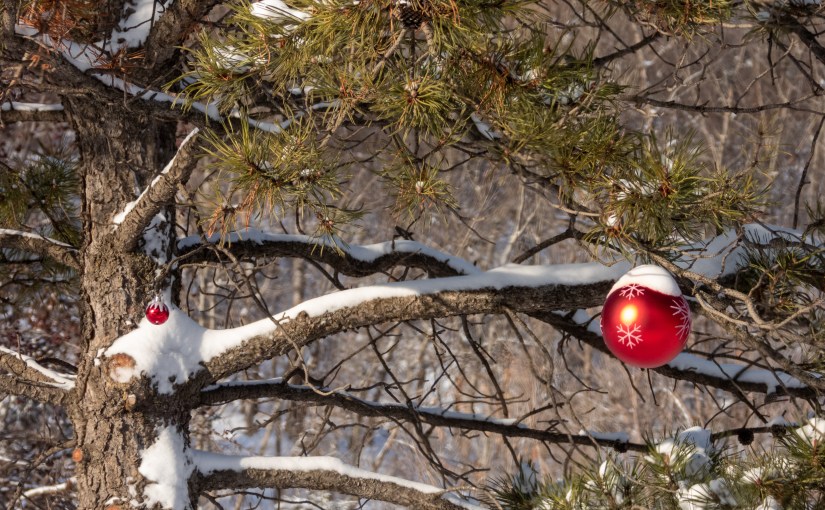
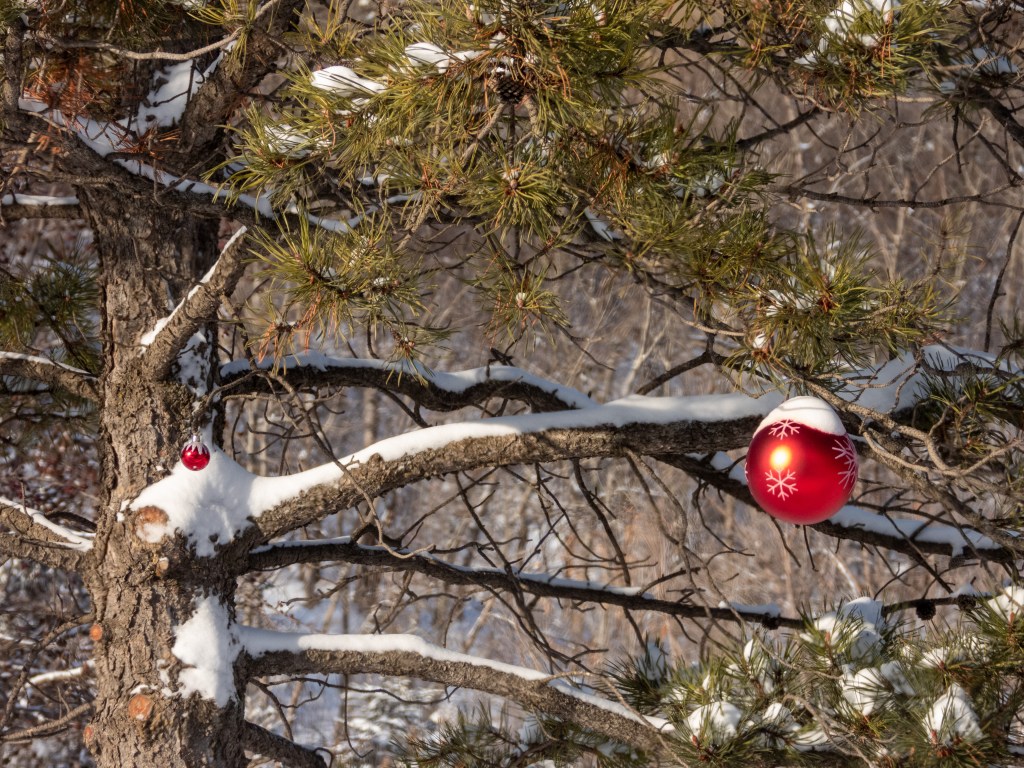
The holiday season is long gone and so is winter solstice. With a busy life it is easy to miss that the days are actually getting longer by almost 4 minutes a day. The turnaround point (aka winter solstice) was on December 23 when the day was the shortest at 7 hours 27 minutes and 43 seconds. Today the day was 7 hours 37 minutes 11 seconds long, about 1 hours and 10 minutes longer than on December 23. Of course this all has to do with the motion of Earth around the sun. Today’s photograph depicts some long forgotten ornaments still decorating a tree in Hermitage park. The ornaments could be a celestial metaphor for the current season with the large ball representing Earth with a snow and ice covered Northern Hemisphere and the small ball representing the moon.

May the curiosity be with you. This is from “The Birds are Calling” blog (www.thebirdsarecalling.com). Copyright Mario Pineda.