Project 366 – Post No. 254 – Black-billed Magpie

What is Project 366? Read more here.

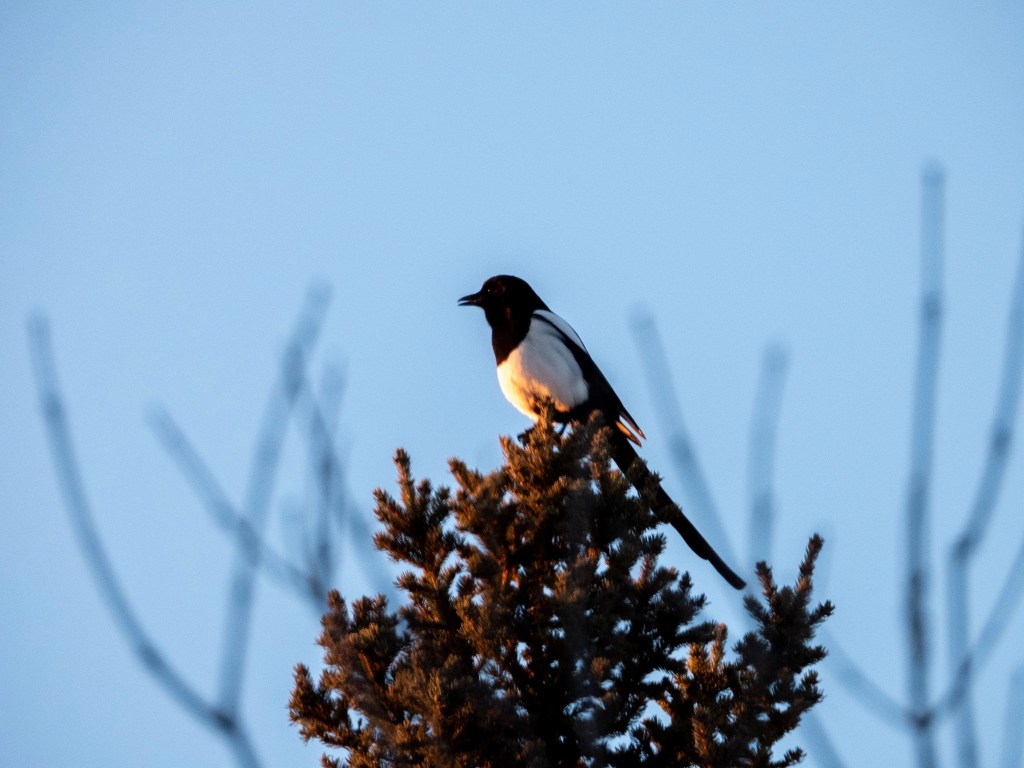
I had returned home from my nature walk and was unpacking the car when I spotted a Black-billed Magpie perched on top of a tall fir tree. Against the blue cloudless sky the bird was impossible to miss. There it was without a worry in the world just keeping an eye on its surrounding. It is easy to dismiss magpies as they are one of those urbanized birds that like to hang out around people. This is my first picture of a magpie, not because I have not seen them, but because I just have not been paying much attention to them.
May the curiosity be with you. This is from “The Birds are Calling” blog (www.thebirdsarecalling.com). Copyright Mario Pineda.
Project 366 – Post No. 253 – Bokeh balls

What is Project 366? Read more here.

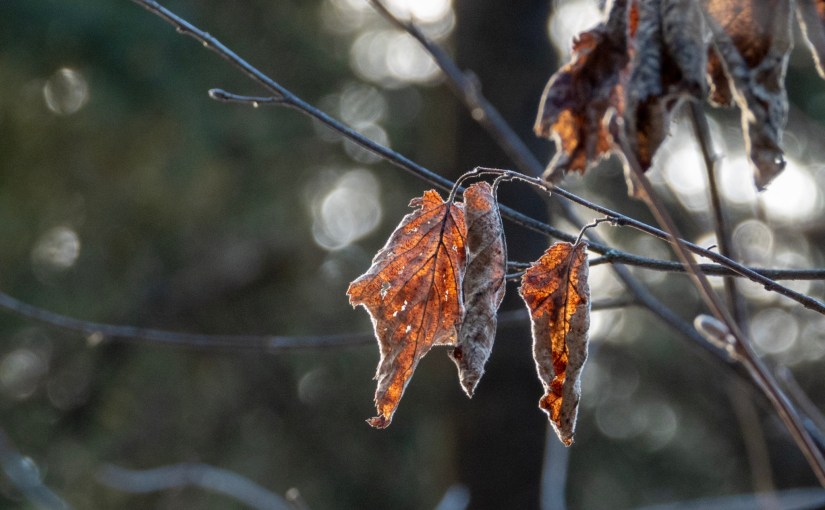
When I took this picture I was going for a back lit effect in the withered leaves. The result was this image of leaves frozen in the winters embrace with the sun illuminating their edges revealing the intricate network of veins running through the leaves. When I looked at the picture at home I did not see any of this. Instead, the first thing I noticed where the round bokeh balls in the background. It’s the first time I have noticed that my Nikon P1000 gives bokeh balls. Bokeh is traditionally known as the aesthetically pleasing quality of the out-of-focus blurred highlight in the background of an image. Traditionally lenses have hexagonal aperture blades producing hexagonal bokeh. I have always had a particular fondness for hexagonal bokeh, perhaps due to my background in black and white photography with film cameras many years ago. When I first noticed the bokeh balls in this image I was taken back. I had never seen/noticed bokeh balls previously. As it turns out, lenses with rounded aperture  blades yield bokeh balls. I think it will take some time for me to come to terms with the lack of hexagonal bokeh.

May the curiosity be with you. This is from “The Birds are Calling” blog (www.thebirdsarecalling.com). Copyright Mario Pineda.

Project 366 – Post No. 252 – Refinery

What is Project 366? Read more here.

Since we were on the topic of oil pipelines in yesterday’s post. Today’s picture is of the Suncor Refinery in north eastern Edmonton, wedged right in between Edmonton and Sherwood Park. This location is significant for several reason. First of all, this is where the pipeline cutting through the Whitemud Ravine originates, and second, I pasa but this industrial behemoth every time I head out towards Sherwood Park on my way to Heritage Wetland Park, Emerald Lake and Centennial Park to go birding.

May the curiosity be with you. This is from “The Birds are Calling” blog (www.thebirdsarecalling.com). Copyright Mario Pineda.

Project 366 – Post No. 251 – Airborn pipeline

What is Project 366? Read more here.

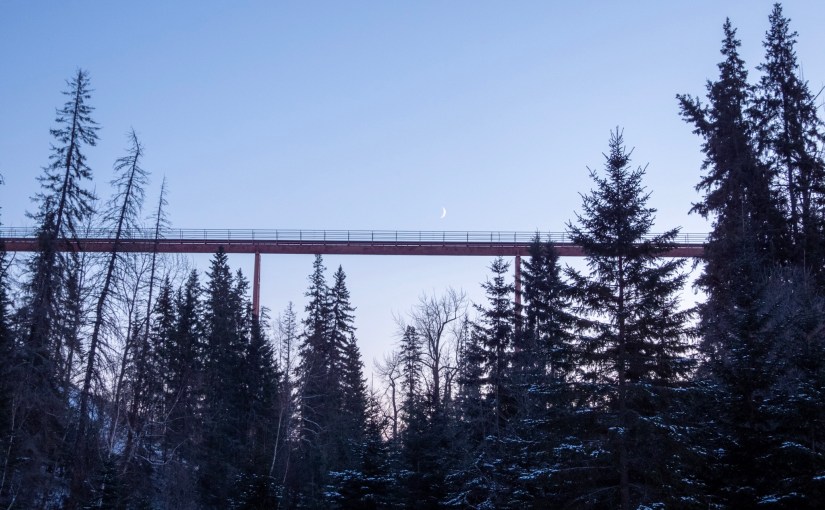
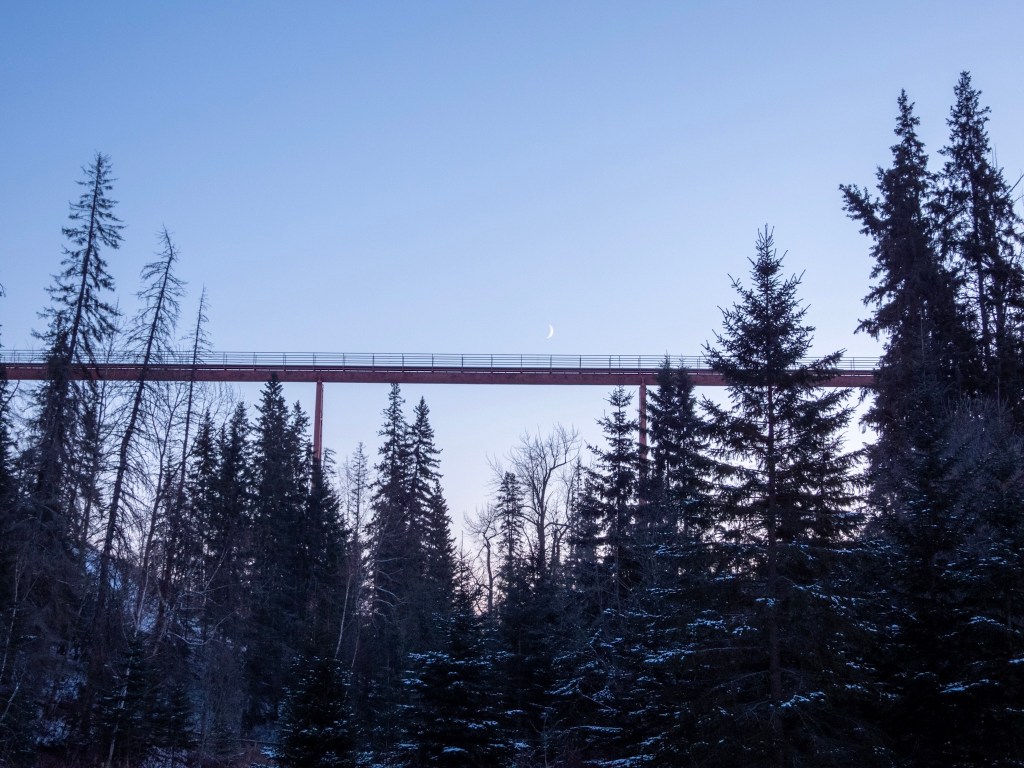
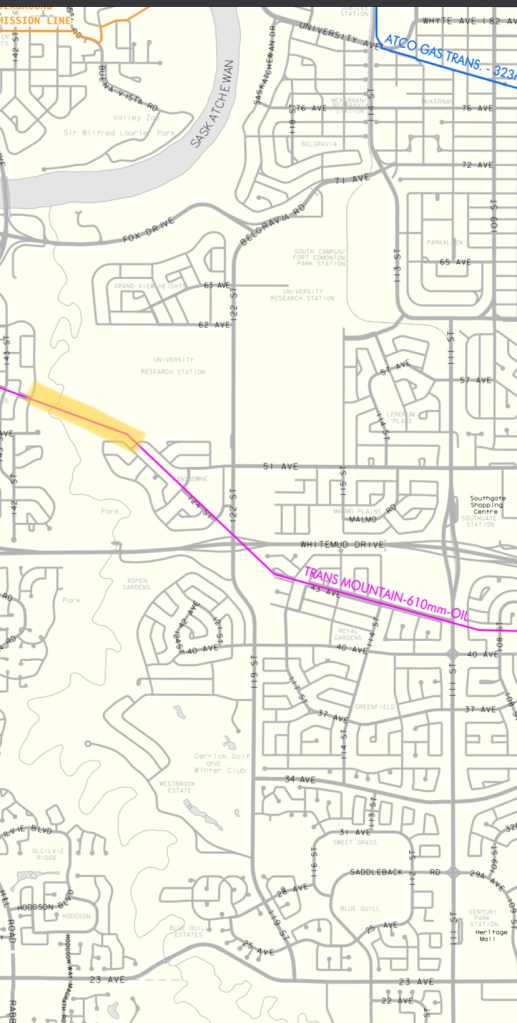
Anybody that has been to the Whitemud Ravine between Fox Drive and Snow Valley has seen the odd looking orange bridge crossing the ravine. Although it clearly has a catwalk on top, it is not a bridge for mere mortals as it is fenced off at both ends. Below the catwalk there is a thick pipe. I have never been able to put my finger at what this bridge is for. Some people have suggested that it is a sewer pipe. That does not make sense as it would freeze in the winter…, and we all know what happens when water/beer/sewage freezes in a enclosed space. The only other thing I can think of that would be impervious to freezing winter temperatures would be an oil flowing through the pipe. Up to today I have not had any evidence suggesting that this is an oil pipeline, other than it would make more logical sense than a water/sewer pipe and the fact that we have a lot of oil pipelines crisscrossing Alberta. That was until I came across a map of pipelines running through Edmonton. The map reveals that there indeed is an oil pipeline crossing the Whitemud Ravine at exactly this location. On the map the pipeline is labelled as “TRANSMOUNTAIN-610mm-OIL” and it originates at the Kinder Morgan Terminal at the outskirts of Edmonton. This terminal is a transit and storage facility for crude oil. So while this provides some answers it also raises many new questions. Is this “The Trans Mountain” pipeline that carries crude and refined oil from Alberta to the coast of British Columbia and that there has been so much debate around in regards to its expansion? It seems a bit puny for being The Trans Mountain pipeline? Is the pipeline still active? Perhaps it is an old route and as been decommissioned? What is the history of this section of the pipeline and why is it running right through (above) the the Whitemud Ravine and through residential areas?

Part of the Edmonton Area Pipeline Map showing the “TRANSMOUNTAIN-610mm-OIL” pipeline where it is crossing the Whitemud Ravine (highlighted in yellow),

May the curiosity be with you. This is from “The Birds are Calling” blog (www.thebirdsarecalling.com). Copyright Mario Pineda.

Project 366 – Post No. 250 – Black water

What is Project 366? Read more here.

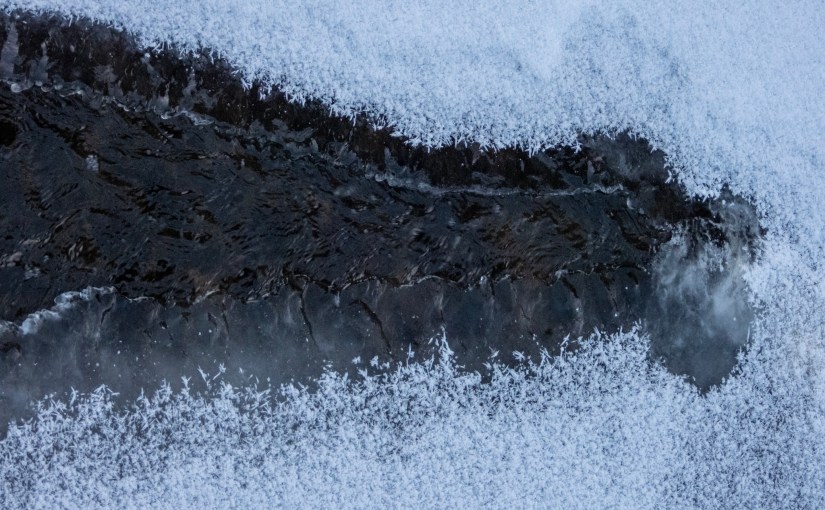
The temperatures are going up and down and the creek cannot make up its mind if it should stay frozen or not. Most of the Whitemud Creek is now frozen over except for a few spots, mainly under bridges, that are still teetering on the cusp between freezing over completely and staying open. I like this picture, where the crystalline white snow is gradually replaced by paper thin transparent ice where the blackness of the water shines through. The water itself is flowing. Cold and black, disappearing under the ice.

May the curiosity be with you. This is from “The Birds are Calling” blog (www.thebirdsarecalling.com). Copyright Mario Pineda.

Project 366 – Post No. 249 – Manitoba maple seeds

What is Project 366? Read more here.

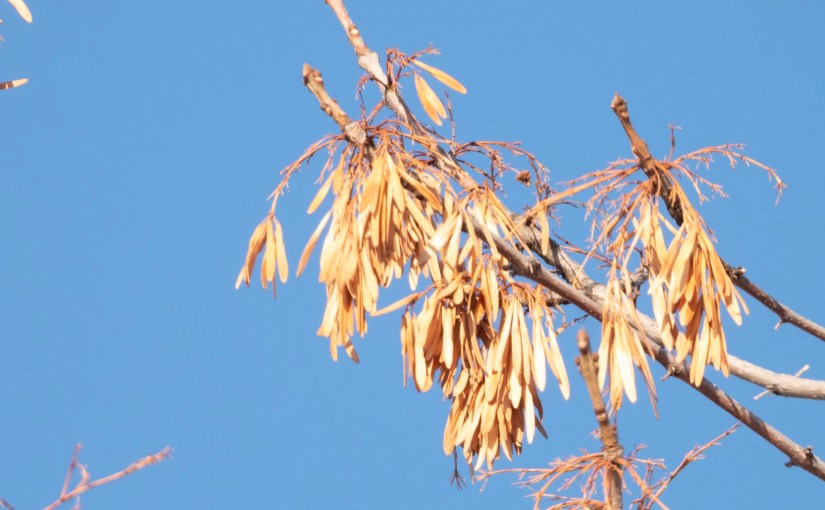
According to eBird reports Evening Grosbeaks had been spotted in Centennial Park in Sherwood Park foraging on Manitoba Maple seeds. Since I was in the neighbourhood I decided to stop by to see if I could spot them. It was a bone chilling morning. I sure found the maples, they were everywhere full of seeds. Unfortunately the Evening Grosbeaks where nowhere to be seen. Better luck next tine.

May the curiosity be with you. This is from “The Birds are Calling” blog (www.thebirdsarecalling.com). Copyright Mario Pineda.
Project 366 – Post No. 248 – Trunks in repose

What is Project 366? Read more here.

repose

verb re·​pose | \ ri-ˈpōz

1a: to lie at rest, b: to lie dead; c: to remain still or concealed. 2: to take a rest. 3: to rest for support

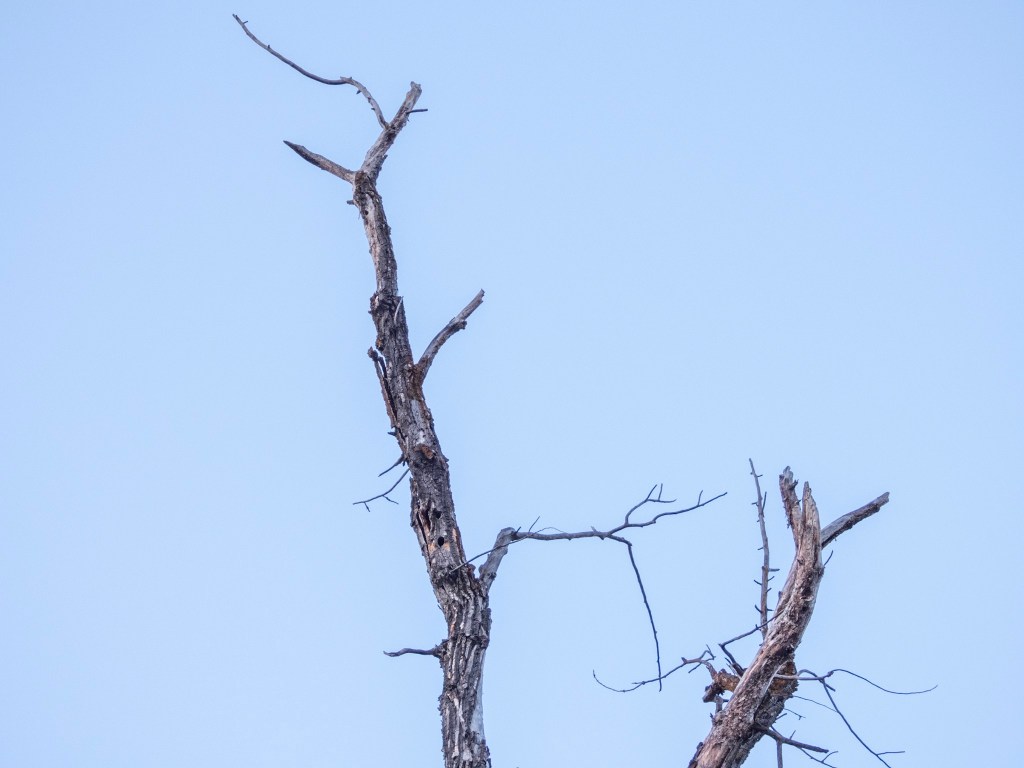
It is difficult to tell if these trunks belong to a living or a dead tree. Green leaves are like a pulse of a living being…, an assurance that the life processes are still going on. Without leaves, however, the difference between the dead and living is harder to pinpoint. One could probable make an argument that any deciduous perennial plant would be in a state of suspended life during the winter. It begs the question are there any cellular processes going on in a tree like the one in today’s photo during the deep cold winter?

May the curiosity be with you. This is from “The Birds are Calling” blog (www.thebirdsarecalling.com). Copyright Mario Pineda.
Project 366 – Post No. 247 – Hairy woodpecker

What is Project 366? Read more here.

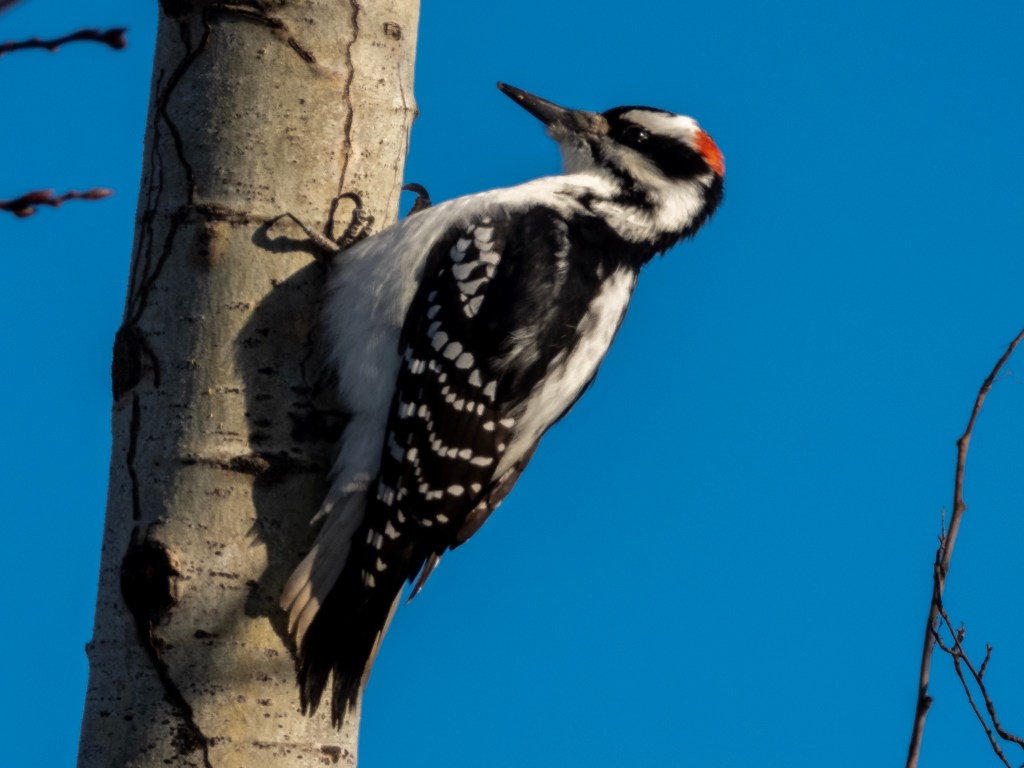
It’s been a while since I saw a Hairy Woodpecker. These fellas are like the big brothers/sister of more common Downy Woodpecker. The Downy is slightly more petit than the Hairy, but the size difference can be subtle and otherwise the two are virtually identical. The two first birds on my life list are the Downy and the Hairy Woodpecker, in that order. They could have been in the opposite order, however, as I was fortunate enough to see both of them at the same time at one of the winter feeders at the Beaver Hills Bird Observatory almost a year ago. Seeing them next to each other was a special treat that allowed me to directly compare them and has helped me immensely in my ability to confidently distinguish the two species. This is my first photograph of a Hairy Woodpecker. I encountered this one at the Centennial Park in Sherwood Park on a bone shattering cold morning. This fella did not seem to mind the cold at all, however, and was busy going to down on the tree branches looking for a morsel to eat.

May the curiosity be with you. This is from “The Birds are Calling” blog (www.thebirdsarecalling.com). Copyright Mario Pineda.

Project 366 – Post No. 246 – Winter darkness

What is Project 366? Read more here.

Today I managed to squeeze in two nature walks. A morning visit to Centennial Park in Sherwood Park. It was a blistering cold day with temperatures down to -20C, yet the winter hardy birds were out in full force. In the afternoon I visited The Whitemud Ravine. This time it was quiet and, other than Black-capped Chickadees, I spotted a fleeting glance of a Pileated Woodpecker. I heard the characteristic monkey laugh of it first and as I started scanning for it I saw a quick flash of it landing on the back of a dead old growth tree. By the time I made my way around the tree the Pileated Woodpecker was gone, but I did find a large cavity roughly where it had landed. I suspect that the woodpecker was likely in that cavity. This is the second potential nesting site of a Pileated Woodpecker I have found at the Whitemud Ravine. I am still lacking any useful photographs of Pileate Woodpeckers, so I will need to monitor these cavities more regularly. Around 3:30 in the afternoon the sun was getting low and by 4 pm it was dusk-like and too dark for photography. The early darkness is an unexpected challenge when it comes to birding during this time of the year. Winter solstice is still several weeks away so things are looking dark (pun intended) for the next little while.

May the curiosity be with you. This is from “The Birds are Calling” blog (www.thebirdsarecalling.com). Copyright Mario Pineda.
Project 366 – Post No. 245 – Conks

What is Project 366? Read more here.

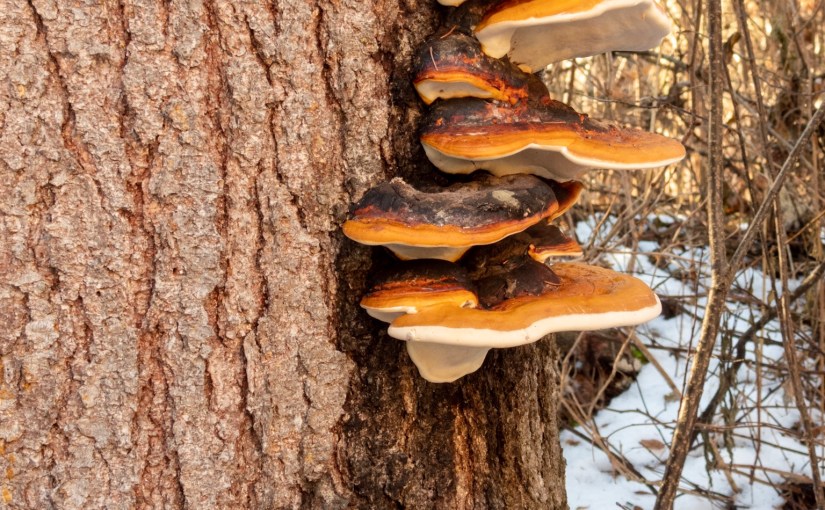
Fungi are the organisms that contribute to the decomposition of dead animals and plants. What we typically think of when we think of fungi are actually the charismatic fruiting bodies. The actual fungus, however, is “invisible” as it is buried underground or inside a decomposing tree trunk in the form of a mycelium. The mycelium is the vegetative part of a fungus and consists of a mass of branching, thread-like hyphae. These fruiting bodies of so called polypore fungi were growing all the way around the trunk of a dead tree. Polypores are also called bracket fungi, and their woody fruiting bodies are called conks and they typically inhabit tree trunks or branches consuming the wood.

May the curiosity be with you. This is from “The Birds are Calling” blog (www.thebirdsarecalling.com). Copyright Mario Pineda.