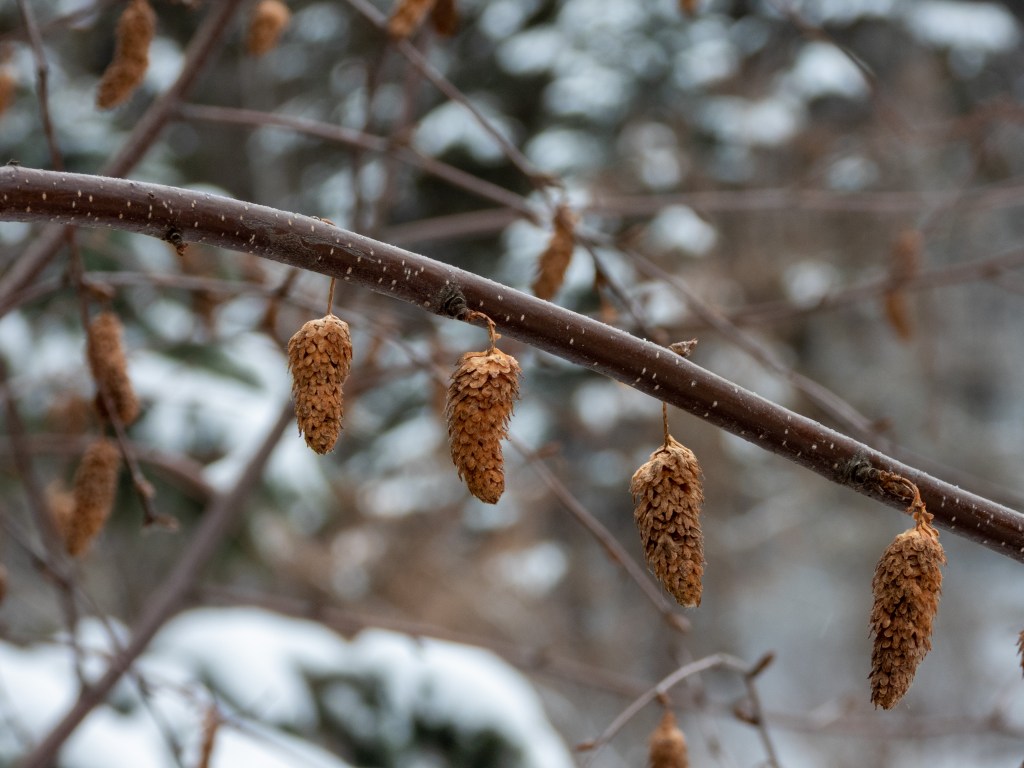
A single branch was reaching out over the frozen creek. The branch was bare except a handful of dry and frozen catkins that were still attached to it, frozen in time. Many trees and shrubs have catkins. The most well-known in these neck of the woods are probably birch and willows.
May the curiosity be with you. This is from “The Birds are Calling” blog (www.thebirdsarecalling.com). Copyright Mario Pineda.
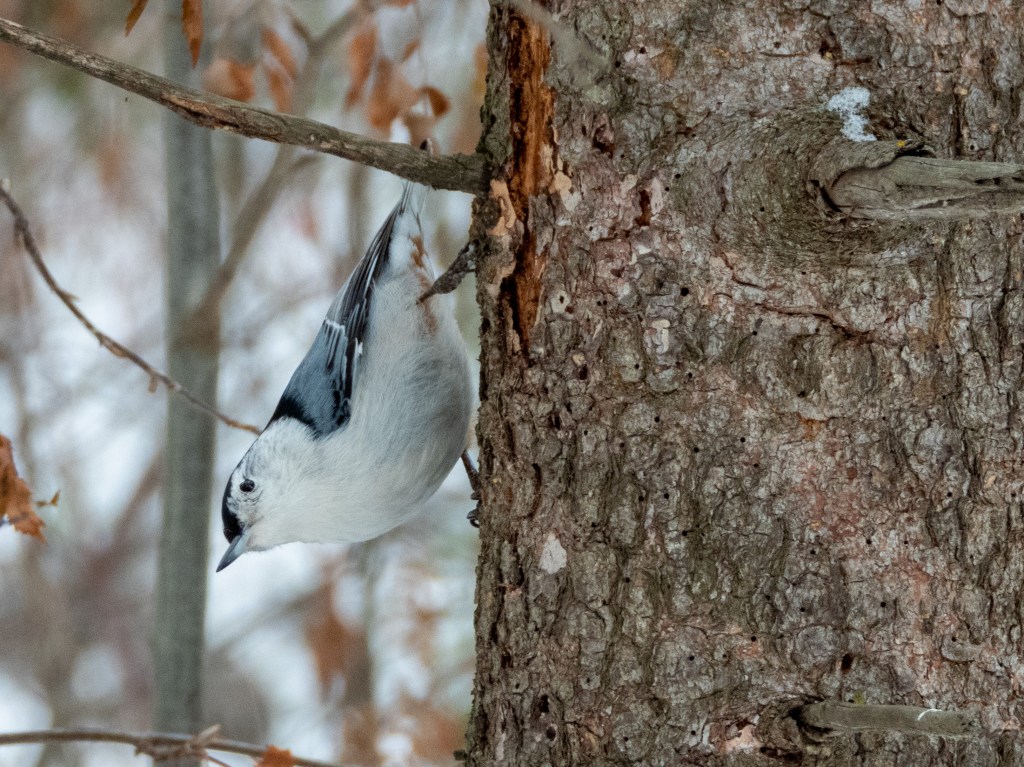
White-breasted Nuthatches and their close cousins, the Red-breasted Nuthatch are common songbirds down in the Whitemud Ravine year round. Next to the Black-capped Chickadees they are probably the most common birds one encounters. I have, however, had some difficulties getting good pictures of them as they never seem to sit still. They are always moving around on a tree trunk, moving up and down and around the tree. After many trials and failures trying to photograph them only to get blurry grey patches I finally got my break last weekend. This one White-breasted Nuthatch was was approaching us, flying from tree trunk to tree trunk, slowly inching his way closer to us. Yes, I do believe it was a male as females have a grey cap. Although it was still moving around a lot it gave me lots of opportunities to photograph it. It soon became apparent what piqued its interest. There was a pile of sunflower seeds on a log right by the trail where we were standing. It was the least shy and went all to way up to the sunflowers at arms length grabbing a seed before it took off into the forest.
May the curiosity be with you. This is from “The Birds are Calling” blog (www.thebirdsarecalling.com). Copyright Mario Pineda.
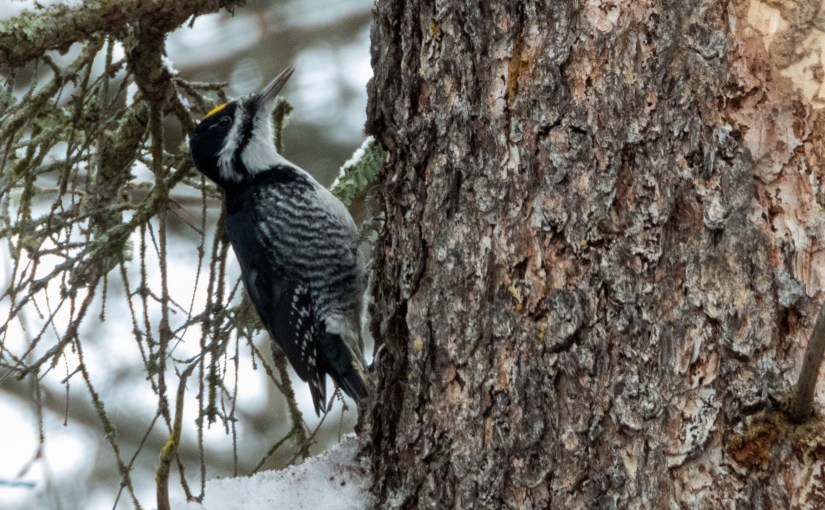
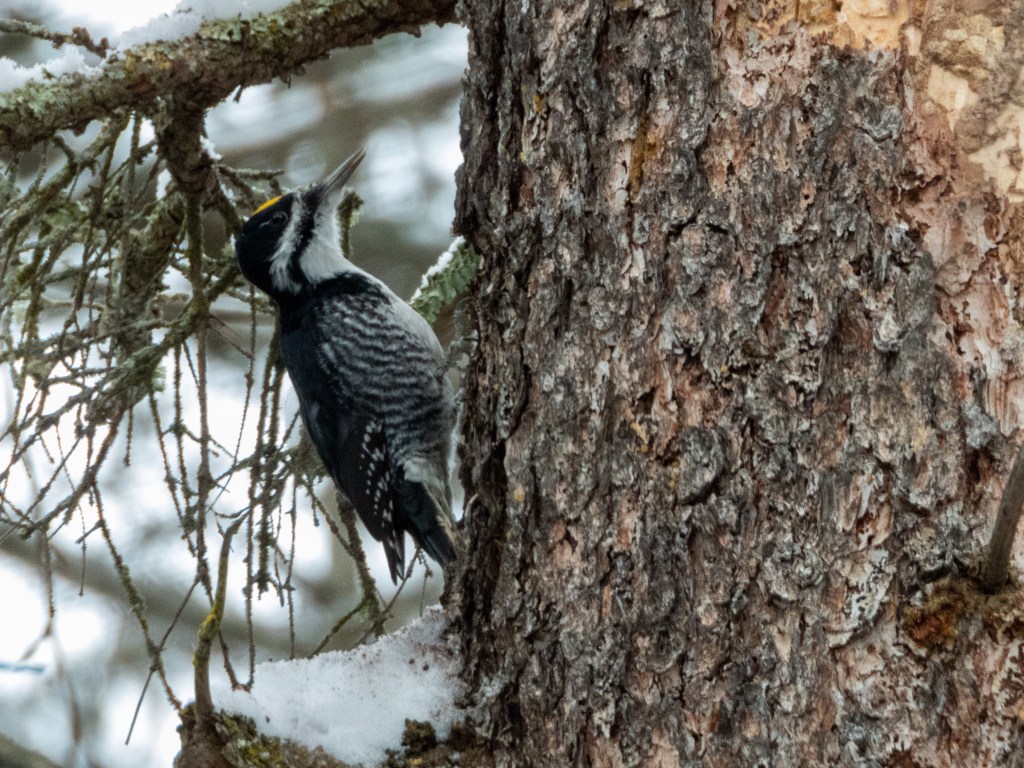
The rumour was that there was a Black-backed Woodpecker along the trail in the Whitemud Ravine. Although I had my doubts that we would find it we decided to go for it. To my surprise we had no trouble locating it. You just had to listen for the characteristic drumming and there it was, half way up a pine tree right along the trail. It took a while for me to realize that this was not just any woodpecker…, it was a lifer. The Black-backed Woodpecker could be mistaken for the American Three-toed Woodpecker, which I have also seen at this location. Both have the same colour pattern – black and white with a yellow forehead. The Black-backed Woodpecker has, however, an entirely black back while the American Three-toed Woodpecker’s back is black and white. It is not every day you score a new woodpecker.
May the curiosity be with you. This is from “The Birds are Calling” blog (www.thebirdsarecalling.com). Copyright Mario Pineda.
Lake of Beaver hills lake as I was hiking along the shore on my way to the bird observatory.
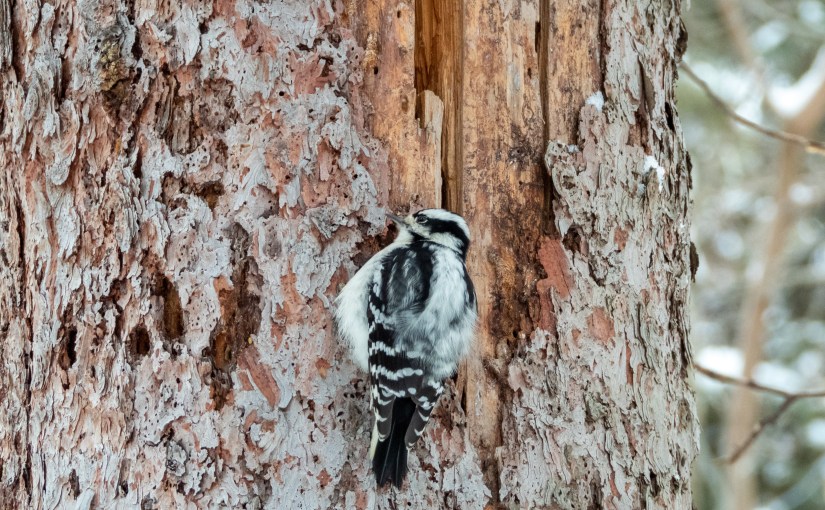
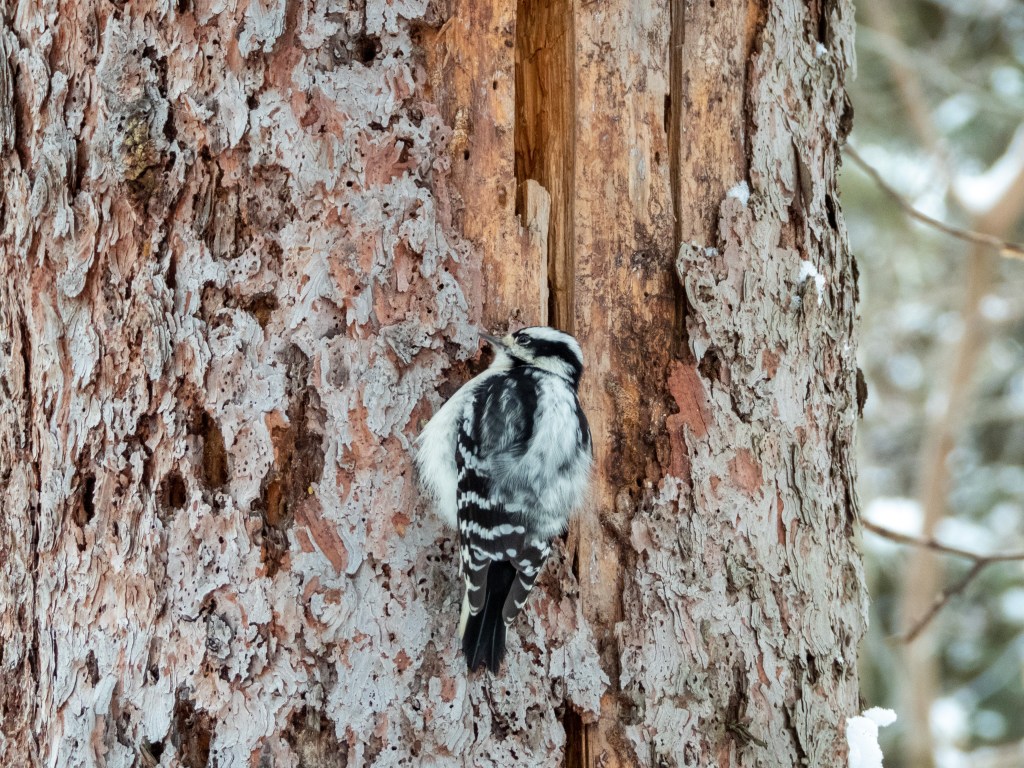
Today is my first birthday as a birder. Exactly one year ago – on December 16, 2018 – I went on my first birding outing with my brand new Nikon Monarch 5 binoculars. A 45 minutes drive took me to the Beaverhill Bird Observatory where I went for a walk through the frozen forest looking for my first species of birds. This was pre-camera days and my phone served as a camera so I mainly got landscape pictures and no bird pictures. The first bird I spotted, and the #1 entry on my life list, was a Downy Woodpecker at one of the bird feeders at the bird observatory. It is fitting that today’s picture is of a Downy that I came across in the Whitemud Ravine yesterday. Downies are the cuties of the winter – petit, fuzzy and irresistible…, yet confident and not shy around us humans. Yesterday’s Downy was busy looking for a morsel to eat on a stump right off the trail. It went about its work systematically and very energetically. It was rather scruffy looking, perhaps it was a young individual or maybe it was just having a bad feather day.
Let’s go back to the same day last year… After a few hours at the bird feeders by the bird observatory I had seen eight species. Not bad for a first-time birder. In the afternoon I went on my second outing to Hermitage Park bird feeders where I saw another four species. The day’s total count ended up being 12 species. As it turns out, the next time I would add another Canadian bird species to my life list would be number 65 over a month later…, but that is a different story.
A year and 166 species later things have obviously slowed down quite a bit in terms of adding new species to the list but now I get the satisfaction of finding and re-familiarizing myself with species that I saw during last year’s winter. The Cedar Waxwings and Snowy Owls are on top of that list. Is has been a tremendously exciting year of birding and there are many highlights that I will cherish forever. As I am looking at my life list every species on it brings back memories of that first sighting. It is quite remarkable how a list of bird species can evoke vivid memories and stories of finding little (on not so little) winged treasures. I am looking forward to my next year of birding and I cannot wait to see what birds it has in store.
Scruffy Downy Woodpecker at the Whitemud Ravine trail.The beginning of my life list with the Downy Woodpecker having that special number 1 spot followed by Hairy Woodpecker, which is also quite fitting since they are almost identical.
May the curiosity be with you. This is from “The Birds are Calling” blog (www.thebirdsarecalling.com). Copyright Mario Pineda.
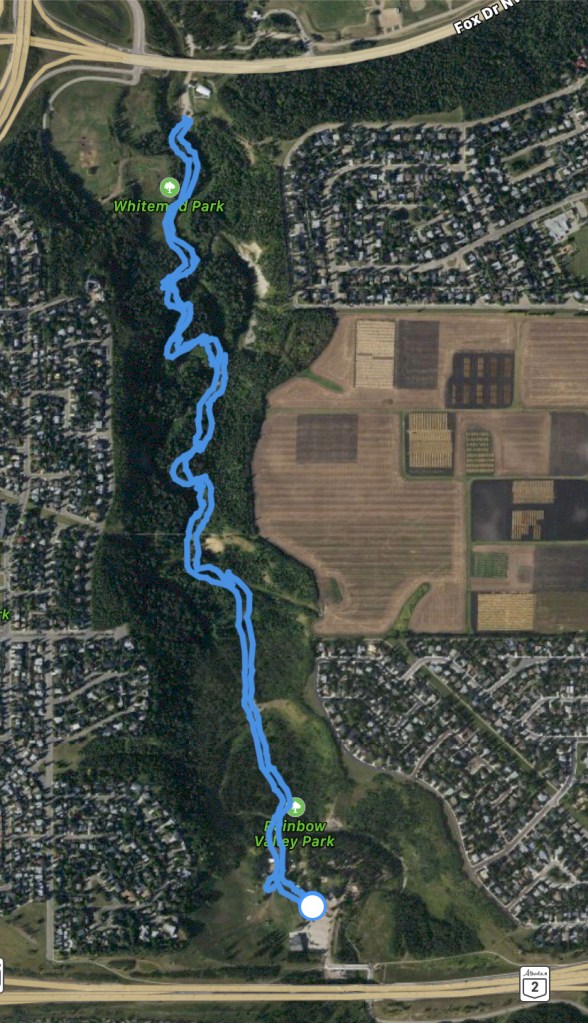
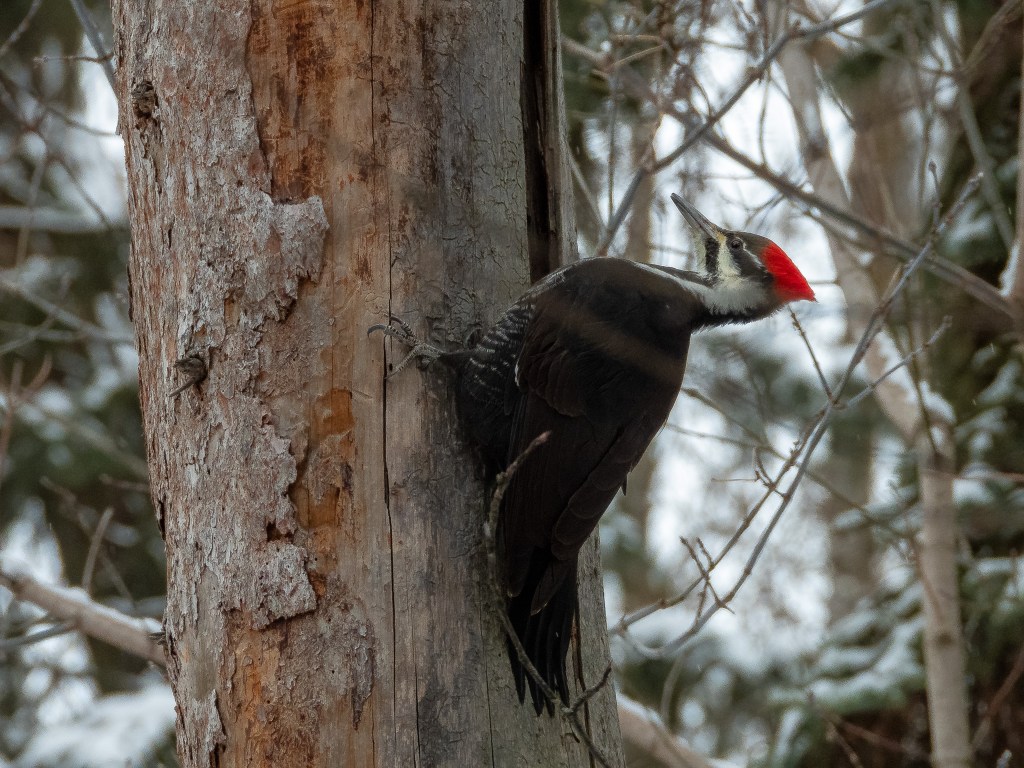
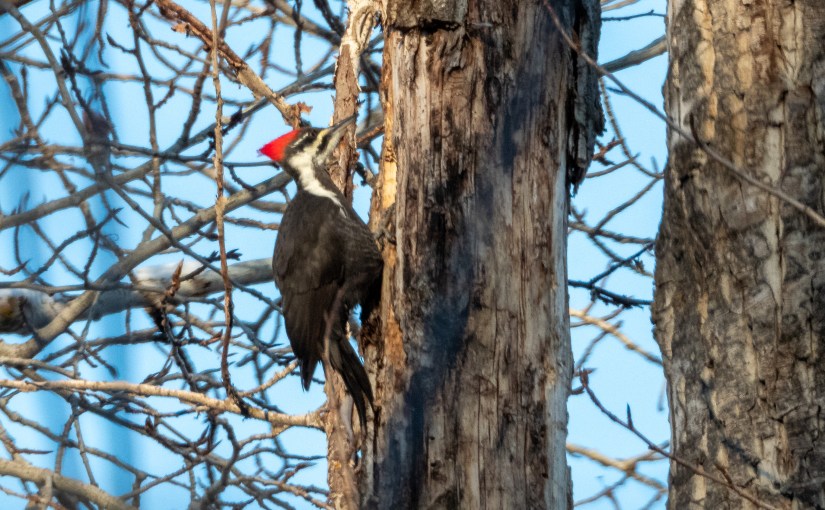
It was a cloudy mild winter’s day and our walk in the Whitemud Ravine started rather uneventful. If was not long, however, before we could hear the familiar drumming sound of a woodpecker going to town on a tree. That was the beginning of a nature walk with the woodpeckers. The first woodpecker was a Pileated Woodpecker in the distance. Once you spot a Pileated Woodpecker it is hard to let it go. Another couple of birders that came by shared that there were Black-backed Woodpeckers further down the trail. This woodpecker is the least common woodpeckers in these neck of the woods, so we decided to try our luck and moved on. Sure enough. One only had to listed for the familiar drumming sound and it was not long before we were able to track down the Black-backed Woodpecker (picture will be posted in a future post). This was a special treat as I have only seen this species once before in this location. From here on, things got only better. While shooting the Black-backed Woodpecker a Brown Creeper serendipitous showed up in the view finder. Further down the trail we came across a scruffy looking Downy Woodpecker only to, moments later, come across the highlight of the day, a magnificent Pileate Woodpecker looking for a snack on a stump right off trail. Wintertime is definitely woodpecker season and some days you really luck out. A peculiar nature of most woodpeckers is that they are not shy or skittish around humans and one can quite easily get close to them. I am not sure if they just could not be bothered with our presence or if they are to busy looking for food to notice us. It sure looks like they are oblivious to our presence.
Edmonton--Whitemud Park, Edmonton, Alberta, CA
Dec 15, 2019 11:47 AM - 1:52 PM
Protocol: Traveling
5.92 kilometer(s)
7 species

Black-backed Woodpecker (Picoides arcticus)  1
Downy Woodpecker (Dryobates pubescens)  1
Pileated Woodpecker (Dryocopus pileatus)  2
Common Raven (Corvus corax)  1
Black-capped Chickadee (Poecile atricapillus)  20
White-breasted Nuthatch (Sitta carolinensis)  2
Brown Creeper (Certhia americana)  1
May the curiosity be with you. This is from “The Birds are Calling” blog (www.thebirdsarecalling.com). Copyright Mario Pineda.
The plants may not have any leaves left but many of them are primed and ready to produce the next generation of plants. Seeds, seeds pods and fruits abound in the frozen forest. While many of them will be a welcomed meal to the winter denizens of the forest the rest will get an opportunity to create the next generation of plants. Most of them will not make it, but that is perhaps why plants produce so many seeds, so that the few can beat the odds.
May the curiosity be with you. This is from “The Birds are Calling” blog (www.thebirdsarecalling.com). Copyright Mario Pineda.
Today is a special day here in Edmonton. Today is the earliest time the sun will set for the year. Yesterday the sunset was at 16:14, today it is at 16:13 and…., tomorrow it is at 16:14 again. After that the sunset times will just keep on getting later until Summer Solstice. The morning sunrises are, however, still getting later so the days are still getting shorter. To be more precise, we will still loose 4 minutes and 10 seconds of day time hours (from 7:32:52 hours of day length today to 7:27:42 hours of day length on December 21). All of this will start to improve, however, after the Winter Solstice, which this year falls on December 21 at 21:19. Already on December 22 we would have gained a fraction of a second of day length. The puzzling fact that the years’s earliest sunset (and the latest sunrise) does not fall on Winter Solstice has to do with the elliptical orbit and axial tilt of our planet.
May the curiosity be with you. This is from “The Birds are Calling” blog (www.thebirdsarecalling.com). Copyright Mario Pineda.
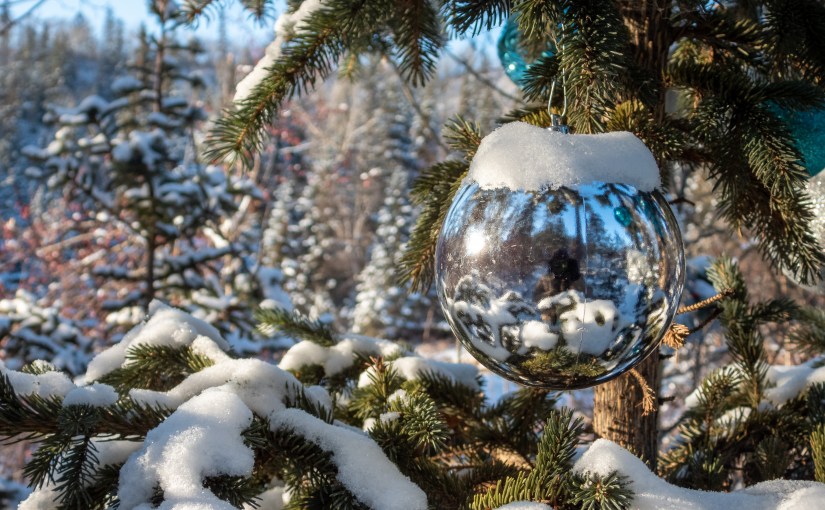
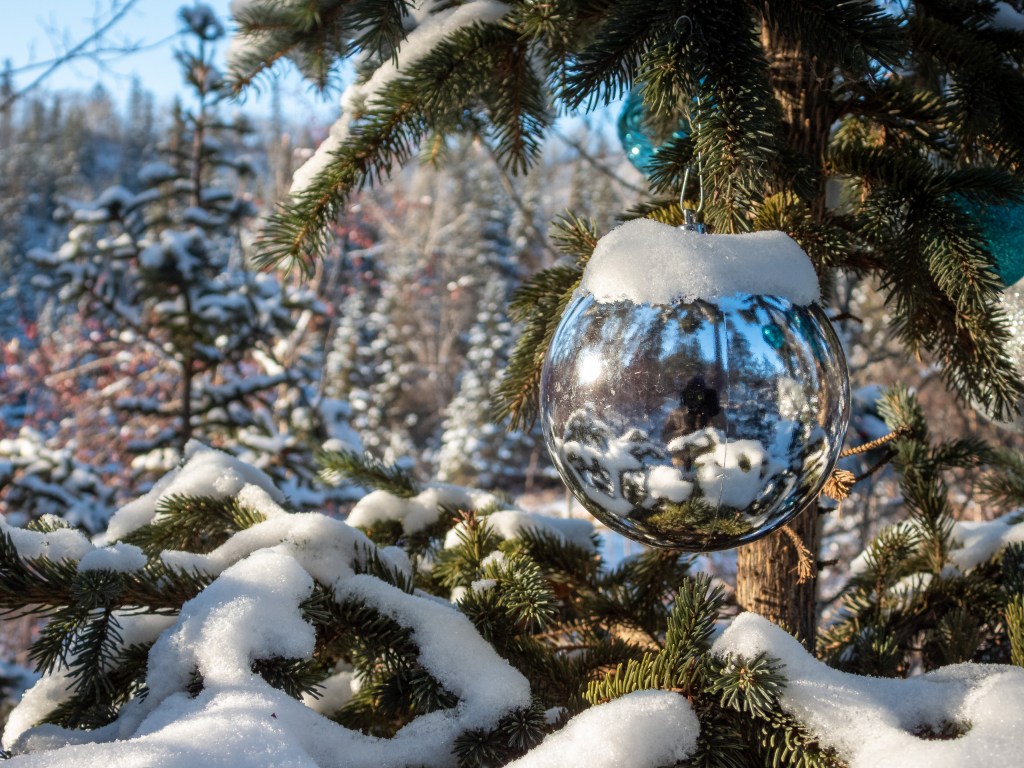
This is not someone’s Christmas tree. Someone has been decorating random trees in the Whitemud Ravine with holiday ornaments. I guess one could call this free-range Christmas trees. I assume the same person will collect the decorations after the holiday season.
May the curiosity be with you. This is from “The Birds are Calling” blog (www.thebirdsarecalling.com). Copyright Mario Pineda.
I have been waiting 256 days (posts) in anticipation to be able to name a post “Pileated Woodpecker”. Up to now these charismatic woodpeckers have been eluding me. I have seen them numerous times in the distance, in flight and one can hear their calls on almost every walk in the Whitemud Ravine. To add to the frustration; on several occasions before I started my Project 366 (and before I had my Nikon P1000 camera) I got amazingly close to these magnificent birds. They certainly are not shy. Its almost as if they were aware that they are the coolest woodpecker around and they like to rub it in your face. As soon as I got my camera, however, I ran out of Pileated Woodpecker luck. Last weekend, however, luck was on my side as there was a bit of an woodpeckerpalooza going on in the Whitemud Ravine, with Downy Woodpeckers, Hairy Woodpeckers and two adult Pileated Woodpecker busy looking for their next meal. Due to the dense understory I did not manage to get as close to the Pileated Woodpeckers as I would have liked to, but I did get pictures that, while not perfect, are the best to this date. There is always another day, so I will be back for more Pileated Woodpecker action in the near future.
May the curiosity be with you. This is from “The Birds are Calling” blog (www.thebirdsarecalling.com). Copyright Mario Pineda.
The other day, as I was crossing the bridge going into the Whitemud Ravine, I noticed that the snow along the banks of the creek seem to have broken off and collapsed. Upon closer inspection I noticed that the snow cover along the middle of the creek also had fractured. A snow free section of the ice revealed that the ice also had fractured right down the middle of the creek. I thought this was peculiar and it got me thinking about what could have cause this. The most plausible explanation I could come up with was that most likely the water level under the ice had dropped. If the ice was not thick enough to support its own weight when it was not longer floating on water it would have collapsed under its own weight. This must have been quite a spectacle and by the looks of it, it probably was a suddenly and fast event. Considering that people walk, ski and bike on the ice covered creek this could have ended badly if someone had been on the ice at the time. I think I will hold off any excursion on the ice for another month or two until one can be certain that it is thick enough to be safe.
May the curiosity be with you. This is from “The Birds are Calling” blog (www.thebirdsarecalling.com). Copyright Mario Pineda.