Project 366 – Post No. 068 – Wood Bison

What is Project 366? Read more here!

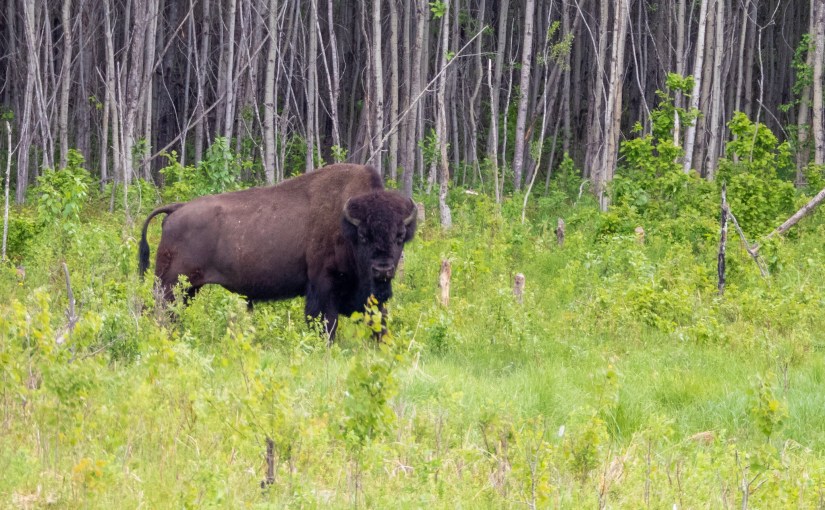
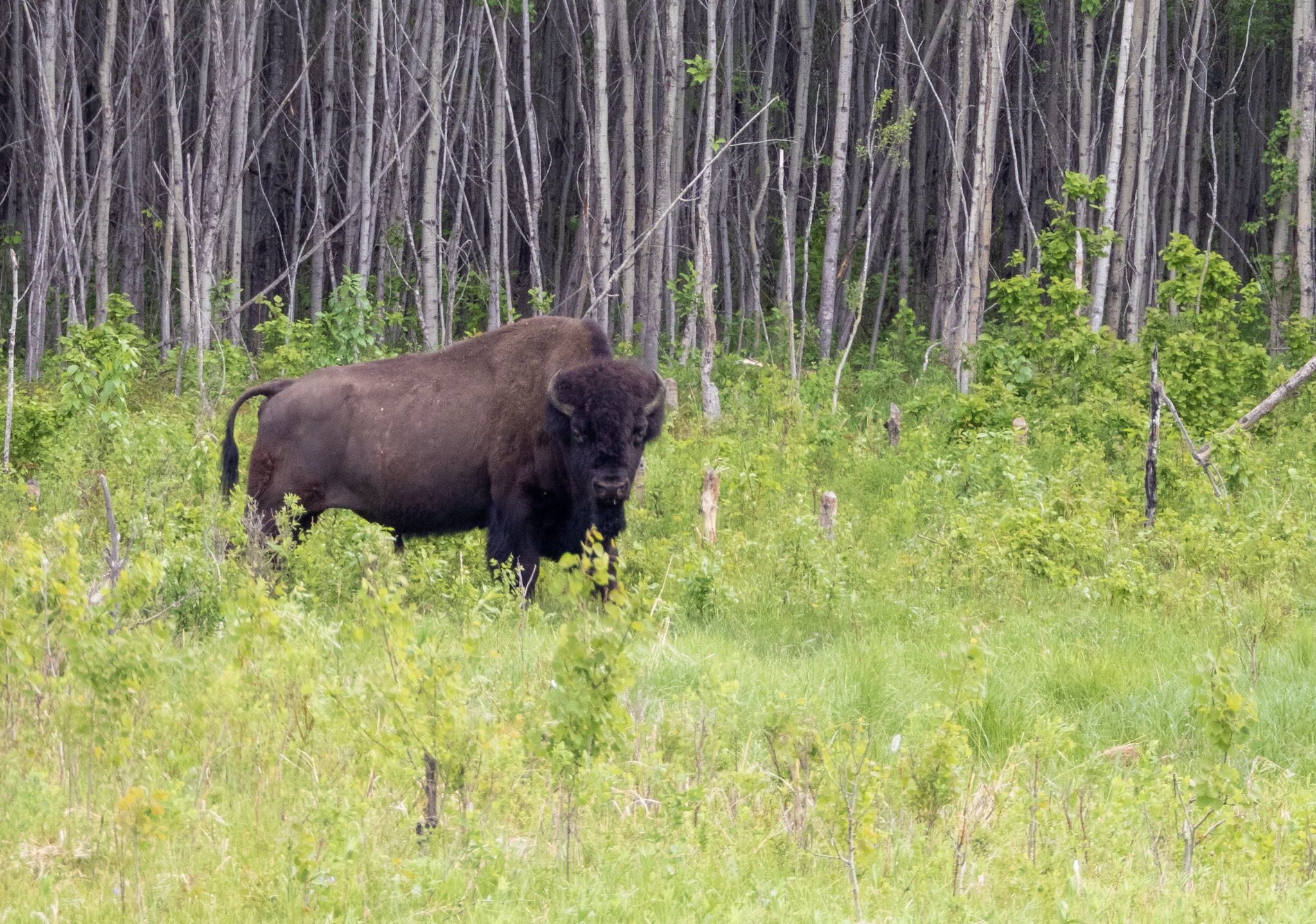
This is the third day of bison-themed posts. Another post and another bison…, yet, this one is different. All my bison pictures and posts so far have featured Plains Bison (Bison bison bison). Today’s picture, however, is featuring a Wood Bison (Bison bison athabascae). Why the trinomial names, instead of the usual Linnaean binomial names? Well, Plains and Wood Bison are considered subspecies within the genus Bison, just like you and I belong to the subspecies Homo sapiens sapiens, which is different from the extinct subspecies Homo sapiens neanderthalensis, both belonging to the genus Homo. Morphologically Wood and Plains Bison can be told apart by Wood Bison being substantially larger with bulls averaging 880 kg and females 540 kg while Plains Bison bulls average 739 kg and females 440 kg – so about a 100 kg difference, not exactly spare change. Wood Bison also have a pronounced hump above their shoulder blades forward of their front legs while the Plains Bison is lacking the hump and have their highest point along their back centered over their front legs. Although they are of different sizes and one has a hump, if you do not have them right next to each other telling them apart is probably as easy as telling a Downy Woodpecker from a Hairy Woodpecker (that was a birder joke). If you visit the bison at Elk Island telling them apart (the bison, not the woodpeckers) is child’s play. If you see a bison north of the Yellowhead Highway it is a Plains Bison and if you see a bison south of the highway it is a Wood Bison. This fella was a southerner so, yeah…, definitely a Woody.

The park maintains about 450 Plains Bison and about 315 Wood Bison, selling off any surplus animals. Historically, the Plains Bison lived primarily in their Greater Plains of central North America, while the Wood Bison lived further north, from Alaska into Yukon and the North West Territories and in Northern British Columbia, Alberta and Saskatchewan. It is believed that there used to be up to 30 million Plains Bison and about 170000 Wood Bison during their heydays. All was hunky dory until the Europeans arrived. When the Europeans colonized North America the population numbers of both bison species declined rapidly. By the late 1800s, Plains Bison no longer existed in Canada and the Wood Bison population was down to about 200 individuals. Conservation efforts saved the bison from complete extinction with populations today around 375000 Plains Bison and 6000 Wood Bison.
Nikon P1000, 504mm @ 35mm, 1/250s, f/5, ISO 400

May the curiosity be with you. This is from “The Birds are Calling” blog (www.thebirdsarecalling.com). Copyright Mario Pineda.
Project 366 – Post No. 067 – Mangy bison with flowers in his hair

What is Project 366? Read more here!

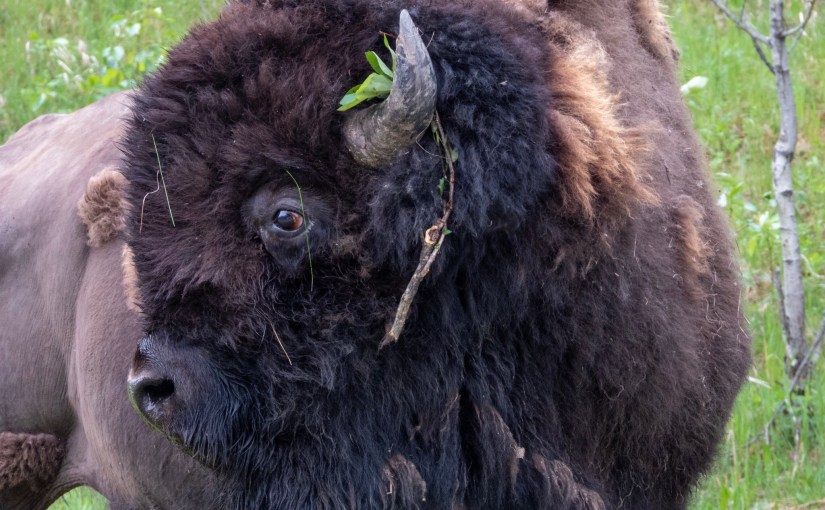
Bison fur consists of a thin layer of short hair right agains the skin and an outer layer of coarse long hair. In the fall the bison grow the long outer fur to keep them nice and toasty throughout the winter. In the spring they shed their outer coat in large clumps making them look quite mangy. Right before I took this picture this male was wallowing, rolling around in the dry dirt, presumable to try to shed his winter coat. As he stood up a leafy twig got caught behind his horn. Bison wallow for many purposes, such as relieving skin irritations, shed their winter coat, seeking relief from biting insects, as a social behaviour or as part of their mating behaviour during the breeding season. There is an informative writeup on wallowing in bison on the US National Parks web site. It turns out that wallowing creates bowl-like depressions, wallows, that serve important ecological roles in the prairie ecosystem. More on that later, however, once I post a picture of a wallow. This bison was just a few meters away from me so, resisted the temptation to step outside the vehicle and shot this picture from the car. The bison at Elk Island are remarkable accepting of humans in vehicles. Not so much with humans outside of vehicles.

Nikon P1000, 258mm @ 35mm, 1/60s, f/4.5, ISO 400

May the curiosity be with you. This is from “The Birds are Calling” blog (www.thebirdsarecalling.com). Copyright Mario Pineda.

Project 366 – Post No. 066 – Bison touring the Bison Loop

What is Project 366? Read more here!

Well, it had to happen…, my bison mojo is back. Just like last Sunday, today I was up at 5 am, on the road at 5:15 and at Elk Island by 6 am. I can get used to this Sunday morning routine. There were plenty of bison around this time. A number of Wood Bison were hanging out along the fence in the South part of the park and I probably must have seen a dozen or so Plains Bison throughout the morning in the North part of the park. Most of them were hanging out out by the aptly named Bison Loop, a few kilometres long gravel loop for for watching bison from your vehicle (but, ironically, I rarely finding bison at the Bison Loop). As I emerged from the Bison Loop I bumped into these two fellas that were taking a stroll down the main thoroughfare towards the Bison Loop (note road sign). Perhaps they just wanted to find out how it is to tour the Bison Loop from “the other side”. It was a bit hazy, probably due to lingering fire smoke, so taking photographs was a bit tricky, particularly when shooting over a long distance. One can see a bit of the haze in the picture. The morning turned out successful, however. I spend quite some time observing a very hungry Musk Rat that was going to town with the aquatic vegetables. A whole bunch of Northern Shovelers and Blue-winged Teal were in the ponds as well, both very beautiful waterfowl. I saw a sparrow that I am still working on identifying, so that one is still a loose end, but I did score two lifers, the Least Flycatcher (Empidonax minimus, Lifer #160, AB Big Year #111) and the Yellow Warbler (Setophaga petechia, Lifer #161, AB Big Year #112).

Nikon P1000, 605mm @ 35mm, 1/250s, f/5, ISO 160

May the curiosity be with you. This is from “The Birds are Calling” blog (www.thebirdsarecalling.com). Copyright Mario Pineda.

Project 366 – Post No. 065 – Bighorn Sheep in Jasper National Park

What is Project 366? Read more here!

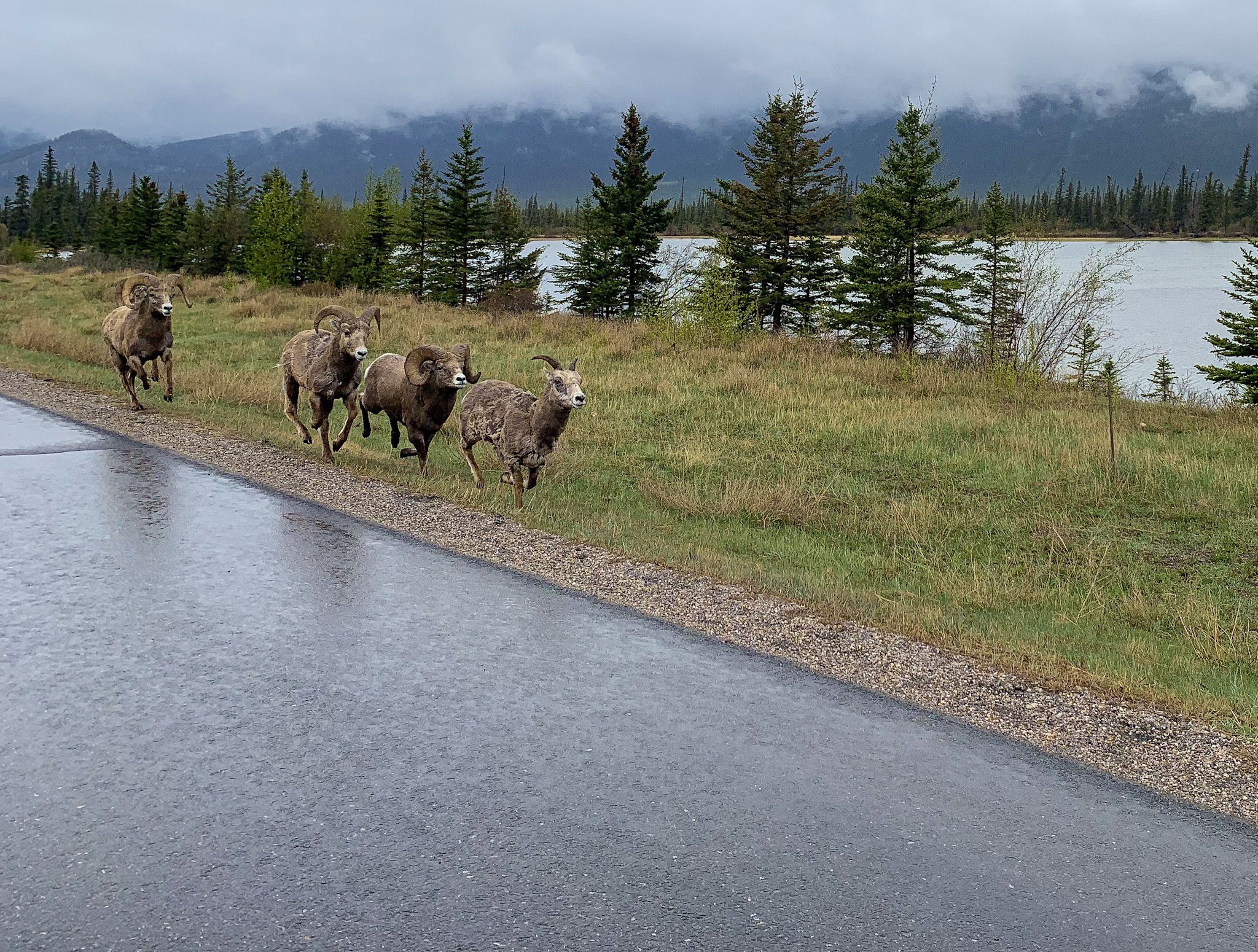
We were on the road to Jasper National Park for a camping weekend in the mountains. It is always a special treat to head up into the mountains, but this time we were a bit apprehensive as the weather forecast looked quite gloomy with rain and cold temperatures. Sure enough, as soon as we went through the park gate the rain started coming down. It was, however, too late to turn back now. The road between the park gate and Jasper is scenic as it meanders its way through a valley following the Athabasca River with mountains and lakes surrounding us on either. The highway inside the park is limited to 90 km/h with a number 70 km/h sections. There are good reasons for this as animals often hang out around and on the highway. In the past we have seen coyotes, foxes, bears, elks and bighorn sheep right on this stretch of highway. As we were crossing an isthmus between the Athabasca River on the right and Talbot Lake on the left half-dozen of Bighorn Sheep came galloping towards us along the highway. This must have been a good omen, if you believe in such things, The weekend ended up turn out great. Yes it rained for the rest of the day. but the next two days were sunshine allowing us to do some awesome hikes and birding, including scoring two lifers: Yellow-rumpled Warbler (Setophaga coronata, Lifer #156, AB Big Year #107) and Hammond’s Flycatcher (Empidonax hammondii, Lifer #155, AB Big Year #106). All in all, that would be considered a pretty awesome weekend.

May the curiosity be with you. This is from “The Birds are Calling” blog (www.thebirdsarecalling.com). Copyright Mario Pineda.

Project 366 – Post No. 064 – In search of bison calves

What is Project 366? Read more here!

Reliable intelligence indicates that the bisons at Elk Island National Park have had their calves. I have not had much luck finding bison over the last few months and things do not seem to improve. It is likely that the adult bison might be even shyer now that they have calves. During my last visit parts of the park had been shutdown to the public due to the calving, so that will likely not improve my bison viewing luck. Assuming the smoke from the wild fires clears I will be doing another dawn field trip to Elk Island this weekend, so wish me luck. If there is one thing wildlife watching has taught me is that crossing the path with wild animals takes good timing and no small amount of luck. Over the years I have had some very memorable run-ins with bison at Elk Island. The one that perhaps stands out the most in my mind is a bison stampede down the main access road involving around 30-50 bison charging down the road as we were driving the other way. Fortunately we were safely inside our car but as the bison passed us our vehicle was completely surrounded by bison hoofs and horns. It appears that memorable encounters are separated by long periods were no animals are encountered. Historically it has been the same situation with bears in the mountain parks. There are years were we do not see a single bear, only to have bears dropping out of trees all over the place the following summer. It takes patience and persistence, that is for sure. The rewards of viewing wildlife in their natural habitats are memories that last a life time.

Nikon P1000, 24mm @ 35mm, 1/800s, f/2.8, ISO 100

May the curiosity be with you. This is from “The Birds are Calling” blog (www.thebirdsarecalling.com). Copyright Mario Pineda.
Project 366 – Post No. 063 – Blue-winged Teal in Repose

What is Project 366? Read more here!

In complete tranquility and at ease the Blue-winged Teal was resting on a submerged rock. If it would not be for the ever so subtle ripples on the water surface its reflection would have been indistinguishable from the real thing. The surface of the pond almost perfectly mirrored the waterfowls, the foliage of the surrounding forest, the reeds and the blue sky. It was a quiet and calm early morning with only the birds and beavers going about their business. The colours were vibrant and stunning with the emerald green foilage and the dark blue sky nestled together on the surface of the pond like a water colour painting. Unfortunately scenes like this are likely to become fleeting and elusive this summer and for the years to come. Fast forward less than a week and much of Alberta is covered in a grim post-apocalyptic yellow, smelly and impenetrable blanked of smoke. The smoke has drifted in from massive forest fires raging in northern Alberta. As of tonight the largest of the forest, the Chuckegg Creek fire, is over 500 000 acres in size, that is about 2300 square kilometres. The smoke is so thick that the street lights have turned on, their light sensors thinking it is evening time. The Air Quality Health Index (AQHI) is at 72…, and that is on a ten point scale…, let that sink in for a bit.

As climate change is going unchecked the forecasts are dire. All predictions indicate that longer and more intensive fire seasons are here to stay. Humanity has accomplished remarkable feats in the span of only a handful of lifetimes, proving that we are capable of astounding feats when we set our minds to it. Unfortunately we humans also suffer from a self-entered navel-gazing dysfunction that has made our society, our leaders and decision makers unwilling to grasp the severity of the situation. The smoke blanketing the capital of Alberta is particularly poignant as it conincides with our politicians in the legislature introducing a bill (Bill 1: The Act to Repeal the Carbon Tax) at 12:01 today killing our already weak climate change initiative.

David Attenborough once said that “No one will protect what they don’t care about; and no one will care about what they have never experienced.”. I cannot imagine how anyone experiencing first hand the magic beauty of a Blue-winged Teal in repose in a emerald green lake under a dark blue morning sky could remain indifferent to the injustice that is being done.

May the curiosity be with you. This is from “The Birds are Calling” blog (www.thebirdsarecalling.com). Copyright Mario Pineda.
Project 366 – Post No. 062 – Nesting Cliff Swallows

What is Project 366? Read more here!

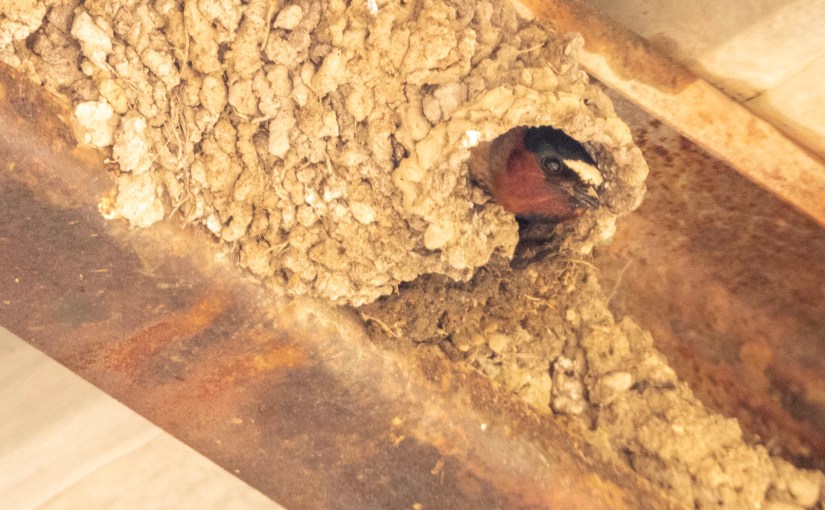
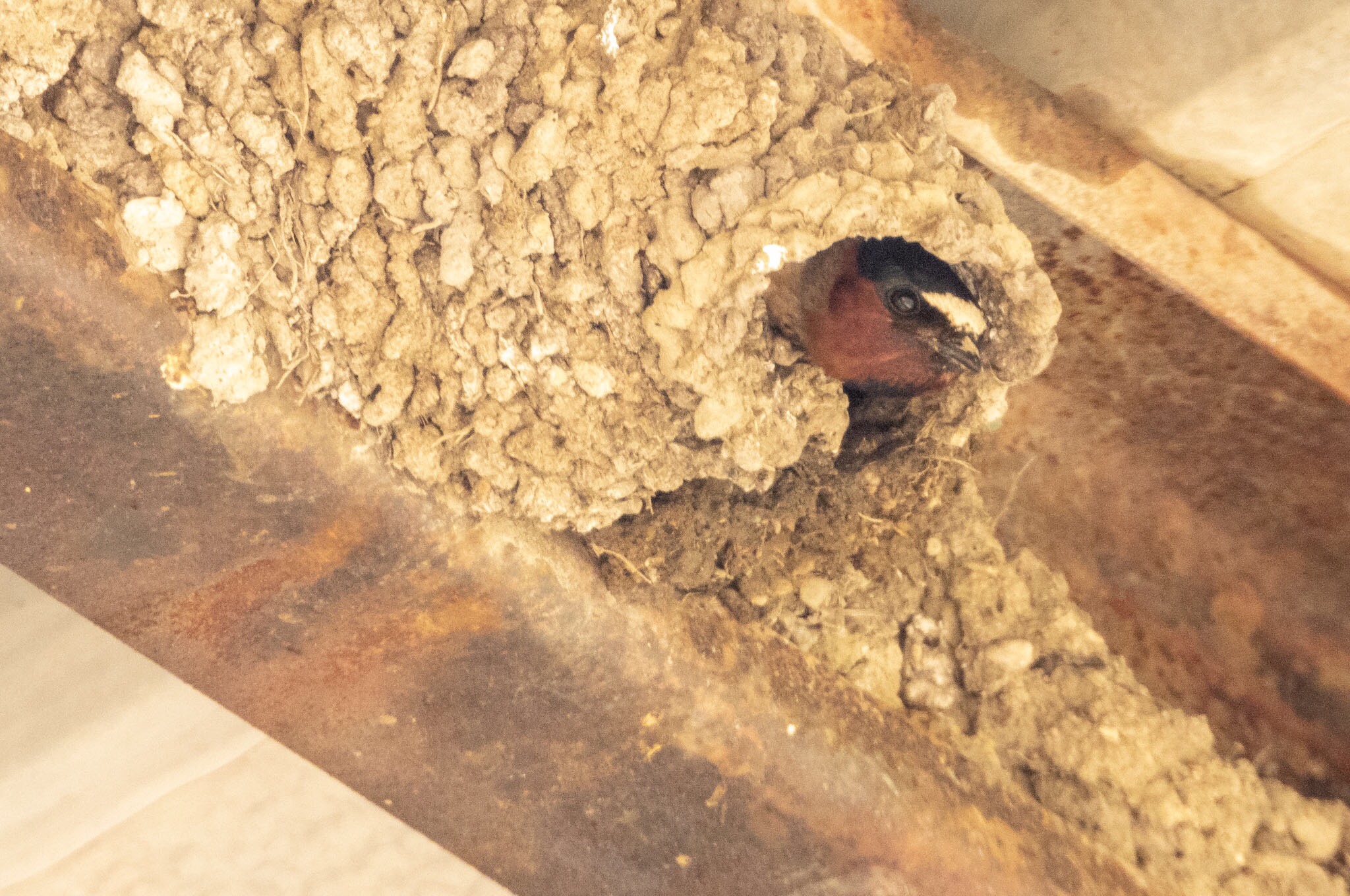
Tucked away behind the visitors centre by the bison paddock at Elk Island National Park there is a large steel structure holding up a metal roof. It looks like it is being used for protecting materials and machines stored outdoors from rain and snow. On Google Maps one can see the large roof here. During a recent visit at the paddock I was walking around looking for bison. I barely noticed the structure until I came closer to it and all of a sudden a swarm of swallow-like birds emerged out of nowhere. The swallows seemed agitated and were swarming around me. It was reminiscent of scenes from Alfred Hitchcock’s The Birds. The reason for the commotion was soon obvious. The steel girders holding up the roof were covered in swallow nests. Most of them had swallows darting in and out and many were still under construction. There was quite a commotion with swallows peeking out of the nests, while others brought in the mud. I assume that these were breeding pairs that were building the nest together. It was quite a sight seeing these engineers of the bird world building their homes. In the picture one can see the darker wet mud that was recently added to the nest surrounded by the lighter dry mud. As I stood there admiring the swallows I completely forgot about the bison and it was not until I was about to leave that I realized that I had not yet identified the species. The only swallows I have seen to date in Canada are tree swallows and barn swallows and the bison paddock swallows seem to have features from both of these species, a white chest like a tree swallow and a bunch of rufous color on their head like a barn swallow. The white patch on their forehead, however, gave them away as Cliff Swallows (Petrochelidon pyrrhonota, Lifer: #150, AB Big Year: #110).

May the curiosity be with you. This is from “The Birds are Calling” blog (www.thebirdsarecalling.com). Copyright Mario Pineda.

Project 366 – Post No. 061 – Nesting robin

What is Project 366? Read more here!

Today’s post, #61, marks the completion of 1/6th of my Project 366. While it is far to premature to celebrate I am in a bit of disbelieve that I actually have managed to post every single day for the past two months. The biggest surprise has been that the writing and posting is not the main challenge but rather getting out into nature enough to have fresh pictures to accompany the posts. Now back to regular business…

During an early morning visit to Elk Island I came across an American Robin that had build its nest in a hollow tree stump. I was surprised that it had chosen such an exposed nesting location. The nest was about shoulder high right along a hiking trail and there really was no way one could miss it. While stayed on the opposite side of the trail from the nest the robin did not seem particularly phased. It sat completely still and the fact that it insisted on staying put rather than flying off could mean that there were eggs or young in the nest. This was one of those times were I was particularly appreciative of the extra long zoom capabilities of the P1000.

Nikon P1000, 605mm @ 35mm, 1/250s, f/5, ISO 400

May the curiosity be with you. This is from “The Birds are Calling” blog (www.thebirdsarecalling.com). Copyright Mario Pineda.

Project 366 – Post No. 060 – Misty Dawn at Elk Island

What is Project 366? Read more here!

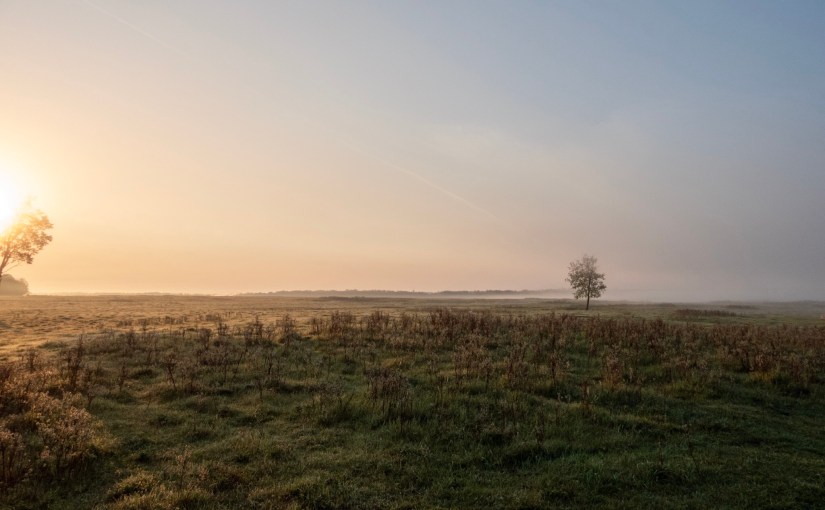
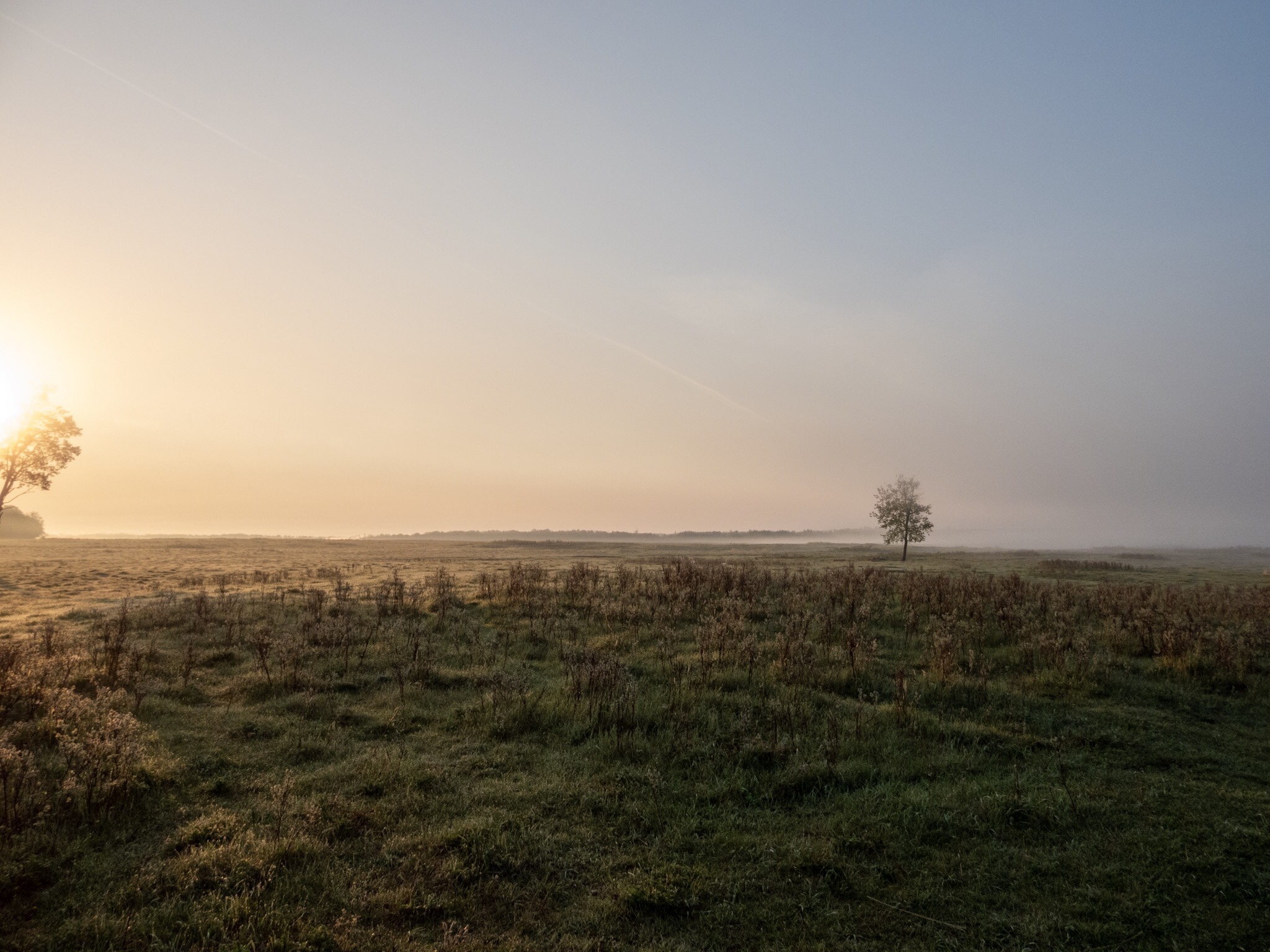
The alarm clock went off at 5am. Fifteen minutes later I was heading East on a quiet and empty Yellowhead Highway, into the sunrise and towards Elk Island. Nature walks at dawn is a meditative experience. The dawn of a new day, the absence of humans and human made noises washes away stress, sleepiness and rejuvenates the mind. The absence of human-made sounds is made up for by a cacophony of natural sounds, primarily birds. Dawn is the time of day that birds are by far the most active and vocal. As I was approaching the park thick impenetrable fog shrouded the landscape forcing me to, at times, slow down to walking speed on the highway. I have not seen fog this thick in many years. It was the proverbial pea soup with visibility diminished to only a few meters. Once I arrived at Elk Island heavy fog banks covered the open fields and ponds. Not ideal for viewing or photographing wildlife, but magical nevertheless and quite inducing for landscape photography. After a quick scan of the fog covered Bison Loop I settled in at the Mud Lake parking lot to brew myself a cup of coffee and wait for the fog to lift. I spend the next few hours hiking along ponds and wetlands around Tawayik Lake seeing lots of waterfowl and industrious beavers.

Nikon P1000,24mm @ 35mm, 1/1000s, f/2.8, ISO 100

May the curiosity be with you. This is from “The Birds are Calling” blog (www.thebirdsarecalling.com). Copyright Mario Pineda.

Project 366 – Post No. 059 – Canada goose goslings

What is Project 366? Read more here!

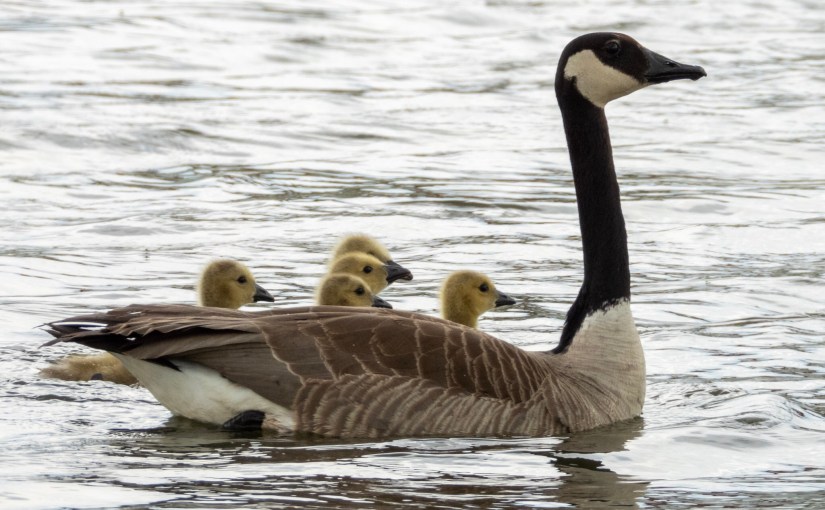
I was at the Emerald Pond in Sherwood Park looking for charismatic birds such as pelicans. The pelicans were a no show, but there was plenty of Canada geese in the tall grass surrounding the pond. I did not pay much attention to the geese and as I was walking along the shore they kept a close eye on me and slowly, almost reluctantly, moved out of my way as I was approaching. As I approached one goose that appeared alone I noticed something else moving around in the grass right beside the goose. They were goslings and this would explain the slighly odd behaviour of the adult geese. The adult was herding the goslings towards the water’s edge while keeping its head high and its gaze fixed on me. As I started to scrutinize the other geese around the pond, now that I knew what to look for, I saw they all had little ones. The yellow goslings were remarkable well-camouflaged in the tall grass and obediently followed their moms and dads into the water. Once in the water the families quickly crossed the pond and got out of the water on the other side. I imagine the goslings might be safer in the tall grass as they would be easy prey for an opportunistic raptor in the open water.

Nikon P1000, 437mm @ 35mm, 1/500s, f/5, ISO 100

May the curiosity be with you. This is from “The Birds are Calling” blog (www.thebirdsarecalling.com). Copyright Mario Pineda.